
Chapter 1
The Birth of a Phenomenon
From Wild Bee Shrimp to Crystal Red (1990–2003)
A revolution in the aquarium hobby does not always begin with a dramatic discovery. Sometimes it begins with one unusual animal, noticed by someone patient enough to see that it was different.
Part I
Before the Revolution
In the early 1990s, the freshwater aquarium hobby looked very different from the world known by modern shrimp keepers.
Today, Caridina shrimp occupy a unique position within the aquarium world. They are photographed like rare jewels, traded internationally, bred according to carefully developed bloodlines, and judged by standards that would have seemed extraordinary only a few decades ago.
But before the rise of Crystal Red Shrimp, ornamental shrimp were largely overlooked.
Fish dominated the aquarium hobby.
Large cichlids, colourful livebearers, discus, goldfish, and planted aquarium species attracted the attention of most enthusiasts. Shrimp, when kept at all, were usually considered interesting additions to a community aquarium rather than the centrepiece of a dedicated breeding project.
The idea that a tiny freshwater shrimp could become one of the most selectively bred ornamental animals in the world would have seemed unlikely.
Yet Japan was already developing the conditions that would allow such a transformation to happen.
Japan and the Culture of Refinement
To understand the rise of Crystal Red Shrimp, it is necessary to understand something about Japanese aquarium culture.
Japan has a long tradition of refining living organisms through careful selection.
The most famous example is koi breeding.
For generations, Japanese breeders had selected koi for:
- colour,
- pattern,
- body shape,
- and consistency.
A fish was not simply judged as attractive or unattractive. It represented the result of generations of decisions.
The same philosophy could later be applied to other aquatic animals.
The idea that a small difference could be meaningful—that a subtle improvement could justify years of work—was already deeply established within Japanese ornamental culture.
When bee shrimp began attracting attention, they entered an environment where selective breeding was already understood.
The question was not simply:
“Can this animal survive in an aquarium?”
The more interesting question became:
“What could this animal become?”
The Bee Shrimp Arrives
The shrimp that would eventually become the foundation of the Crystal Red line originated from wild populations of bee shrimp.
The species now commonly referred to by hobbyists as Caridina cantonensis was introduced into the aquarium hobby through imported wild specimens from Asia.
At the time, these shrimp were valued primarily for their attractive natural patterning.
Their bodies displayed contrasting dark and light markings that made them appealing to experienced aquarists.
However, compared with modern selectively bred shrimp, their appearance was relatively simple.
Wild bee shrimp generally displayed:
- natural black-and-white patterns,
- considerable variation between individuals,
- less intense colouration than later ornamental strains.
They were beautiful animals, but they were not yet viewed as a breeding project.
That would soon change.
The Importance of Observation
The early history of Crystal Red Shrimp demonstrates one of the most important principles in selective breeding:
Extraordinary animals are often hidden among ordinary ones.
A breeder may examine hundreds or thousands of individuals before noticing something unusual.
The ability to recognise that difference is what separates a normal specimen from the beginning of a new bloodline.
This is why the story of Crystal Red Shrimp is not simply a story about mutation.
It is a story about attention, patience, and the willingness to pursue something that others might ignore.
The Aquarium Hobby at the Turning Point
By the early 1990s, several developments were beginning to reshape Japanese aquarium keeping.
The hobby was becoming increasingly specialised.
Enthusiasts were no longer satisfied simply keeping fish alive. They were interested in:
- creating natural environments,
- breeding unusual varieties,
- documenting results,
- exchanging information.
Specialist shops became meeting places where knowledge was shared.
Magazines provided detailed information.
Hobbyists experimented with techniques and reported their successes and failures.
This environment was crucial.
A rare mutation in an ordinary community aquarium might disappear unnoticed.
A rare mutation within Japan’s increasingly connected specialist hobby had the possibility of becoming something much larger.
The Beginning of a New Era
The exact details of the earliest Crystal Red Shrimp discovery have become surrounded by repeated stories and simplified versions.
What is consistently recognised within the hobby is that the development of Crystal Red Shrimp is credited to Japanese breeder Hisayasu Suzuki.
During the 1990s, Suzuki identified a naturally occurring red mutation among bee shrimp and began the long process of selective breeding required to establish the trait.
The important word is establish.
Finding an unusual shrimp is only the beginning.
A mutation must be:
- maintained,
- reproduced,
- strengthened,
- and made predictable across generations.
Without that work, the discovery remains an interesting accident.
With careful breeding, it becomes a new variety.
Research Note
The Discovery Story
Confirmed:
- Crystal Red Shrimp were developed in Japan.
- Hisayasu Suzuki is widely credited with establishing the Crystal Red line.
- The variety originated from bee shrimp.
Still requiring historical documentation:
- The exact date of the first observation.
- The exact number of generations required for stabilisation.
- Original breeding records.
- Early photographs from the development period.
Because much of this history predates the modern internet era, original documentation is difficult to locate.
The First Question
At the beginning, the red shrimp was not the worldwide phenomenon it would later become.
It was simply an unusual animal.
The significance was not immediately obvious.
But selective breeding has always worked the same way:
First comes observation.
Then comes patience.
Then comes the realisation that something ordinary has become something extraordinary.
The Crystal Red Shrimp was about to begin that journey.
End of Part I
Next section:
Part II — A Chance Discovery
The emergence of the Crystal Red mutation, Hisayasu Suzuki’s breeding work, and the transformation from unusual shrimp into a new ornamental variety.
Let’s continue with part 2
Chapter 1
The Birth of a Phenomenon
From Wild Bee Shrimp to Crystal Red (1990–2003)
Part II
A Chance Discovery
The history of ornamental breeding is filled with moments that appear insignificant at first.
A single flower with an unusual colour.
A fish with a different pattern.
A bird displaying a rare mutation.
Most of these variations disappear.
Only a small number become the foundation of something new.
The emergence of the Crystal Red Shrimp followed this same pattern.
It did not begin with a grand announcement or a carefully planned breeding programme. It began with one unusual variation among a group of bee shrimp.
The difference was simple but extraordinary.
Instead of the familiar dark patterning of wild bee shrimp, one individual displayed a striking red and white appearance.
At first glance, it was only a colour mutation.
But within that small difference was the possibility of creating an entirely new branch of the aquarium hobby.
The Discovery of the Red Mutation
The development of the Crystal Red Shrimp is widely attributed to Japanese breeder Hisayasu Suzuki during the 1990s.
Suzuki’s achievement was not simply noticing a red shrimp.
Mutations occur naturally in many species. The difficult part is recognising their potential and developing them into a stable variety.
A single unusual shrimp does not create a new strain.
The breeder must answer several questions:
- Can the trait be inherited?
- Will offspring display the same characteristic?
- Can unwanted traits be removed through selection?
- Can the desired appearance become consistent?
These questions require time.
Years, not weeks.
From Mutation to Bloodline
The early development of Crystal Red Shrimp was a process of selective breeding.
The basic principle was simple:
Keep the individuals that show the desired characteristics.
Breed them.
Evaluate the offspring.
Repeat.
However, the reality was much more complicated.
Early Crystal Red Shrimp were not the highly refined animals familiar to modern hobbyists.
They lacked many of the characteristics that breeders would later pursue.
Compared with modern high-grade shrimp, early individuals often displayed:
- thinner white areas,
- less intense red colouration,
- more variable patterns,
- inconsistent offspring.
The famous grading systems that exist today had not yet developed.
At this stage, the challenge was not producing the “perfect” Crystal Red.
The challenge was proving that the mutation could become a stable ornamental variety.
The Difference Between Discovery and Creation
One of the most important lessons from the Crystal Red story is that discovery and creation are different things.
The mutation itself was a natural event.
The variety was created through human selection.
Without Suzuki’s work, the red shrimp may have remained an isolated curiosity.
The achievement was taking a chance occurrence and transforming it into a reliable bloodline.
This distinction is important because it reflects a broader principle throughout the golden era of Japanese shrimp breeding.
The most respected breeders were not simply lucky enough to find unusual shrimp.
They were skilled enough to recognise potential and patient enough to develop it.
The Japanese Approach to Selective Breeding
The methods used during this period reflected a traditional Japanese approach to ornamental breeding.
Quality was built slowly.
There was no shortcut.
A breeder could not simply improve a shrimp through better food or equipment. Products could improve survival and health, but they could not replace generations of genetic selection.
The process involved:
Observation
Each shrimp had to be examined carefully.
Small differences mattered.
A slightly stronger red colour.
A cleaner white section.
A more balanced pattern.
Traits that seemed minor could become important over generations.
Selection
Not every shrimp was kept for breeding.
This is a difficult concept for newcomers to selective breeding.
A tank containing hundreds of shrimp may produce only a small number suitable for continuing a particular line.
The breeder’s skill lies not only in producing good animals, but in identifying which animals should contribute to the future.
Patience
Shrimp reproduce faster than many ornamental fish, but meaningful genetic improvement still takes time.
A breeder must wait for offspring to mature before judging results.
A decision made today may not reveal its success until months later.
The Birth of a New Standard
The early Crystal Red Shrimp represented something completely new.
Before this point, ornamental shrimp were appreciated mainly for natural beauty.
Crystal Reds introduced a different concept:
A shrimp could be deliberately refined.
Colour could be improved.
Patterns could be developed.
Quality could be judged.
This changed expectations.
The hobby began moving from simply keeping shrimp towards actively breeding them.
The Importance of Naming
The name itself played an important role.
The variety became known as the Crystal Red Shrimp.
The name captured the qualities that made it distinctive:
- the bright white areas,
- the transparent quality of the shell,
- the jewel-like appearance.
A memorable name helped the shrimp stand apart from ordinary bee shrimp.
It was no longer just a colour variation.
It was a new ornamental variety with its own identity.
The First Years of Recognition
The earliest period of Crystal Red development was still largely within Japan’s specialist hobby community.
Information did not spread instantly as it does today.
There were no social media groups, international online marketplaces, or video platforms connecting breeders worldwide.
Knowledge travelled through:
- specialist shops,
- aquarium magazines,
- hobby clubs,
- personal contacts.
This created an environment where rare developments could remain relatively unknown outside small circles.
A remarkable shrimp could exist for years before the wider hobby became aware of it.
A New Possibility
By the end of the 1990s, the significance of Crystal Red Shrimp was becoming clearer.
The shrimp had demonstrated something important:
Caridina shrimp possessed enormous potential for selective breeding.
The question was no longer whether shrimp could be refined.
The question was:
How far could breeders take them?
That question would drive the next decade of innovation.
The discovery of Crystal Red Shrimp created the foundation.
But the golden era would require something else.
Breeders needed to learn not only how to create beautiful shrimp.
They needed to learn how to keep them healthy, reproduce them consistently, and develop entire systems around them.
That next stage would change everything.
Historical Summary
- The Crystal Red Shrimp originated from a naturally occurring mutation in bee shrimp.
- Hisayasu Suzuki is widely recognised as the breeder who developed and established the variety.
- The creation of the Crystal Red was the result of selective breeding over multiple generations.
- The achievement was not discovering a red shrimp, but transforming that mutation into a stable ornamental strain.
Evidence Assessment
| Claim | Evidence level |
|---|---|
| Crystal Red Shrimp originated in Japan | Confirmed |
| Hisayasu Suzuki developed the variety | Strongly supported |
| The variety came from bee shrimp | Confirmed |
| Exact discovery date | Requires further documentation |
| Exact early breeding methods | Requires further documentation |
| Number of generations required for stabilisation | Unknown |
End of Part II
Chapter 1
The Birth of a Phenomenon
From Wild Bee Shrimp to Crystal Red (1990–2003)
Part II
A Chance Discovery
The history of ornamental breeding is filled with moments that appear insignificant at first.
A single flower with an unusual colour.
A fish with a different pattern.
A bird displaying a rare mutation.
Most of these variations disappear.
Only a small number become the foundation of something new.
The emergence of the Crystal Red Shrimp followed this same pattern.
It did not begin with a grand announcement or a carefully planned breeding programme. It began with one unusual variation among a group of bee shrimp.
The difference was simple but extraordinary.
Instead of the familiar dark patterning of wild bee shrimp, one individual displayed a striking red and white appearance.
At first glance, it was only a colour mutation.
But within that small difference was the possibility of creating an entirely new branch of the aquarium hobby.
The Discovery of the Red Mutation
The development of the Crystal Red Shrimp is widely attributed to Japanese breeder Hisayasu Suzuki during the 1990s.
Suzuki’s achievement was not simply noticing a red shrimp.
Mutations occur naturally in many species. The difficult part is recognising their potential and developing them into a stable variety.
A single unusual shrimp does not create a new strain.
The breeder must answer several questions:
- Can the trait be inherited?
- Will offspring display the same characteristic?
- Can unwanted traits be removed through selection?
- Can the desired appearance become consistent?
These questions require time.
Years, not weeks.
From Mutation to Bloodline
The early development of Crystal Red Shrimp was a process of selective breeding.
The basic principle was simple:
Keep the individuals that show the desired characteristics.
Breed them.
Evaluate the offspring.
Repeat.
However, the reality was much more complicated.
Early Crystal Red Shrimp were not the highly refined animals familiar to modern hobbyists.
They lacked many of the characteristics that breeders would later pursue.
Compared with modern high-grade shrimp, early individuals often displayed:
- thinner white areas,
- less intense red colouration,
- more variable patterns,
- inconsistent offspring.
The famous grading systems that exist today had not yet developed.
At this stage, the challenge was not producing the “perfect” Crystal Red.
The challenge was proving that the mutation could become a stable ornamental variety.
The Difference Between Discovery and Creation
One of the most important lessons from the Crystal Red story is that discovery and creation are different things.
The mutation itself was a natural event.
The variety was created through human selection.
Without Suzuki’s work, the red shrimp may have remained an isolated curiosity.
The achievement was taking a chance occurrence and transforming it into a reliable bloodline.
This distinction is important because it reflects a broader principle throughout the golden era of Japanese shrimp breeding.
The most respected breeders were not simply lucky enough to find unusual shrimp.
They were skilled enough to recognise potential and patient enough to develop it.
The Japanese Approach to Selective Breeding
The methods used during this period reflected a traditional Japanese approach to ornamental breeding.
Quality was built slowly.
There was no shortcut.
A breeder could not simply improve a shrimp through better food or equipment. Products could improve survival and health, but they could not replace generations of genetic selection.
The process involved:
Observation
Each shrimp had to be examined carefully.
Small differences mattered.
A slightly stronger red colour.
A cleaner white section.
A more balanced pattern.
Traits that seemed minor could become important over generations.
Selection
Not every shrimp was kept for breeding.
This is a difficult concept for newcomers to selective breeding.
A tank containing hundreds of shrimp may produce only a small number suitable for continuing a particular line.
The breeder’s skill lies not only in producing good animals, but in identifying which animals should contribute to the future.
Patience
Shrimp reproduce faster than many ornamental fish, but meaningful genetic improvement still takes time.
A breeder must wait for offspring to mature before judging results.
A decision made today may not reveal its success until months later.
The Birth of a New Standard
The early Crystal Red Shrimp represented something completely new.
Before this point, ornamental shrimp were appreciated mainly for natural beauty.
Crystal Reds introduced a different concept:
A shrimp could be deliberately refined.
Colour could be improved.
Patterns could be developed.
Quality could be judged.
This changed expectations.
The hobby began moving from simply keeping shrimp towards actively breeding them.
The Importance of Naming
The name itself played an important role.
The variety became known as the Crystal Red Shrimp.
The name captured the qualities that made it distinctive:
- the bright white areas,
- the transparent quality of the shell,
- the jewel-like appearance.
A memorable name helped the shrimp stand apart from ordinary bee shrimp.
It was no longer just a colour variation.
It was a new ornamental variety with its own identity.
The First Years of Recognition
The earliest period of Crystal Red development was still largely within Japan’s specialist hobby community.
Information did not spread instantly as it does today.
There were no social media groups, international online marketplaces, or video platforms connecting breeders worldwide.
Knowledge travelled through:
- specialist shops,
- aquarium magazines,
- hobby clubs,
- personal contacts.
This created an environment where rare developments could remain relatively unknown outside small circles.
A remarkable shrimp could exist for years before the wider hobby became aware of it.
A New Possibility
By the end of the 1990s, the significance of Crystal Red Shrimp was becoming clearer.
The shrimp had demonstrated something important:
Caridina shrimp possessed enormous potential for selective breeding.
The question was no longer whether shrimp could be refined.
The question was:
How far could breeders take them?
That question would drive the next decade of innovation.
The discovery of Crystal Red Shrimp created the foundation.
But the golden era would require something else.
Breeders needed to learn not only how to create beautiful shrimp.
They needed to learn how to keep them healthy, reproduce them consistently, and develop entire systems around them.
That next stage would change everything.
Historical Summary
- The Crystal Red Shrimp originated from a naturally occurring mutation in bee shrimp.
- Hisayasu Suzuki is widely recognised as the breeder who developed and established the variety.
- The creation of the Crystal Red was the result of selective breeding over multiple generations.
- The achievement was not discovering a red shrimp, but transforming that mutation into a stable ornamental strain.
Evidence Assessment
| Claim | Evidence level |
|---|---|
| Crystal Red Shrimp originated in Japan | Confirmed |
| Hisayasu Suzuki developed the variety | Strongly supported |
| The variety came from bee shrimp | Confirmed |
| Exact discovery date | Requires further documentation |
| Exact early breeding methods | Requires further documentation |
| Number of generations required for stabilisation | Unknown |
End of Part II
Next:
Part III — Building the First Bloodline
The early Crystal Red years: stabilisation, selection, the development of grading, and the foundations of competitive shrimp breeding.
Can you put part one and two into a pdf
Data analysis can run again after your Instant limit resets. Do you want to continue without it for now?
Let’s continue with part 3
Excellent. We’ll continue the manuscript.
A quick note before we proceed: as we move deeper into the history, the evidence becomes more fragmented. The early Crystal Red period is much better documented than the private breeding practices of individual Japanese breeders, so I will continue to clearly separate established history from areas where the record is incomplete.
Chapter 1
The Birth of a Phenomenon
From Wild Bee Shrimp to Crystal Red (1990–2003)
Part III
Building the First Bloodline
The creation of a new ornamental variety is rarely a single moment in history.
It is tempting to look backwards and identify a single event—the discovery of a mutation, the first public appearance, or the first sale of a new variety—and describe that as the beginning.
But the reality is much slower.
A new variety is built through thousands of small decisions.
Every generation represents a choice.
Which animals continue the line?
Which traits are valuable?
Which imperfections must be removed?
For the first Crystal Red Shrimp breeders, this process was only beginning.
The unusual red mutation had shown potential, but potential alone was not enough. The challenge was turning a rare individual into a reliable bloodline.
The Challenge of Stabilisation
When a spontaneous mutation appears, it does not automatically produce identical offspring.
Genetic variation remains.
Some offspring may inherit the desired colouration.
Others may display weaker expression of the trait.
Some may appear closer to the original wild form.
This meant that the early breeders faced a long process of stabilisation.
The goal was not simply to produce red shrimp.
The goal was to produce red shrimp consistently.
That difference is what separates a curiosity from a true ornamental strain.
The Early Crystal Red Appearance
Modern hobbyists are familiar with Crystal Red Shrimp displaying:
- brilliant white sections,
- strong red bands,
- sharp pattern boundaries,
- high levels of opacity.
However, the earliest Crystal Reds were very different from the high-grade shrimp that would appear years later.
Early examples were valuable because of their rarity, not because they matched modern standards.
Many early individuals displayed:
- lighter red colouration,
- less dense white areas,
- more transparent sections,
- irregular patterns.
This was not a failure.
It was the natural starting point.
Almost every selectively bred animal begins with a relatively simple form before generations of selection create refinement.
Selection: The Foundation of Progress
Selective breeding requires making decisions that are not always obvious.
A breeder may have hundreds of offspring but only a small number may possess the combination of traits needed for future generations.
The best individuals are not necessarily the largest.
They are not necessarily the most active.
They are the ones that carry the characteristics the breeder wants to preserve.
For Crystal Reds, these characteristics gradually became focused around several areas.
Colour Development
The first and most obvious difference was the red pigmentation.
Breeders selected shrimp that displayed:
- stronger crimson colour,
- more even pigmentation,
- less fading,
- better consistency among offspring.
Over multiple generations, this created increasingly impressive animals.
The red became deeper.
The contrast became stronger.
The shrimp became more visually striking.
White Development
Perhaps the most important advancement in Crystal Red breeding was the development of stronger white pigmentation.
The contrast between red and white became the defining feature of the variety.
Breeders began selecting for shrimp with:
- thicker white sections,
- more opaque shells,
- cleaner separation between colours.
This would eventually lead to the highly refined grading systems familiar today.
Pattern Selection
Patterns also became increasingly important.
Early Crystal Reds displayed considerable variation.
Some had uneven markings.
Some had incomplete bands.
Some displayed attractive but inconsistent patterns.
As breeders continued selecting, certain patterns became highly desirable.
The shrimp was no longer judged simply by being red and white.
It was judged by how it was red and white.
The Beginning of Grading Culture
One of the most significant changes created by Crystal Red Shrimp was the introduction of a new way of thinking.
Before Crystal Reds, most aquarium animals were judged mainly by species and general appearance.
Crystal Reds introduced a more detailed approach.
Individuals could be compared according to:
- colour intensity,
- pattern quality,
- rarity,
- breeding potential.
Although grading systems would continue developing over the following years, the foundations were already being established.
The shrimp hobby was beginning to adopt concepts familiar from other Japanese breeding traditions.
A shrimp was no longer simply a shrimp.
It was an individual with a measurable quality.
The Importance of Culling
One of the most misunderstood aspects of selective breeding is the role of culling.
In everyday language, “culling” can sound negative.
Within serious breeding programmes, however, it is a method of maintaining a desired standard.
A breeder who keeps every offspring regardless of quality will eventually lose the characteristics that made the line special.
Selective removal helps maintain:
- colour quality,
- pattern consistency,
- genetic direction.
This philosophy became one of the defining features of the Japanese approach.
Quality was created through discipline.
Beyond Appearance
Although colour and pattern attracted attention, experienced breeders understood that appearance alone was not enough.
A successful line also required:
- fertility,
- healthy offspring,
- reliable reproduction,
- adaptability to aquarium conditions.
A beautiful shrimp that could not reproduce successfully had limited value as a breeding animal.
The greatest breeders balanced beauty with practicality.
The First International Interest
During the late 1990s and early 2000s, awareness of Crystal Red Shrimp began spreading beyond small Japanese circles.
However, international distribution was still limited.
Information moved slowly compared with today’s world.
There were no instant photographs shared globally.
No social media groups.
No online marketplaces connecting breeders across continents.
Instead, knowledge travelled through:
- aquarium magazines,
- specialist retailers,
- personal contacts,
- early internet forums.
This slower exchange helped create an atmosphere of mystery.
Rare shrimp were genuinely rare.
A photograph of an exceptional Crystal Red could create excitement because many hobbyists had never seen anything similar.
A New Direction for the Hobby
By the early 2000s, Crystal Red Shrimp had already changed the expectations of advanced aquarists.
The idea that shrimp could be selectively bred for beauty and quality was now established.
The future of Caridina keeping would no longer be based only on maintaining wild-type animals.
It would be based on development.
Breeders had discovered that shrimp could become a canvas for refinement.
The question facing the hobby was no longer:
“Can we create beautiful shrimp?”
The question became:
“How far can we take them?”
That question would define the golden era that followed.
Historical Summary
- The early Crystal Red period was defined by stabilisation of a naturally occurring mutation.
- Selective breeding gradually improved red colour, white pigmentation and pattern quality.
- Early Crystal Reds were very different from modern high-grade examples.
- The foundations of shrimp grading culture developed during this period.
- The methods established during these years shaped the entire future of Caridina breeding.
Evidence Assessment
| Claim | Evidence level |
|---|---|
| Crystal Red development required selective breeding | Confirmed |
| Early Crystal Reds differed from modern examples | Strongly supported |
| Colour and pattern selection shaped later grading systems | Strongly supported |
| Exact early breeding methods used by Suzuki | Requires further documentation |
| First grading terminology and dates | Requires further research |
End of Part III
Data analysis can run again after your Instant limit resets. Do you want to continue without it for now?
Let’s continue with part 3
Excellent. We’ll continue the manuscript.
A quick note before we proceed: as we move deeper into the history, the evidence becomes more fragmented. The early Crystal Red period is much better documented than the private breeding practices of individual Japanese breeders, so I will continue to clearly separate established history from areas where the record is incomplete.
Chapter 1
The Birth of a Phenomenon
From Wild Bee Shrimp to Crystal Red (1990–2003)
Part III
Building the First Bloodline
The creation of a new ornamental variety is rarely a single moment in history.
It is tempting to look backwards and identify a single event—the discovery of a mutation, the first public appearance, or the first sale of a new variety—and describe that as the beginning.
But the reality is much slower.
A new variety is built through thousands of small decisions.
Every generation represents a choice.
Which animals continue the line?
Which traits are valuable?
Which imperfections must be removed?
For the first Crystal Red Shrimp breeders, this process was only beginning.
The unusual red mutation had shown potential, but potential alone was not enough. The challenge was turning a rare individual into a reliable bloodline.
The Challenge of Stabilisation
When a spontaneous mutation appears, it does not automatically produce identical offspring.
Genetic variation remains.
Some offspring may inherit the desired colouration.
Others may display weaker expression of the trait.
Some may appear closer to the original wild form.
This meant that the early breeders faced a long process of stabilisation.
The goal was not simply to produce red shrimp.
The goal was to produce red shrimp consistently.
That difference is what separates a curiosity from a true ornamental strain.
The Early Crystal Red Appearance
Modern hobbyists are familiar with Crystal Red Shrimp displaying:
- brilliant white sections,
- strong red bands,
- sharp pattern boundaries,
- high levels of opacity.
However, the earliest Crystal Reds were very different from the high-grade shrimp that would appear years later.
Early examples were valuable because of their rarity, not because they matched modern standards.
Many early individuals displayed:
- lighter red colouration,
- less dense white areas,
- more transparent sections,
- irregular patterns.
This was not a failure.
It was the natural starting point.
Almost every selectively bred animal begins with a relatively simple form before generations of selection create refinement.
Selection: The Foundation of Progress
Selective breeding requires making decisions that are not always obvious.
A breeder may have hundreds of offspring but only a small number may possess the combination of traits needed for future generations.
The best individuals are not necessarily the largest.
They are not necessarily the most active.
They are the ones that carry the characteristics the breeder wants to preserve.
For Crystal Reds, these characteristics gradually became focused around several areas.
Colour Development
The first and most obvious difference was the red pigmentation.
Breeders selected shrimp that displayed:
- stronger crimson colour,
- more even pigmentation,
- less fading,
- better consistency among offspring.
Over multiple generations, this created increasingly impressive animals.
The red became deeper.
The contrast became stronger.
The shrimp became more visually striking.
White Development
Perhaps the most important advancement in Crystal Red breeding was the development of stronger white pigmentation.
The contrast between red and white became the defining feature of the variety.
Breeders began selecting for shrimp with:
- thicker white sections,
- more opaque shells,
- cleaner separation between colours.
This would eventually lead to the highly refined grading systems familiar today.
Pattern Selection
Patterns also became increasingly important.
Early Crystal Reds displayed considerable variation.
Some had uneven markings.
Some had incomplete bands.
Some displayed attractive but inconsistent patterns.
As breeders continued selecting, certain patterns became highly desirable.
The shrimp was no longer judged simply by being red and white.
It was judged by how it was red and white.
The Beginning of Grading Culture
One of the most significant changes created by Crystal Red Shrimp was the introduction of a new way of thinking.
Before Crystal Reds, most aquarium animals were judged mainly by species and general appearance.
Crystal Reds introduced a more detailed approach.
Individuals could be compared according to:
- colour intensity,
- pattern quality,
- rarity,
- breeding potential.
Although grading systems would continue developing over the following years, the foundations were already being established.
The shrimp hobby was beginning to adopt concepts familiar from other Japanese breeding traditions.
A shrimp was no longer simply a shrimp.
It was an individual with a measurable quality.
The Importance of Culling
One of the most misunderstood aspects of selective breeding is the role of culling.
In everyday language, “culling” can sound negative.
Within serious breeding programmes, however, it is a method of maintaining a desired standard.
A breeder who keeps every offspring regardless of quality will eventually lose the characteristics that made the line special.
Selective removal helps maintain:
- colour quality,
- pattern consistency,
- genetic direction.
This philosophy became one of the defining features of the Japanese approach.
Quality was created through discipline.
Beyond Appearance
Although colour and pattern attracted attention, experienced breeders understood that appearance alone was not enough.
A successful line also required:
- fertility,
- healthy offspring,
- reliable reproduction,
- adaptability to aquarium conditions.
A beautiful shrimp that could not reproduce successfully had limited value as a breeding animal.
The greatest breeders balanced beauty with practicality.
The First International Interest
During the late 1990s and early 2000s, awareness of Crystal Red Shrimp began spreading beyond small Japanese circles.
However, international distribution was still limited.
Information moved slowly compared with today’s world.
There were no instant photographs shared globally.
No social media groups.
No online marketplaces connecting breeders across continents.
Instead, knowledge travelled through:
- aquarium magazines,
- specialist retailers,
- personal contacts,
- early internet forums.
This slower exchange helped create an atmosphere of mystery.
Rare shrimp were genuinely rare.
A photograph of an exceptional Crystal Red could create excitement because many hobbyists had never seen anything similar.
A New Direction for the Hobby
By the early 2000s, Crystal Red Shrimp had already changed the expectations of advanced aquarists.
The idea that shrimp could be selectively bred for beauty and quality was now established.
The future of Caridina keeping would no longer be based only on maintaining wild-type animals.
It would be based on development.
Breeders had discovered that shrimp could become a canvas for refinement.
The question facing the hobby was no longer:
“Can we create beautiful shrimp?”
The question became:
“How far can we take them?”
That question would define the golden era that followed.
Historical Summary
- The early Crystal Red period was defined by stabilisation of a naturally occurring mutation.
- Selective breeding gradually improved red colour, white pigmentation and pattern quality.
- Early Crystal Reds were very different from modern high-grade examples.
- The foundations of shrimp grading culture developed during this period.
- The methods established during these years shaped the entire future of Caridina breeding.
Evidence Assessment
| Claim | Evidence level |
|---|---|
| Crystal Red development required selective breeding | Confirmed |
| Early Crystal Reds differed from modern examples | Strongly supported |
| Colour and pattern selection shaped later grading systems | Strongly supported |
| Exact early breeding methods used by Suzuki | Requires further documentation |
| First grading terminology and dates | Requires further research |
End of Part III
Next:
Part IV — The First Community
How Crystal Red Shrimp moved from private Japanese breeding rooms into shops, magazines, forums, and the wider aquarium world.
Today 8:33 AM
Let’s continue part 4
Chapter 1 — The Birth of a Phenomenon
From Wild Bee Shrimp to Crystal Red (1990–2003)
Part IV
The First Community
A remarkable animal can exist without becoming a movement.
For Crystal Red Shrimp to transform the aquarium hobby, something more than selective breeding was required. The knowledge surrounding them had to travel.
A breeder needed other breeders.
A shop needed customers.
Customers needed information.
And information needed somewhere to circulate.
Today, the process would be almost instantaneous. A breeder could photograph an exceptional shrimp in the morning and have thousands of enthusiasts examining the image by evening. A new mutation could be discussed across continents before the shrimp had even reached its first birthday.
In the early years of Crystal Red Shrimp, none of this existed.
The movement developed through a much slower network of specialist shops, aquarium publications, hobby clubs, personal correspondence and, increasingly, the early internet.
That network would become one of the foundations of the golden era.
The Specialist Shop
Japanese aquarium shops occupied an important position in the development of ornamental shrimp.
For an ordinary aquarist, a shop was somewhere to purchase fish, plants and equipment.
For specialist breeders, it could be something much more important.
It was a meeting point.
Rare animals could be displayed. Breeders could compare specimens. Customers could ask questions. New products could be tested and discussed.
A particularly unusual shrimp could attract attention simply by being placed in a tank where other enthusiasts could see it.
This was particularly important for Crystal Reds.
Their significance was difficult to communicate through words alone.
A description such as “red and white bee shrimp” did not convey the visual impact of a high-quality specimen.
Seeing the animal was different.
The contrast between the white shell and deep red pigmentation immediately suggested why breeders had become fascinated by the variety.
From Curiosity to Commodity
There was another important change taking place.
The shrimp was beginning to acquire monetary value.
This is an important stage in the history of any selectively bred ornamental animal.
Once enthusiasts are prepared to pay a premium for particular characteristics, breeding those characteristics becomes economically worthwhile.
The process creates a feedback loop:
Rare trait → high demand → selective breeding → improved quality → greater demand.
Crystal Reds were particularly well suited to this process.
They were:
- small enough to keep in large numbers,
- relatively inexpensive to house compared with many ornamental fish,
- capable of reproducing in freshwater,
- visually variable,
- and suitable for selective breeding.
A breeder could therefore maintain multiple generations within a relatively small space.
The economics of shrimp breeding would eventually become one of the forces driving the extraordinary expansion of the hobby.
But in the earliest years, the market was still small.
The Importance of Magazines
Before online communities became dominant, aquarium magazines were among the most important ways enthusiasts discovered new developments.
Japan had a particularly strong aquarium publishing culture.
Magazines could introduce readers to:
- new species,
- breeding techniques,
- aquarium layouts,
- specialist equipment,
- unusual varieties.
For shrimp breeders, these publications created something that was otherwise difficult to achieve:
a permanent record.
A conversation in a shop could disappear.
A magazine article could be kept for years.
Photographs could be copied and passed between hobbyists.
An article about an unusual shrimp could therefore have an influence long after its publication.
This is one reason contemporary Japanese magazines are so important to reconstructing the history of the golden era today.
Unfortunately, many of the relevant publications have never been comprehensively translated into English, and some are difficult to obtain outside Japan.
The Language Barrier
The international history of Japanese Caridina breeding has always been complicated by language.
Many of the most important developments were documented in Japanese.
Western hobbyists often encountered the results without seeing the original discussions.
A Japanese breeder might publish an article explaining a breeding method, a specialist product or a particular bloodline.
Years later, an English-speaking hobbyist might encounter a translated summary—or simply a photograph.
The original context could then disappear.
This created an unusual situation.
The influence of Japanese shrimp breeders became global while much of the original Japanese documentation remained inaccessible to the international hobby.
It also helps explain why so many stories surrounding the golden era are difficult to verify today.
The Early Internet
The arrival of the internet began to change everything.
By the late 1990s and early 2000s, aquarium enthusiasts were increasingly able to communicate beyond their local communities.
This was still a very different internet from the one we know today.
Websites were basic.
Photographs were relatively poor.
Search engines were less comprehensive.
Social media did not exist in its modern form.
Yet the impact was enormous.
For the first time, a hobbyist in one part of the world could discover that another aquarist thousands of miles away was attempting exactly the same thing.
Forums Become Laboratories
The early aquarium forum was more than a social network.
It was an informal laboratory.
A breeder could post:
“I changed my substrate and the shrimplet survival rate appears to have improved.”
Other hobbyists could try the same thing.
Someone else might report a different result.
Gradually, techniques were refined.
This process was particularly important for Caridina because successful shrimp keeping depended on many interacting variables.
Hobbyists experimented with:
- substrates,
- filtration,
- water sources,
- mineralisation,
- feeding,
- bacterial maturity,
- temperature.
Not every theory was correct.
But the collective process of experimentation accelerated the development of the hobby.
The Photograph Changes Everything
There was another technological development that mattered enormously:
the ability to photograph shrimp and share the images.
A high-quality Crystal Red could communicate its value immediately.
The photographs also created aspiration.
A hobbyist looking at an exceptional shrimp could begin asking:
How do I produce one like that?
That question was enormously powerful.
It transformed passive admiration into active breeding.
The hobby became competitive.
Not necessarily in the formal sense of competitions—those would become increasingly important later—but in the sense that breeders could compare their results.
Every exceptional photograph raised the standard.
The Emergence of the Serious Breeder
This was the environment in which the next generation of Japanese breeders emerged.
The distinction between a hobbyist and a specialist breeder gradually became clearer.
A casual keeper might maintain a single aquarium.
A serious breeder might maintain:
- multiple tanks,
- separate breeding lines,
- cull tanks,
- juvenile tanks,
- dedicated water preparation systems.
The aquarium was becoming a production environment.
The objective was no longer simply to maintain a colony.
It was to control its development.
The Importance of Bloodlines
As breeding progressed, the concept of a bloodline became increasingly important.
Two Crystal Reds could look similar but produce very different offspring.
One line might consistently produce strong colour.
Another might produce highly variable offspring.
This meant that the value of a shrimp could not always be determined by appearance alone.
Its ancestry mattered.
A breeder with a reliable line possessed something valuable.
This concept would become increasingly important during the golden era and would eventually contribute to the extraordinary prices commanded by exceptional shrimp.
The Community Begins to Separate
By the beginning of the 2000s, the shrimp hobby was beginning to divide into different levels.
There were ordinary aquarium keepers.
There were enthusiasts keeping Crystal Reds.
And there was an increasingly serious group of breeders concentrating on quality.
These breeders were interested in questions that ordinary aquarists rarely considered.
Which shrimp should be retained?
Which should be removed?
Which pairing produces the strongest offspring?
How can colour be increased?
How can white coverage be improved?
How can a desirable pattern be reproduced consistently?
The hobby was becoming a breeding discipline.
2003: The Threshold
By approximately 2003, the conditions for the golden era were beginning to come together.
The Crystal Red had been established.
Selective breeding was accelerating.
Specialist knowledge was spreading.
The internet was beginning to connect enthusiasts.
And a new generation of breeders was beginning to experiment with increasingly sophisticated approaches to water quality, nutrition and genetics.
But there was still a fundamental problem.
Breeders could produce beautiful shrimp.
Keeping them consistently healthy was another matter.
A spectacular bloodline was of little use if colonies repeatedly collapsed.
The next great advance therefore would not initially come from genetics.
It would come from the environment.
The hobby needed people who could answer a deceptively simple question:
What does a Crystal Red actually need in order to thrive?
That question leads directly to the subject of the next chapter.
Historical Summary
The early Crystal Red movement developed through a combination of:
- specialist aquarium shops,
- Japanese aquarium publications,
- hobby clubs,
- personal networks,
- early internet communities,
- and increasingly sophisticated selective breeding.
The emergence of online communication was particularly important because it allowed techniques and photographs to spread beyond local Japanese communities.
By approximately 2003, the foundations of an international Caridina movement were in place.
The shrimp had been created.
The breeders had begun refining it.
The community had begun sharing it.
The next challenge was learning how to build an environment capable of supporting increasingly demanding breeding programmes.
Evidence Assessment
| Historical point | Assessment |
|---|---|
| Japanese specialist aquarium culture helped disseminate new shrimp varieties | Strong evidence |
| Aquarium publications played an important role in Japanese hobby culture | Strong evidence |
| Early internet forums accelerated international knowledge exchange | Strong evidence |
| Crystal Red breeding became increasingly specialised | Strong evidence |
| Bloodline and selective-breeding concepts became increasingly important | Strong evidence |
| Exact first Japanese publications devoted to Crystal Reds | Requires archival research |
| Exact date of the first international online Crystal Red discussions | Requires archival research |
| Exact first overseas commercial export of Crystal Reds | Unresolved |
Research Note
One of the most important tasks for the final version of this chapter will be to locate contemporary Japanese material from the 1990s and early 2000s.
In particular, we should look for:
- original Crystal Red advertisements,
- early photographs,
- articles involving Hisayasu Suzuki,
- contemporary grading terminology,
- specialist shop catalogues,
- early breeding reports.
These sources could allow us to replace some of the broad historical statements in this draft with specific dates and documented events.
That distinction matters.
The history of the golden era should not be reconstructed solely from what modern hobbyists remember. Whenever possible, it should be reconstructed from what was actually being written and published at the time.
Excellent. We’ll continue the manuscript.
A quick note before we proceed: as we move deeper into the history, the evidence becomes more fragmented. The early Crystal Red period is much better documented than the private breeding practices of individual Japanese breeders, so I will continue to clearly separate established history from areas where the record is incomplete.
Chapter 1
The Birth of a Phenomenon
From Wild Bee Shrimp to Crystal Red (1990–2003)
Part III
Building the First Bloodline
The creation of a new ornamental variety is rarely a single moment in history.
It is tempting to look backwards and identify a single event—the discovery of a mutation, the first public appearance, or the first sale of a new variety—and describe that as the beginning.
But the reality is much slower.
A new variety is built through thousands of small decisions.
Every generation represents a choice.
Which animals continue the line?
Which traits are valuable?
Which imperfections must be removed?
For the first Crystal Red Shrimp breeders, this process was only beginning.
The unusual red mutation had shown potential, but potential alone was not enough. The challenge was turning a rare individual into a reliable bloodline.
The Challenge of Stabilisation
When a spontaneous mutation appears, it does not automatically produce identical offspring.
Genetic variation remains.
Some offspring may inherit the desired colouration.
Others may display weaker expression of the trait.
Some may appear closer to the original wild form.
This meant that the early breeders faced a long process of stabilisation.
The goal was not simply to produce red shrimp.
The goal was to produce red shrimp consistently.
That difference is what separates a curiosity from a true ornamental strain.
The Early Crystal Red Appearance
Modern hobbyists are familiar with Crystal Red Shrimp displaying:
- brilliant white sections,
- strong red bands,
- sharp pattern boundaries,
- high levels of opacity.
However, the earliest Crystal Reds were very different from the high-grade shrimp that would appear years later.
Early examples were valuable because of their rarity, not because they matched modern standards.
Many early individuals displayed:
- lighter red colouration,
- less dense white areas,
- more transparent sections,
- irregular patterns.
This was not a failure.
It was the natural starting point.
Almost every selectively bred animal begins with a relatively simple form before generations of selection create refinement.
Selection: The Foundation of Progress
Selective breeding requires making decisions that are not always obvious.
A breeder may have hundreds of offspring but only a small number may possess the combination of traits needed for future generations.
The best individuals are not necessarily the largest.
They are not necessarily the most active.
They are the ones that carry the characteristics the breeder wants to preserve.
For Crystal Reds, these characteristics gradually became focused around several areas.
Colour Development
The first and most obvious difference was the red pigmentation.
Breeders selected shrimp that displayed:
- stronger crimson colour,
- more even pigmentation,
- less fading,
- better consistency among offspring.
Over multiple generations, this created increasingly impressive animals.
The red became deeper.
The contrast became stronger.
The shrimp became more visually striking.
White Development
Perhaps the most important advancement in Crystal Red breeding was the development of stronger white pigmentation.
The contrast between red and white became the defining feature of the variety.
Breeders began selecting for shrimp with:
- thicker white sections,
- more opaque shells,
- cleaner separation between colours.
This would eventually lead to the highly refined grading systems familiar today.
Pattern Selection
Patterns also became increasingly important.
Early Crystal Reds displayed considerable variation.
Some had uneven markings.
Some had incomplete bands.
Some displayed attractive but inconsistent patterns.
As breeders continued selecting, certain patterns became highly desirable.
The shrimp was no longer judged simply by being red and white.
It was judged by how it was red and white.
The Beginning of Grading Culture
One of the most significant changes created by Crystal Red Shrimp was the introduction of a new way of thinking.
Before Crystal Reds, most aquarium animals were judged mainly by species and general appearance.
Crystal Reds introduced a more detailed approach.
Individuals could be compared according to:
- colour intensity,
- pattern quality,
- rarity,
- breeding potential.
Although grading systems would continue developing over the following years, the foundations were already being established.
The shrimp hobby was beginning to adopt concepts familiar from other Japanese breeding traditions.
A shrimp was no longer simply a shrimp.
It was an individual with a measurable quality.
The Importance of Culling
One of the most misunderstood aspects of selective breeding is the role of culling.
In everyday language, “culling” can sound negative.
Within serious breeding programmes, however, it is a method of maintaining a desired standard.
A breeder who keeps every offspring regardless of quality will eventually lose the characteristics that made the line special.
Selective removal helps maintain:
- colour quality,
- pattern consistency,
- genetic direction.
This philosophy became one of the defining features of the Japanese approach.
Quality was created through discipline.
Beyond Appearance
Although colour and pattern attracted attention, experienced breeders understood that appearance alone was not enough.
A successful line also required:
- fertility,
- healthy offspring,
- reliable reproduction,
- adaptability to aquarium conditions.
A beautiful shrimp that could not reproduce successfully had limited value as a breeding animal.
The greatest breeders balanced beauty with practicality.
The First International Interest
During the late 1990s and early 2000s, awareness of Crystal Red Shrimp began spreading beyond small Japanese circles.
However, international distribution was still limited.
Information moved slowly compared with today’s world.
There were no instant photographs shared globally.
No social media groups.
No online marketplaces connecting breeders across continents.
Instead, knowledge travelled through:
- aquarium magazines,
- specialist retailers,
- personal contacts,
- early internet forums.
This slower exchange helped create an atmosphere of mystery.
Rare shrimp were genuinely rare.
A photograph of an exceptional Crystal Red could create excitement because many hobbyists had never seen anything similar.
A New Direction for the Hobby
By the early 2000s, Crystal Red Shrimp had already changed the expectations of advanced aquarists.
The idea that shrimp could be selectively bred for beauty and quality was now established.
The future of Caridina keeping would no longer be based only on maintaining wild-type animals.
It would be based on development.
Breeders had discovered that shrimp could become a canvas for refinement.
The question facing the hobby was no longer:
“Can we create beautiful shrimp?”
The question became:
“How far can we take them?”
That question would define the golden era that followed.
Historical Summary
- The early Crystal Red period was defined by stabilisation of a naturally occurring mutation.
- Selective breeding gradually improved red colour, white pigmentation and pattern quality.
- Early Crystal Reds were very different from modern high-grade examples.
- The foundations of shrimp grading culture developed during this period.
- The methods established during these years shaped the entire future of Caridina breeding.
Evidence Assessment
| Claim | Evidence level |
|---|---|
| Crystal Red development required selective breeding | Confirmed |
| Early Crystal Reds differed from modern examples | Strongly supported |
| Colour and pattern selection shaped later grading systems | Strongly supported |
| Exact early breeding methods used by Suzuki | Requires further documentation |
| First grading terminology and dates | Requires further research |
End of Part III
Next:
Part IV — The First Community
How Crystal Red Shrimp moved from private Japanese breeding rooms into shops, magazines, forums, and the wider aquarium world.
Today 8:33 AM
Let’s continue part 4
Chapter 1 — The Birth of a Phenomenon
From Wild Bee Shrimp to Crystal Red (1990–2003)
Part IV
The First Community
A remarkable animal can exist without becoming a movement.
For Crystal Red Shrimp to transform the aquarium hobby, something more than selective breeding was required. The knowledge surrounding them had to travel.
A breeder needed other breeders.
A shop needed customers.
Customers needed information.
And information needed somewhere to circulate.
Today, the process would be almost instantaneous. A breeder could photograph an exceptional shrimp in the morning and have thousands of enthusiasts examining the image by evening. A new mutation could be discussed across continents before the shrimp had even reached its first birthday.
In the early years of Crystal Red Shrimp, none of this existed.
The movement developed through a much slower network of specialist shops, aquarium publications, hobby clubs, personal correspondence and, increasingly, the early internet.
That network would become one of the foundations of the golden era.
The Specialist Shop
Japanese aquarium shops occupied an important position in the development of ornamental shrimp.
For an ordinary aquarist, a shop was somewhere to purchase fish, plants and equipment.
For specialist breeders, it could be something much more important.
It was a meeting point.
Rare animals could be displayed. Breeders could compare specimens. Customers could ask questions. New products could be tested and discussed.
A particularly unusual shrimp could attract attention simply by being placed in a tank where other enthusiasts could see it.
This was particularly important for Crystal Reds.
Their significance was difficult to communicate through words alone.
A description such as “red and white bee shrimp” did not convey the visual impact of a high-quality specimen.
Seeing the animal was different.
The contrast between the white shell and deep red pigmentation immediately suggested why breeders had become fascinated by the variety.
From Curiosity to Commodity
There was another important change taking place.
The shrimp was beginning to acquire monetary value.
This is an important stage in the history of any selectively bred ornamental animal.
Once enthusiasts are prepared to pay a premium for particular characteristics, breeding those characteristics becomes economically worthwhile.
The process creates a feedback loop:
Rare trait → high demand → selective breeding → improved quality → greater demand.
Crystal Reds were particularly well suited to this process.
They were:
- small enough to keep in large numbers,
- relatively inexpensive to house compared with many ornamental fish,
- capable of reproducing in freshwater,
- visually variable,
- and suitable for selective breeding.
A breeder could therefore maintain multiple generations within a relatively small space.
The economics of shrimp breeding would eventually become one of the forces driving the extraordinary expansion of the hobby.
But in the earliest years, the market was still small.
The Importance of Magazines
Before online communities became dominant, aquarium magazines were among the most important ways enthusiasts discovered new developments.
Japan had a particularly strong aquarium publishing culture.
Magazines could introduce readers to:
- new species,
- breeding techniques,
- aquarium layouts,
- specialist equipment,
- unusual varieties.
For shrimp breeders, these publications created something that was otherwise difficult to achieve:
a permanent record.
A conversation in a shop could disappear.
A magazine article could be kept for years.
Photographs could be copied and passed between hobbyists.
An article about an unusual shrimp could therefore have an influence long after its publication.
This is one reason contemporary Japanese magazines are so important to reconstructing the history of the golden era today.
Unfortunately, many of the relevant publications have never been comprehensively translated into English, and some are difficult to obtain outside Japan.
The Language Barrier
The international history of Japanese Caridina breeding has always been complicated by language.
Many of the most important developments were documented in Japanese.
Western hobbyists often encountered the results without seeing the original discussions.
A Japanese breeder might publish an article explaining a breeding method, a specialist product or a particular bloodline.
Years later, an English-speaking hobbyist might encounter a translated summary—or simply a photograph.
The original context could then disappear.
This created an unusual situation.
The influence of Japanese shrimp breeders became global while much of the original Japanese documentation remained inaccessible to the international hobby.
It also helps explain why so many stories surrounding the golden era are difficult to verify today.
The Early Internet
The arrival of the internet began to change everything.
By the late 1990s and early 2000s, aquarium enthusiasts were increasingly able to communicate beyond their local communities.
This was still a very different internet from the one we know today.
Websites were basic.
Photographs were relatively poor.
Search engines were less comprehensive.
Social media did not exist in its modern form.
Yet the impact was enormous.
For the first time, a hobbyist in one part of the world could discover that another aquarist thousands of miles away was attempting exactly the same thing.
Forums Become Laboratories
The early aquarium forum was more than a social network.
It was an informal laboratory.
A breeder could post:
“I changed my substrate and the shrimplet survival rate appears to have improved.”
Other hobbyists could try the same thing.
Someone else might report a different result.
Gradually, techniques were refined.
This process was particularly important for Caridina because successful shrimp keeping depended on many interacting variables.
Hobbyists experimented with:
- substrates,
- filtration,
- water sources,
- mineralisation,
- feeding,
- bacterial maturity,
- temperature.
Not every theory was correct.
But the collective process of experimentation accelerated the development of the hobby.
The Photograph Changes Everything
There was another technological development that mattered enormously:
the ability to photograph shrimp and share the images.
A high-quality Crystal Red could communicate its value immediately.
The photographs also created aspiration.
A hobbyist looking at an exceptional shrimp could begin asking:
How do I produce one like that?
That question was enormously powerful.
It transformed passive admiration into active breeding.
The hobby became competitive.
Not necessarily in the formal sense of competitions—those would become increasingly important later—but in the sense that breeders could compare their results.
Every exceptional photograph raised the standard.
The Emergence of the Serious Breeder
This was the environment in which the next generation of Japanese breeders emerged.
The distinction between a hobbyist and a specialist breeder gradually became clearer.
A casual keeper might maintain a single aquarium.
A serious breeder might maintain:
- multiple tanks,
- separate breeding lines,
- cull tanks,
- juvenile tanks,
- dedicated water preparation systems.
The aquarium was becoming a production environment.
The objective was no longer simply to maintain a colony.
It was to control its development.
The Importance of Bloodlines
As breeding progressed, the concept of a bloodline became increasingly important.
Two Crystal Reds could look similar but produce very different offspring.
One line might consistently produce strong colour.
Another might produce highly variable offspring.
This meant that the value of a shrimp could not always be determined by appearance alone.
Its ancestry mattered.
A breeder with a reliable line possessed something valuable.
This concept would become increasingly important during the golden era and would eventually contribute to the extraordinary prices commanded by exceptional shrimp.
The Community Begins to Separate
By the beginning of the 2000s, the shrimp hobby was beginning to divide into different levels.
There were ordinary aquarium keepers.
There were enthusiasts keeping Crystal Reds.
And there was an increasingly serious group of breeders concentrating on quality.
These breeders were interested in questions that ordinary aquarists rarely considered.
Which shrimp should be retained?
Which should be removed?
Which pairing produces the strongest offspring?
How can colour be increased?
How can white coverage be improved?
How can a desirable pattern be reproduced consistently?
The hobby was becoming a breeding discipline.
2003: The Threshold
By approximately 2003, the conditions for the golden era were beginning to come together.
The Crystal Red had been established.
Selective breeding was accelerating.
Specialist knowledge was spreading.
The internet was beginning to connect enthusiasts.
And a new generation of breeders was beginning to experiment with increasingly sophisticated approaches to water quality, nutrition and genetics.
But there was still a fundamental problem.
Breeders could produce beautiful shrimp.
Keeping them consistently healthy was another matter.
A spectacular bloodline was of little use if colonies repeatedly collapsed.
The next great advance therefore would not initially come from genetics.
It would come from the environment.
The hobby needed people who could answer a deceptively simple question:
What does a Crystal Red actually need in order to thrive?
That question leads directly to the subject of the next chapter.
Historical Summary
The early Crystal Red movement developed through a combination of:
- specialist aquarium shops,
- Japanese aquarium publications,
- hobby clubs,
- personal networks,
- early internet communities,
- and increasingly sophisticated selective breeding.
The emergence of online communication was particularly important because it allowed techniques and photographs to spread beyond local Japanese communities.
By approximately 2003, the foundations of an international Caridina movement were in place.
The shrimp had been created.
The breeders had begun refining it.
The community had begun sharing it.
The next challenge was learning how to build an environment capable of supporting increasingly demanding breeding programmes.
Evidence Assessment
| Historical point | Assessment |
|---|---|
| Japanese specialist aquarium culture helped disseminate new shrimp varieties | Strong evidence |
| Aquarium publications played an important role in Japanese hobby culture | Strong evidence |
| Early internet forums accelerated international knowledge exchange | Strong evidence |
| Crystal Red breeding became increasingly specialised | Strong evidence |
| Bloodline and selective-breeding concepts became increasingly important | Strong evidence |
| Exact first Japanese publications devoted to Crystal Reds | Requires archival research |
| Exact date of the first international online Crystal Red discussions | Requires archival research |
| Exact first overseas commercial export of Crystal Reds | Unresolved |
Research Note
One of the most important tasks for the final version of this chapter will be to locate contemporary Japanese material from the 1990s and early 2000s.
In particular, we should look for:
- original Crystal Red advertisements,
- early photographs,
- articles involving Hisayasu Suzuki,
- contemporary grading terminology,
- specialist shop catalogues,
- early breeding reports.
These sources could allow us to replace some of the broad historical statements in this draft with specific dates and documented events.
That distinction matters.
The history of the golden era should not be reconstructed solely from what modern hobbyists remember. Whenever possible, it should be reconstructed from what was actually being written and published at the time.
End of Part IV
Part V — The Spark That Lit the Fire will bring the chapter towards its conclusion, examining how Crystal Red moved from a specialist Japanese breeding project into the foundation for the extraordinary explosion in Caridina breeding that followed after 2003.
If you’re continuing the training course parts, this authoring tool is an option.
Ad
Let’s continue with part 5
Chapter 1 — The Birth of a Phenomenon
From Wild Bee Shrimp to Crystal Red (1990–2003)
Part V
The Spark That Lit the Fire
By the beginning of the 2000s, something had changed.
Crystal Red Shrimp were no longer simply an unusual colour form of a small freshwater shrimp. They had become the focus of a specialised breeding culture.
The transformation had happened gradually.
A mutation had been noticed.
A bloodline had been developed.
Breeders had begun selecting for increasingly desirable characteristics.
A community had formed around the animals.
And, perhaps most importantly, people had begun to understand that there was still enormous potential left to explore.
The Crystal Red had become the starting point rather than the destination.
From Keeping to Breeding
The significance of Crystal Red Shrimp was not simply that they were attractive.
It was that they invited the keeper to participate in their development.
A fish can certainly be selectively bred, but the scale and speed of shrimp reproduction made the process particularly accessible.
A relatively small aquarium could contain a substantial breeding colony.
A breeder could maintain multiple generations.
Offspring could be observed individually.
Different lines could be separated.
The results of selective breeding could therefore become visible within a relatively short period.
This made Caridina uniquely suited to a new type of aquarium hobbyist.
The keeper became a breeder.
The aquarium became a breeding programme.
And the shrimp became the result of that programme.
The Rise of the Specialist
As more hobbyists became interested in Crystal Reds, a distinction began to emerge between simply keeping shrimp and deliberately improving them.
The serious breeder approached the aquarium differently.
Instead of asking:
“How many shrimp can I keep?”
the question became:
“What characteristics can I reproduce?”
This changed everything.
A breeder might maintain several separate colonies rather than one mixed population.
One tank could be selected for stronger red.
Another for white coverage.
Another for pattern.
The best offspring could then become the foundation of subsequent generations.
The process was slow, but it created something the aquarium hobby had rarely seen at this scale: a rapidly evolving ornamental animal.
The Economics of Quality
As the quality of Crystal Reds increased, their economic value increased with it.
This relationship was fundamental to the development of the golden era.
Ordinary shrimp could be inexpensive.
Exceptional shrimp could be valuable.
Very rare shrimp could be extremely valuable.
That created an incentive for breeders to invest more time and resources into selective breeding.
The economics also changed the structure of the hobby.
A breeder who produced exceptional animals could sell them.
The income could then be used to:
- expand the breeding room,
- purchase additional bloodlines,
- improve equipment,
- experiment with different systems,
- acquire rare shrimp.
In this way, the market helped accelerate genetic development.
The better the shrimp became, the more valuable the best individuals became.
And the greater the value, the greater the incentive to produce something even better.
The Importance of Scarcity
There was another factor that made the early Crystal Red market particularly powerful:
scarcity.
Today, a hobbyist can search online and find thousands of photographs of high-grade Caridina.
In the early 2000s, exceptional shrimp were far harder to find.
A breeder might have only a handful of genuinely outstanding animals.
This scarcity created excitement.
Owning one was not simply a matter of buying an aquarium animal.
It could mean owning a piece of a particular bloodline.
This was the beginning of the concept of shrimp as genetics rather than simply livestock.
The Emergence of Grades
As breeders compared increasingly sophisticated Crystal Reds, visual grading became more important.
The precise terminology and systems would continue to develop and vary between communities, breeders and markets.
But the underlying principle was already clear:
not every Crystal Red was equal.
Shrimp could be evaluated according to:
- colour,
- opacity,
- pattern,
- distribution of white,
- overall appearance.
The concept of grading created another powerful feedback loop.
If breeders could identify superior animals, they could select them.
If they could select them, they could breed them.
If breeding produced more superior animals, the standard could be raised again.
The definition of “high grade” therefore continued moving.
The First Seeds of Competition
Competition did not necessarily begin with formal contests.
It began whenever breeders compared their animals.
One breeder’s shrimp became the benchmark against which another breeder judged his own.
A photograph could inspire another breeding programme.
A particularly impressive line could become highly sought after.
The hobby began to develop something approaching an unofficial hierarchy.
There were ordinary Crystal Reds.
There were good Crystal Reds.
And there were exceptional Crystal Reds.
The gap between them became the target for the next generation of breeders.
Why Japan?
The obvious question is why this development happened so strongly in Japan.
There was no single answer.
Several factors came together.
A mature ornamental culture
Japan already possessed sophisticated traditions of selective breeding.
Specialist aquarium keeping
The hobby supported dedicated enthusiasts willing to experiment.
Dense communities
Breeders could exchange animals and information.
Specialist retail
Aquarium shops provided access to unusual livestock and equipment.
A culture of refinement
Small differences in quality could be treated as meaningful.
New communication technology
The internet increasingly allowed ideas to travel beyond local communities.
None of these factors alone created the golden era.
Together, they created the conditions in which it could flourish.
The Shrimp Room
One of the most important developments of this period was the transformation of space.
Keeping a few shrimp required an aquarium.
Breeding seriously required infrastructure.
A dedicated breeder could have:
- rows of aquariums,
- separate breeding colonies,
- juvenile tanks,
- cull tanks,
- water storage,
- filtration systems,
- dedicated feeding equipment.
The shrimp room became the physical expression of the new philosophy.
Every tank had a purpose.
Every colony represented a genetic experiment.
The room was no longer simply a collection of aquariums.
It was a living laboratory.
A New Problem Emerges
But the more breeders pushed genetic quality, the more another problem became apparent.
High-grade shrimp were not necessarily easier to keep.
Quite the opposite.
As the hobby moved towards specialised breeding, breeders became increasingly concerned with:
- water stability,
- bacterial balance,
- substrate,
- mineral content,
- feeding,
- maturation of aquariums.
A breeder could possess extraordinary genetics and still lose the colony.
This created the next major turning point.
The question was no longer only:
“How do we breed better shrimp?”
It became:
“How do we build an environment in which these shrimp can reproduce reliably?”
That question would produce another revolution.
The Foundation for the Golden Era
By 2003, the foundations were in place.
The Crystal Red had demonstrated that selective breeding could produce dramatic results.
The community had learned that shrimp could be treated as serious breeding animals.
The market had demonstrated that quality had financial value.
The internet was beginning to connect enthusiasts.
And breeders were starting to develop increasingly sophisticated aquarium systems.
What happened next would be extraordinary.
Within only a few years, the hobby would produce:
- new Crystal Red grades,
- Taiwan Bee shrimp,
- specialist substrates,
- shrimp-specific foods,
- mineral systems,
- bacterial products,
- competitions,
- international trade,
- and breeders whose names would become legendary.
The golden era was about to begin.
2003 — The Threshold
It is tempting to choose a single year and declare:
“This was the beginning of the golden era.”
History rarely works so neatly.
The developments that created the golden era had been accumulating for years.
But around 2003, enough pieces were finally in place for the next stage to begin.
The Crystal Red had moved from mutation to bloodline.
The bloodline had become a commercial animal.
The commercial animal had created a specialist market.
The specialist market encouraged further breeding.
And further breeding created demand for better methods of keeping the animals.
The cycle was now self-sustaining.
The hobby was ready for its next generation.
The Door Opens
Some of the breeders who would later become synonymous with the golden era were already working within this emerging culture.
They would approach the same shrimp in very different ways.
Some would concentrate on genetics.
Others would focus on the aquarium environment.
Some would develop foods.
Others would specialise in rare patterns.
Some would become international businesses.
Others would remain almost entirely within Japan.
Their philosophies would differ.
Their methods would sometimes contradict one another.
Yet they were all building upon the same foundation.
The Crystal Red Shrimp had opened the door.
What emerged through it would become the golden age of Japanese Caridina breeding.
Historical Summary
The period leading to 2003 established the essential foundations of the modern Caridina hobby.
Crystal Red Shrimp transformed the role of the aquarist from keeper to breeder.
Selective breeding created increasingly valuable animals.
Scarcity and quality created a market.
Specialist communities allowed knowledge and genetics to circulate.
Dedicated breeding rooms transformed shrimp keeping into a systematic activity.
And the increasing difficulty of maintaining high-grade shrimp created demand for new approaches to water, nutrition and biology.
The Crystal Red was therefore not simply a new shrimp variety.
It was the catalyst for an entire industry and culture.
Evidence Assessment
| Historical conclusion | Assessment |
|---|---|
| Crystal Red breeding encouraged specialised selective breeding | Strong evidence |
| Increasing quality created a premium market | Strong evidence |
| Specialist breeding facilities became increasingly important | Strong evidence |
| Grading developed as quality increased | Strong evidence |
| Internet communication accelerated international interest | Strong evidence |
| 2003 can be treated as a useful threshold for the golden era | Interpretive — not a precise historical boundary |
| Exact prices of early high-grade shrimp | Requires contemporary sales records |
| Exact first grading systems and dates | Requires Japanese archival research |
Research Note
The distinction between “the development of Crystal Red” and “the beginning of the golden era” is important.
The former can be traced to the 1990s.
The latter was a gradual process.
For this book, 2003 is being used as a practical chronological boundary, not as a claim that the golden era suddenly began on 1 January 2003.
That distinction will become increasingly important as we examine the breeders who followed.
Chapter 1 — Conclusion
The story began with a shrimp that looked different.
It could easily have remained a curiosity.
Instead, a breeder recognised its potential and began the painstaking process of turning an accident of nature into a reproducible ornamental variety.
Other breeders followed.
They selected.
They compared.
They experimented.
They improved.
And slowly, the shrimp changed.
But the most important transformation was not happening inside the shrimp.
It was happening inside the minds of the people keeping them.
The aquarium was becoming a breeding room.
The shrimp was becoming a bloodline.
And the keeper was becoming a breeder.
By the beginning of the new millennium, the foundations had been laid.
The next chapter of the story would not be about creating a more beautiful shrimp.
It would be about creating the perfect environment in which that shrimp could live.
And at the centre of that transformation would be another influential figure of the Japanese Caridina movement:
Takayuki Shirakura.
Chapter 1 — Historical Summary
The development of Crystal Red Shrimp during the 1990s and early 2000s created the foundation for the golden era of Japanese Caridina breeding.
The key transformation was the move from keeping shrimp to deliberately developing them.
Hisayasu Suzuki’s work demonstrated the potential of selective breeding. The emerging community, specialist retail network and early internet allowed knowledge and genetics to spread. Increasing demand for exceptional shrimp created economic incentives for further refinement.
By around 2003, the hobby was ready for a second transformation.
Genetics alone were not enough.
Breeders needed stable systems capable of supporting increasingly valuable and demanding colonies.
That challenge would shape the next phase of Japanese shrimp keeping.
Chapter 1 — Evidence Assessment
Well established
- Crystal Red Shrimp were developed in Japan from bee shrimp.
- Hisayasu Suzuki is widely credited with their development.
- Selective breeding was fundamental to establishing the variety.
- Crystal Reds became the foundation for increasingly specialised Caridina breeding.
Strongly supported but requiring more primary documentation
- The role of Japanese specialist shops and publications.
- The development of early grading culture.
- The growth of dedicated shrimp breeding facilities.
- The increasing international spread of Crystal Reds around the turn of the millennium.
Still requiring archival research
- Exact dates of individual milestones.
- Original breeding records.
- First published photographs.
- Earliest documented Crystal Red sales.
- Original prices.
- First grading terminology and its precise chronology.
- First international exports.
Chapter 1 — The Birth of a Phenomenon
From Wild Bee Shrimp to Crystal Red (1990–2003)
Part IV
The First Community
A remarkable animal can exist without becoming a movement.
For Crystal Red Shrimp to transform the aquarium hobby, something more than selective breeding was required. The knowledge surrounding them had to travel.
A breeder needed other breeders.
A shop needed customers.
Customers needed information.
And information needed somewhere to circulate.
Today, the process would be almost instantaneous. A breeder could photograph an exceptional shrimp in the morning and have thousands of enthusiasts examining the image by evening. A new mutation could be discussed across continents before the shrimp had even reached its first birthday.
In the early years of Crystal Red Shrimp, none of this existed.
The movement developed through a much slower network of specialist shops, aquarium publications, hobby clubs, personal correspondence and, increasingly, the early internet.
That network would become one of the foundations of the golden era.
The Specialist Shop
Japanese aquarium shops occupied an important position in the development of ornamental shrimp.
For an ordinary aquarist, a shop was somewhere to purchase fish, plants and equipment.
For specialist breeders, it could be something much more important.
It was a meeting point.
Rare animals could be displayed. Breeders could compare specimens. Customers could ask questions. New products could be tested and discussed.
A particularly unusual shrimp could attract attention simply by being placed in a tank where other enthusiasts could see it.
This was particularly important for Crystal Reds.
Their significance was difficult to communicate through words alone.
A description such as “red and white bee shrimp” did not convey the visual impact of a high-quality specimen.
Seeing the animal was different.
The contrast between the white shell and deep red pigmentation immediately suggested why breeders had become fascinated by the variety.
From Curiosity to Commodity
There was another important change taking place.
The shrimp was beginning to acquire monetary value.
This is an important stage in the history of any selectively bred ornamental animal.
Once enthusiasts are prepared to pay a premium for particular characteristics, breeding those characteristics becomes economically worthwhile.
The process creates a feedback loop:
Rare trait → high demand → selective breeding → improved quality → greater demand.
Crystal Reds were particularly well suited to this process.
They were:
- small enough to keep in large numbers,
- relatively inexpensive to house compared with many ornamental fish,
- capable of reproducing in freshwater,
- visually variable,
- and suitable for selective breeding.
A breeder could therefore maintain multiple generations within a relatively small space.
The economics of shrimp breeding would eventually become one of the forces driving the extraordinary expansion of the hobby.
But in the earliest years, the market was still small.
The Importance of Magazines
Before online communities became dominant, aquarium magazines were among the most important ways enthusiasts discovered new developments.
Japan had a particularly strong aquarium publishing culture.
Magazines could introduce readers to:
- new species,
- breeding techniques,
- aquarium layouts,
- specialist equipment,
- unusual varieties.
For shrimp breeders, these publications created something that was otherwise difficult to achieve:
a permanent record.
A conversation in a shop could disappear.
A magazine article could be kept for years.
Photographs could be copied and passed between hobbyists.
An article about an unusual shrimp could therefore have an influence long after its publication.
This is one reason contemporary Japanese magazines are so important to reconstructing the history of the golden era today.
Unfortunately, many of the relevant publications have never been comprehensively translated into English, and some are difficult to obtain outside Japan.
The Language Barrier
The international history of Japanese Caridina breeding has always been complicated by language.
Many of the most important developments were documented in Japanese.
Western hobbyists often encountered the results without seeing the original discussions.
A Japanese breeder might publish an article explaining a breeding method, a specialist product or a particular bloodline.
Years later, an English-speaking hobbyist might encounter a translated summary—or simply a photograph.
The original context could then disappear.
This created an unusual situation.
The influence of Japanese shrimp breeders became global while much of the original Japanese documentation remained inaccessible to the international hobby.
It also helps explain why so many stories surrounding the golden era are difficult to verify today.
The Early Internet
The arrival of the internet began to change everything.
By the late 1990s and early 2000s, aquarium enthusiasts were increasingly able to communicate beyond their local communities.
This was still a very different internet from the one we know today.
Websites were basic.
Photographs were relatively poor.
Search engines were less comprehensive.
Social media did not exist in its modern form.
Yet the impact was enormous.
For the first time, a hobbyist in one part of the world could discover that another aquarist thousands of miles away was attempting exactly the same thing.
Forums Become Laboratories
The early aquarium forum was more than a social network.
It was an informal laboratory.
A breeder could post:
“I changed my substrate and the shrimplet survival rate appears to have improved.”
Other hobbyists could try the same thing.
Someone else might report a different result.
Gradually, techniques were refined.
This process was particularly important for Caridina because successful shrimp keeping depended on many interacting variables.
Hobbyists experimented with:
- substrates,
- filtration,
- water sources,
- mineralisation,
- feeding,
- bacterial maturity,
- temperature.
Not every theory was correct.
But the collective process of experimentation accelerated the development of the hobby.
The Photograph Changes Everything
There was another technological development that mattered enormously:
the ability to photograph shrimp and share the images.
A high-quality Crystal Red could communicate its value immediately.
The photographs also created aspiration.
A hobbyist looking at an exceptional shrimp could begin asking:
How do I produce one like that?
That question was enormously powerful.
It transformed passive admiration into active breeding.
The hobby became competitive.
Not necessarily in the formal sense of competitions—those would become increasingly important later—but in the sense that breeders could compare their results.
Every exceptional photograph raised the standard.
The Emergence of the Serious Breeder
This was the environment in which the next generation of Japanese breeders emerged.
The distinction between a hobbyist and a specialist breeder gradually became clearer.
A casual keeper might maintain a single aquarium.
A serious breeder might maintain:
- multiple tanks,
- separate breeding lines,
- cull tanks,
- juvenile tanks,
- dedicated water preparation systems.
The aquarium was becoming a production environment.
The objective was no longer simply to maintain a colony.
It was to control its development.
The Importance of Bloodlines
As breeding progressed, the concept of a bloodline became increasingly important.
Two Crystal Reds could look similar but produce very different offspring.
One line might consistently produce strong colour.
Another might produce highly variable offspring.
This meant that the value of a shrimp could not always be determined by appearance alone.
Its ancestry mattered.
A breeder with a reliable line possessed something valuable.
This concept would become increasingly important during the golden era and would eventually contribute to the extraordinary prices commanded by exceptional shrimp.
The Community Begins to Separate
By the beginning of the 2000s, the shrimp hobby was beginning to divide into different levels.
There were ordinary aquarium keepers.
There were enthusiasts keeping Crystal Reds.
And there was an increasingly serious group of breeders concentrating on quality.
These breeders were interested in questions that ordinary aquarists rarely considered.
Which shrimp should be retained?
Which should be removed?
Which pairing produces the strongest offspring?
How can colour be increased?
How can white coverage be improved?
How can a desirable pattern be reproduced consistently?
The hobby was becoming a breeding discipline.
2003: The Threshold
By approximately 2003, the conditions for the golden era were beginning to come together.
The Crystal Red had been established.
Selective breeding was accelerating.
Specialist knowledge was spreading.
The internet was beginning to connect enthusiasts.
And a new generation of breeders was beginning to experiment with increasingly sophisticated approaches to water quality, nutrition and genetics.
But there was still a fundamental problem.
Breeders could produce beautiful shrimp.
Keeping them consistently healthy was another matter.
A spectacular bloodline was of little use if colonies repeatedly collapsed.
The next great advance therefore would not initially come from genetics.
It would come from the environment.
The hobby needed people who could answer a deceptively simple question:
What does a Crystal Red actually need in order to thrive?
That question leads directly to the subject of the next chapter.
Historical Summary
The early Crystal Red movement developed through a combination of:
- specialist aquarium shops,
- Japanese aquarium publications,
- hobby clubs,
- personal networks,
- early internet communities,
- and increasingly sophisticated selective breeding.
The emergence of online communication was particularly important because it allowed techniques and photographs to spread beyond local Japanese communities.
By approximately 2003, the foundations of an international Caridina movement were in place.
The shrimp had been created.
The breeders had begun refining it.
The community had begun sharing it.
The next challenge was learning how to build an environment capable of supporting increasingly demanding breeding programmes.
Evidence Assessment
| Historical point | Assessment |
|---|---|
| Japanese specialist aquarium culture helped disseminate new shrimp varieties | Strong evidence |
| Aquarium publications played an important role in Japanese hobby culture | Strong evidence |
| Early internet forums accelerated international knowledge exchange | Strong evidence |
| Crystal Red breeding became increasingly specialised | Strong evidence |
| Bloodline and selective-breeding concepts became increasingly important | Strong evidence |
| Exact first Japanese publications devoted to Crystal Reds | Requires archival research |
| Exact date of the first international online Crystal Red discussions | Requires archival research |
| Exact first overseas commercial export of Crystal Reds | Unresolved |
Research Note
One of the most important tasks for the final version of this chapter will be to locate contemporary Japanese material from the 1990s and early 2000s.
In particular, we should look for:
- original Crystal Red advertisements,
- early photographs,
- articles involving Hisayasu Suzuki,
- contemporary grading terminology,
- specialist shop catalogues,
- early breeding reports.
These sources could allow us to replace some of the broad historical statements in this draft with specific dates and documented events.
That distinction matters.
The history of the golden era should not be reconstructed solely from what modern hobbyists remember. Whenever possible, it should be reconstructed from what was actually being written and published at the time.
End of Part IV
Part V — The Spark That Lit the Fire will bring the chapter towards its conclusion, examining how Crystal Red moved from a specialist Japanese breeding project into the foundation for the extraordinary explosion in Caridina breeding that followed after 2003.
Let’s continue with part 5
Chapter 1 — The Birth of a Phenomenon
From Wild Bee Shrimp to Crystal Red (1990–2003)
Part V
The Spark That Lit the Fire
By the beginning of the 2000s, something had changed.
Crystal Red Shrimp were no longer simply an unusual colour form of a small freshwater shrimp. They had become the focus of a specialised breeding culture.
The transformation had happened gradually.
A mutation had been noticed.
A bloodline had been developed.
Breeders had begun selecting for increasingly desirable characteristics.
A community had formed around the animals.
And, perhaps most importantly, people had begun to understand that there was still enormous potential left to explore.
The Crystal Red had become the starting point rather than the destination.
From Keeping to Breeding
The significance of Crystal Red Shrimp was not simply that they were attractive.
It was that they invited the keeper to participate in their development.
A fish can certainly be selectively bred, but the scale and speed of shrimp reproduction made the process particularly accessible.
A relatively small aquarium could contain a substantial breeding colony.
A breeder could maintain multiple generations.
Offspring could be observed individually.
Different lines could be separated.
The results of selective breeding could therefore become visible within a relatively short period.
This made Caridina uniquely suited to a new type of aquarium hobbyist.
The keeper became a breeder.
The aquarium became a breeding programme.
And the shrimp became the result of that programme.
The Rise of the Specialist
As more hobbyists became interested in Crystal Reds, a distinction began to emerge between simply keeping shrimp and deliberately improving them.
The serious breeder approached the aquarium differently.
Instead of asking:
“How many shrimp can I keep?”
the question became:
“What characteristics can I reproduce?”
This changed everything.
A breeder might maintain several separate colonies rather than one mixed population.
One tank could be selected for stronger red.
Another for white coverage.
Another for pattern.
The best offspring could then become the foundation of subsequent generations.
The process was slow, but it created something the aquarium hobby had rarely seen at this scale: a rapidly evolving ornamental animal.
The Economics of Quality
As the quality of Crystal Reds increased, their economic value increased with it.
This relationship was fundamental to the development of the golden era.
Ordinary shrimp could be inexpensive.
Exceptional shrimp could be valuable.
Very rare shrimp could be extremely valuable.
That created an incentive for breeders to invest more time and resources into selective breeding.
The economics also changed the structure of the hobby.
A breeder who produced exceptional animals could sell them.
The income could then be used to:
- expand the breeding room,
- purchase additional bloodlines,
- improve equipment,
- experiment with different systems,
- acquire rare shrimp.
In this way, the market helped accelerate genetic development.
The better the shrimp became, the more valuable the best individuals became.
And the greater the value, the greater the incentive to produce something even better.
The Importance of Scarcity
There was another factor that made the early Crystal Red market particularly powerful:
scarcity.
Today, a hobbyist can search online and find thousands of photographs of high-grade Caridina.
In the early 2000s, exceptional shrimp were far harder to find.
A breeder might have only a handful of genuinely outstanding animals.
This scarcity created excitement.
Owning one was not simply a matter of buying an aquarium animal.
It could mean owning a piece of a particular bloodline.
This was the beginning of the concept of shrimp as genetics rather than simply livestock.
The Emergence of Grades
As breeders compared increasingly sophisticated Crystal Reds, visual grading became more important.
The precise terminology and systems would continue to develop and vary between communities, breeders and markets.
But the underlying principle was already clear:
not every Crystal Red was equal.
Shrimp could be evaluated according to:
- colour,
- opacity,
- pattern,
- distribution of white,
- overall appearance.
The concept of grading created another powerful feedback loop.
If breeders could identify superior animals, they could select them.
If they could select them, they could breed them.
If breeding produced more superior animals, the standard could be raised again.
The definition of “high grade” therefore continued moving.
The First Seeds of Competition
Competition did not necessarily begin with formal contests.
It began whenever breeders compared their animals.
One breeder’s shrimp became the benchmark against which another breeder judged his own.
A photograph could inspire another breeding programme.
A particularly impressive line could become highly sought after.
The hobby began to develop something approaching an unofficial hierarchy.
There were ordinary Crystal Reds.
There were good Crystal Reds.
And there were exceptional Crystal Reds.
The gap between them became the target for the next generation of breeders.
Why Japan?
The obvious question is why this development happened so strongly in Japan.
There was no single answer.
Several factors came together.
A mature ornamental culture
Japan already possessed sophisticated traditions of selective breeding.
Specialist aquarium keeping
The hobby supported dedicated enthusiasts willing to experiment.
Dense communities
Breeders could exchange animals and information.
Specialist retail
Aquarium shops provided access to unusual livestock and equipment.
A culture of refinement
Small differences in quality could be treated as meaningful.
New communication technology
The internet increasingly allowed ideas to travel beyond local communities.
None of these factors alone created the golden era.
Together, they created the conditions in which it could flourish.
The Shrimp Room
One of the most important developments of this period was the transformation of space.
Keeping a few shrimp required an aquarium.
Breeding seriously required infrastructure.
A dedicated breeder could have:
- rows of aquariums,
- separate breeding colonies,
- juvenile tanks,
- cull tanks,
- water storage,
- filtration systems,
- dedicated feeding equipment.
The shrimp room became the physical expression of the new philosophy.
Every tank had a purpose.
Every colony represented a genetic experiment.
The room was no longer simply a collection of aquariums.
It was a living laboratory.
A New Problem Emerges
But the more breeders pushed genetic quality, the more another problem became apparent.
High-grade shrimp were not necessarily easier to keep.
Quite the opposite.
As the hobby moved towards specialised breeding, breeders became increasingly concerned with:
- water stability,
- bacterial balance,
- substrate,
- mineral content,
- feeding,
- maturation of aquariums.
A breeder could possess extraordinary genetics and still lose the colony.
This created the next major turning point.
The question was no longer only:
“How do we breed better shrimp?”
It became:
“How do we build an environment in which these shrimp can reproduce reliably?”
That question would produce another revolution.
The Foundation for the Golden Era
By 2003, the foundations were in place.
The Crystal Red had demonstrated that selective breeding could produce dramatic results.
The community had learned that shrimp could be treated as serious breeding animals.
The market had demonstrated that quality had financial value.
The internet was beginning to connect enthusiasts.
And breeders were starting to develop increasingly sophisticated aquarium systems.
What happened next would be extraordinary.
Within only a few years, the hobby would produce:
- new Crystal Red grades,
- Taiwan Bee shrimp,
- specialist substrates,
- shrimp-specific foods,
- mineral systems,
- bacterial products,
- competitions,
- international trade,
- and breeders whose names would become legendary.
The golden era was about to begin.
2003 — The Threshold
It is tempting to choose a single year and declare:
“This was the beginning of the golden era.”
History rarely works so neatly.
The developments that created the golden era had been accumulating for years.
But around 2003, enough pieces were finally in place for the next stage to begin.
The Crystal Red had moved from mutation to bloodline.
The bloodline had become a commercial animal.
The commercial animal had created a specialist market.
The specialist market encouraged further breeding.
And further breeding created demand for better methods of keeping the animals.
The cycle was now self-sustaining.
The hobby was ready for its next generation.
The Door Opens
Some of the breeders who would later become synonymous with the golden era were already working within this emerging culture.
They would approach the same shrimp in very different ways.
Some would concentrate on genetics.
Others would focus on the aquarium environment.
Some would develop foods.
Others would specialise in rare patterns.
Some would become international businesses.
Others would remain almost entirely within Japan.
Their philosophies would differ.
Their methods would sometimes contradict one another.
Yet they were all building upon the same foundation.
The Crystal Red Shrimp had opened the door.
What emerged through it would become the golden age of Japanese Caridina breeding.
Historical Summary
The period leading to 2003 established the essential foundations of the modern Caridina hobby.
Crystal Red Shrimp transformed the role of the aquarist from keeper to breeder.
Selective breeding created increasingly valuable animals.
Scarcity and quality created a market.
Specialist communities allowed knowledge and genetics to circulate.
Dedicated breeding rooms transformed shrimp keeping into a systematic activity.
And the increasing difficulty of maintaining high-grade shrimp created demand for new approaches to water, nutrition and biology.
The Crystal Red was therefore not simply a new shrimp variety.
It was the catalyst for an entire industry and culture.
Evidence Assessment
| Historical conclusion | Assessment |
|---|---|
| Crystal Red breeding encouraged specialised selective breeding | Strong evidence |
| Increasing quality created a premium market | Strong evidence |
| Specialist breeding facilities became increasingly important | Strong evidence |
| Grading developed as quality increased | Strong evidence |
| Internet communication accelerated international interest | Strong evidence |
| 2003 can be treated as a useful threshold for the golden era | Interpretive — not a precise historical boundary |
| Exact prices of early high-grade shrimp | Requires contemporary sales records |
| Exact first grading systems and dates | Requires Japanese archival research |
Research Note
The distinction between “the development of Crystal Red” and “the beginning of the golden era” is important.
The former can be traced to the 1990s.
The latter was a gradual process.
For this book, 2003 is being used as a practical chronological boundary, not as a claim that the golden era suddenly began on 1 January 2003.
That distinction will become increasingly important as we examine the breeders who followed.
Chapter 1 — Conclusion
The story began with a shrimp that looked different.
It could easily have remained a curiosity.
Instead, a breeder recognised its potential and began the painstaking process of turning an accident of nature into a reproducible ornamental variety.
Other breeders followed.
They selected.
They compared.
They experimented.
They improved.
And slowly, the shrimp changed.
But the most important transformation was not happening inside the shrimp.
It was happening inside the minds of the people keeping them.
The aquarium was becoming a breeding room.
The shrimp was becoming a bloodline.
And the keeper was becoming a breeder.
By the beginning of the new millennium, the foundations had been laid.
The next chapter of the story would not be about creating a more beautiful shrimp.
It would be about creating the perfect environment in which that shrimp could live.
And at the centre of that transformation would be another influential figure of the Japanese Caridina movement:
Takayuki Shirakura.
Chapter 1 — Historical Summary
The development of Crystal Red Shrimp during the 1990s and early 2000s created the foundation for the golden era of Japanese Caridina breeding.
The key transformation was the move from keeping shrimp to deliberately developing them.
Hisayasu Suzuki’s work demonstrated the potential of selective breeding. The emerging community, specialist retail network and early internet allowed knowledge and genetics to spread. Increasing demand for exceptional shrimp created economic incentives for further refinement.
By around 2003, the hobby was ready for a second transformation.
Genetics alone were not enough.
Breeders needed stable systems capable of supporting increasingly valuable and demanding colonies.
That challenge would shape the next phase of Japanese shrimp keeping.
Chapter 1 — Evidence Assessment
Well established
- Crystal Red Shrimp were developed in Japan from bee shrimp.
- Hisayasu Suzuki is widely credited with their development.
- Selective breeding was fundamental to establishing the variety.
- Crystal Reds became the foundation for increasingly specialised Caridina breeding.
Strongly supported but requiring more primary documentation
- The role of Japanese specialist shops and publications.
- The development of early grading culture.
- The growth of dedicated shrimp breeding facilities.
- The increasing international spread of Crystal Reds around the turn of the millennium.
Still requiring archival research
- Exact dates of individual milestones.
- Original breeding records.
- First published photographs.
- Earliest documented Crystal Red sales.
- Original prices.
- First grading terminology and its precise chronology.
- First international exports.
Research Note for the Final Manuscript
The chapter is now structurally complete, but I would not yet call it fact-checked.
The next stage should be to go back through Parts I–V and strengthen the historical record with contemporary Japanese sources wherever possible. In particular, we should investigate the original documentation surrounding Suzuki and the early Crystal Red period rather than relying on modern hobby histories.
That research stage will allow us to replace general statements with specific dates, publications and documented events—and will make Chapter 1 considerably stronger before we move on to Chapter 2.
Today 9:30 AM
Let’s continue with chapter 2
Absolutely. Chapter 2 should now pick up directly from where Chapter 1 ends: the shrimp had been created, but keeping increasingly refined Caridina successfully was becoming the next great challenge.
Chapter 2
The Architect of Modern Shrimp Keeping
Takayuki Shirakura and the Search for Stability
A beautiful shrimp can be created through selection. Keeping that shrimp alive, healthy and reproducing is another problem entirely.
Part I
The Problem After the Breakthrough
By the beginning of the 2000s, the Crystal Red Shrimp had already demonstrated what selective breeding could accomplish.
The transformation was remarkable.
A small freshwater shrimp that had once been little more than an attractive wild animal had become a deliberately developed ornamental variety. Breeders were beginning to distinguish between ordinary and exceptional individuals, and the most desirable animals were being retained for future generations.
But genetics created a problem.
The better the shrimp became, the more important the environment became.
A breeder could spend years developing a valuable bloodline and still lose it because the aquarium was unstable.
This was particularly frustrating because the causes were not always obvious.
A tank could appear clean.
The shrimp could seem healthy.
Water could look perfectly clear.
And yet reproduction could decline, shrimplets could disappear, or an entire colony could suddenly deteriorate.
The hobby had learned how to create beautiful shrimp.
It had not yet fully learned how to create the conditions in which those shrimp could reliably thrive.
That problem would become one of the defining challenges of the next stage of Japanese Caridina breeding.
And it was within this environment that another name began to become increasingly important:
Shirakura.
The Man Behind the Name
Takayuki Shirakura became one of the most influential figures in the development of specialist shrimp keeping.
Where the early Crystal Red story had been primarily about genetics, Shirakura’s contribution became closely associated with the environment surrounding the shrimp.
The central idea was deceptively simple:
A shrimp aquarium should be designed around the biological requirements of the shrimp rather than forcing the shrimp to adapt to a conventional aquarium.
This distinction would have enormous consequences.
Instead of treating shrimp as another species that could be added to an established fishkeeping system, the emerging Japanese approach increasingly treated Caridina as animals requiring their own specialised environment.
A Different Way of Thinking
Traditional aquarium keeping often begins with the water available to the aquarist.
If the tap water is suitable for a particular fish, it is used.
If the pH is unsuitable, it may be adjusted.
If the aquarium becomes dirty, it is cleaned.
Shrimp keeping increasingly required a different mindset.
The breeder had to think about:
- pH,
- hardness,
- mineral availability,
- substrate chemistry,
- bacterial populations,
- organic matter,
- feeding,
- filtration,
- maturation.
These were not isolated variables.
They interacted with one another.
A substrate affected water chemistry.
Water chemistry affected the shrimp.
Feeding affected the microbial environment.
The microbial environment affected shrimplet survival.
The entire aquarium became a system.
This systems-based approach would become one of the most important legacies of the Japanese shrimp movement.
The Importance of Soft Water
One of the central problems facing Caridina breeders was water chemistry.
Many Crystal Red Shrimp could not simply be placed into ordinary hard, alkaline tap water and expected to thrive indefinitely.
Successful breeders increasingly worked with softer, more acidic conditions.
This was a major conceptual shift for many aquarists.
Instead of asking:
“What water do I have?”
the serious breeder began asking:
“What water does the shrimp require?”
That led naturally to the use of:
- reverse osmosis water,
- remineralisation,
- active substrates,
- controlled mineral levels.
The objective was not simply to make the water soft.
It was to create a stable environment with predictable chemistry.
Active Soil
One of the most important developments in specialist Caridina keeping was the widespread adoption of active aquarium soils.
These substrates were capable of influencing water chemistry, particularly pH and carbonate hardness.
For breeders working with soft-water Caridina, this was extremely useful.
Rather than continually attempting to manipulate the aquarium water directly, the substrate became part of the system.
The aquarium floor was no longer simply somewhere for plants to grow.
It became a chemical and biological component of the breeding environment.
This was a major conceptual development.
Why Stability Mattered
The importance of stability cannot be overstated.
A shrimp may tolerate a particular set of conditions.
It may even survive poor conditions for a considerable period.
But survival is not the same as successful breeding.
A breeding colony requires:
- adults that remain healthy,
- females that reproduce,
- eggs that develop,
- shrimplets that survive,
- and juveniles that mature.
A system that repeatedly experiences large fluctuations can therefore fail even if the shrimp never visibly die.
This was one of the reasons specialist Japanese systems became increasingly sophisticated.
The objective was not to create perfect water for one day.
It was to create stable water for months and years.
The Invisible Aquarium
Perhaps the most important change was the growing recognition that an aquarium contains far more life than the animals visible inside it.
The glass box may contain:
- bacteria,
- fungi,
- microorganisms,
- algae,
- biofilm,
- decomposing organic matter.
For shrimp, this invisible ecosystem is particularly important.
Shrimplets spend much of their early lives grazing on microscopic surfaces.
A mature aquarium can therefore provide an enormous food resource that cannot be measured simply by counting pellets.
This understanding would become increasingly important in Japanese shrimp keeping.
Biofilm
Biofilm became one of the key concepts in specialist shrimp husbandry.
A mature aquarium develops a thin layer of microorganisms and organic material across surfaces.
Shrimp constantly graze these surfaces.
This is particularly important for young shrimplets, which are too small and vulnerable to compete effectively for larger food particles.
A breeder therefore had to think beyond feeding.
The goal was to grow food inside the aquarium.
That represented a fundamental shift in husbandry philosophy.
Feeding the Ecosystem
This helps explain why Japanese shrimp products often focused on more than conventional nutrition.
A food could serve several purposes.
It could provide direct nutrition.
It could also contribute organic material that supported microbial activity.
Some products were marketed around concepts such as:
- bacterial support,
- biofilm development,
- microorganisms,
- minerals,
- water conditioning.
Not every historical claim made about these products can now be verified.
But the underlying philosophy is clear.
The shrimp aquarium was increasingly being treated as an ecosystem rather than a container in which food was periodically added.
The Shirakura Philosophy
Shirakura’s significance therefore goes beyond any individual product.
The broader philosophy can be summarised as:
Build the environment first.
If the aquarium is biologically mature and chemically stable, the shrimp have a better opportunity to reproduce naturally.
This philosophy contrasted with a common beginner’s approach:
Shrimp appear unhealthy → add something.
Shrimp stop breeding → change something.
Water looks poor → perform a large intervention.
The Japanese specialist approach increasingly favoured preventing instability rather than repeatedly correcting it.
Shirakura and the Modern Caridina Aquarium
Many features now considered normal in serious Caridina keeping reflect ideas that became widespread during this period:
- RO water,
- remineralisation,
- active substrate,
- low KH,
- controlled GH,
- sponge filtration,
- mature aquariums,
- biofilm,
- restrained feeding.
Not every one of these ideas originated with Shirakura.
That distinction is important.
Japanese breeders were working within a much larger community, and techniques developed through experimentation by many people.
Shirakura should therefore not be presented as the sole inventor of modern Caridina husbandry.
His importance lies in bringing many of these concepts together into a coherent specialist system and making them accessible to hobbyists.
From Breeder to System
This was a major turning point.
The early Crystal Red breeder had asked:
“Which shrimp should I breed?”
The new generation increasingly asked:
“What system will allow me to breed them successfully?”
That question created an entirely new market.
If shrimp required specialist conditions, then hobbyists needed specialist equipment and products.
And once those products existed, they made specialist shrimp keeping easier for the next generation.
A feedback loop developed.
Better systems → healthier shrimp → better breeding → higher demand → better products → better systems.
The industry was beginning to build itself.
The Beginning of a Philosophy
There was also a philosophical difference emerging between the major Japanese breeders.
This would become increasingly important as the golden era developed.
Some breeders concentrated primarily on:
genetics.
Others concentrated on:
the aquarium environment.
Some focused on:
nutrition.
Others concentrated on:
natural biological processes.
And some attempted to combine everything.
These differences would eventually produce recognisable breeding philosophies.
That is why the history of the golden era cannot simply be written as a list of famous names.
The important question is not only:
Who was breeding shrimp?
It is:
What did each breeder believe made shrimp successful?
The Foundation for What Came Next
By the early 2000s, the Japanese Caridina movement had therefore developed two essential foundations.
The first had come from the Crystal Red:
genetic potential.
The second was the emerging specialist aquarium system:
environmental control.
Together they created possibilities that had not previously existed.
A breeder could obtain increasingly refined genetics and place them into an aquarium specifically designed to support them.
That combination would fuel the extraordinary developments of the coming decade.
And among the breeders who would push the genetic side of the hobby further than almost anyone else was a name that would soon become synonymous with the pursuit of perfection.
Benibachi.
Historical Summary
The period following the development of Crystal Red Shrimp saw a fundamental change in Japanese shrimp keeping.
The emphasis shifted from simply obtaining desirable genetics towards creating stable, specialised environments in which those genetics could be maintained and reproduced.
Takayuki Shirakura became one of the major figures associated with this development.
The philosophy increasingly centred on:
- soft, controlled water,
- active substrates,
- biological maturity,
- biofilm,
- specialist nutrition,
- mineral management,
- and stability.
These ideas helped establish the modern Caridina aquarium.
Evidence Assessment
| Historical conclusion | Assessment |
|---|---|
| Specialist Caridina keeping increasingly emphasised soft, acidic water | Strong evidence |
| Active substrates became important to the Japanese Caridina hobby | Strong evidence |
| Biofilm became an important husbandry concept | Strong evidence |
| Shirakura became a major influence on specialist shrimp keeping | Strong evidence |
| All modern Caridina techniques originated with Shirakura | Not supported |
| Exact origins of individual husbandry techniques | Require further research |
| Exact dates of Shirakura product introductions | Require product/archive research |
Research Note
Chapter 2 will need particularly careful source work before publication.
There is a tendency within the modern hobby to attribute almost every Japanese shrimp-keeping technique to a single breeder or company. The historical reality was almost certainly more complicated.
The final version should therefore distinguish between:
Shirakura’s documented contribution
and
techniques that were already circulating among Japanese breeders and were subsequently incorporated into the Shirakura system.
That distinction will become increasingly important as the book moves into the golden era itself.
Chapter 1 — The Birth of a Phenomenon
From Wild Bee Shrimp to Crystal Red (1990–2003)
Part V
The Spark That Lit the Fire
By the beginning of the 2000s, something had changed.
Crystal Red Shrimp were no longer simply an unusual colour form of a small freshwater shrimp. They had become the focus of a specialised breeding culture.
The transformation had happened gradually.
A mutation had been noticed.
A bloodline had been developed.
Breeders had begun selecting for increasingly desirable characteristics.
A community had formed around the animals.
And, perhaps most importantly, people had begun to understand that there was still enormous potential left to explore.
The Crystal Red had become the starting point rather than the destination.
From Keeping to Breeding
The significance of Crystal Red Shrimp was not simply that they were attractive.
It was that they invited the keeper to participate in their development.
A fish can certainly be selectively bred, but the scale and speed of shrimp reproduction made the process particularly accessible.
A relatively small aquarium could contain a substantial breeding colony.
A breeder could maintain multiple generations.
Offspring could be observed individually.
Different lines could be separated.
The results of selective breeding could therefore become visible within a relatively short period.
This made Caridina uniquely suited to a new type of aquarium hobbyist.
The keeper became a breeder.
The aquarium became a breeding programme.
And the shrimp became the result of that programme.
The Rise of the Specialist
As more hobbyists became interested in Crystal Reds, a distinction began to emerge between simply keeping shrimp and deliberately improving them.
The serious breeder approached the aquarium differently.
Instead of asking:
“How many shrimp can I keep?”
the question became:
“What characteristics can I reproduce?”
This changed everything.
A breeder might maintain several separate colonies rather than one mixed population.
One tank could be selected for stronger red.
Another for white coverage.
Another for pattern.
The best offspring could then become the foundation of subsequent generations.
The process was slow, but it created something the aquarium hobby had rarely seen at this scale: a rapidly evolving ornamental animal.
The Economics of Quality
As the quality of Crystal Reds increased, their economic value increased with it.
This relationship was fundamental to the development of the golden era.
Ordinary shrimp could be inexpensive.
Exceptional shrimp could be valuable.
Very rare shrimp could be extremely valuable.
That created an incentive for breeders to invest more time and resources into selective breeding.
The economics also changed the structure of the hobby.
A breeder who produced exceptional animals could sell them.
The income could then be used to:
- expand the breeding room,
- purchase additional bloodlines,
- improve equipment,
- experiment with different systems,
- acquire rare shrimp.
In this way, the market helped accelerate genetic development.
The better the shrimp became, the more valuable the best individuals became.
And the greater the value, the greater the incentive to produce something even better.
The Importance of Scarcity
There was another factor that made the early Crystal Red market particularly powerful:
scarcity.
Today, a hobbyist can search online and find thousands of photographs of high-grade Caridina.
In the early 2000s, exceptional shrimp were far harder to find.
A breeder might have only a handful of genuinely outstanding animals.
This scarcity created excitement.
Owning one was not simply a matter of buying an aquarium animal.
It could mean owning a piece of a particular bloodline.
This was the beginning of the concept of shrimp as genetics rather than simply livestock.
The Emergence of Grades
As breeders compared increasingly sophisticated Crystal Reds, visual grading became more important.
The precise terminology and systems would continue to develop and vary between communities, breeders and markets.
But the underlying principle was already clear:
not every Crystal Red was equal.
Shrimp could be evaluated according to:
- colour,
- opacity,
- pattern,
- distribution of white,
- overall appearance.
The concept of grading created another powerful feedback loop.
If breeders could identify superior animals, they could select them.
If they could select them, they could breed them.
If breeding produced more superior animals, the standard could be raised again.
The definition of “high grade” therefore continued moving.
The First Seeds of Competition
Competition did not necessarily begin with formal contests.
It began whenever breeders compared their animals.
One breeder’s shrimp became the benchmark against which another breeder judged his own.
A photograph could inspire another breeding programme.
A particularly impressive line could become highly sought after.
The hobby began to develop something approaching an unofficial hierarchy.
There were ordinary Crystal Reds.
There were good Crystal Reds.
And there were exceptional Crystal Reds.
The gap between them became the target for the next generation of breeders.
Why Japan?
The obvious question is why this development happened so strongly in Japan.
There was no single answer.
Several factors came together.
A mature ornamental culture
Japan already possessed sophisticated traditions of selective breeding.
Specialist aquarium keeping
The hobby supported dedicated enthusiasts willing to experiment.
Dense communities
Breeders could exchange animals and information.
Specialist retail
Aquarium shops provided access to unusual livestock and equipment.
A culture of refinement
Small differences in quality could be treated as meaningful.
New communication technology
The internet increasingly allowed ideas to travel beyond local communities.
None of these factors alone created the golden era.
Together, they created the conditions in which it could flourish.
The Shrimp Room
One of the most important developments of this period was the transformation of space.
Keeping a few shrimp required an aquarium.
Breeding seriously required infrastructure.
A dedicated breeder could have:
- rows of aquariums,
- separate breeding colonies,
- juvenile tanks,
- cull tanks,
- water storage,
- filtration systems,
- dedicated feeding equipment.
The shrimp room became the physical expression of the new philosophy.
Every tank had a purpose.
Every colony represented a genetic experiment.
The room was no longer simply a collection of aquariums.
It was a living laboratory.
A New Problem Emerges
But the more breeders pushed genetic quality, the more another problem became apparent.
High-grade shrimp were not necessarily easier to keep.
Quite the opposite.
As the hobby moved towards specialised breeding, breeders became increasingly concerned with:
- water stability,
- bacterial balance,
- substrate,
- mineral content,
- feeding,
- maturation of aquariums.
A breeder could possess extraordinary genetics and still lose the colony.
This created the next major turning point.
The question was no longer only:
“How do we breed better shrimp?”
It became:
“How do we build an environment in which these shrimp can reproduce reliably?”
That question would produce another revolution.
The Foundation for the Golden Era
By 2003, the foundations were in place.
The Crystal Red had demonstrated that selective breeding could produce dramatic results.
The community had learned that shrimp could be treated as serious breeding animals.
The market had demonstrated that quality had financial value.
The internet was beginning to connect enthusiasts.
And breeders were starting to develop increasingly sophisticated aquarium systems.
What happened next would be extraordinary.
Within only a few years, the hobby would produce:
- new Crystal Red grades,
- Taiwan Bee shrimp,
- specialist substrates,
- shrimp-specific foods,
- mineral systems,
- bacterial products,
- competitions,
- international trade,
- and breeders whose names would become legendary.
The golden era was about to begin.
2003 — The Threshold
It is tempting to choose a single year and declare:
“This was the beginning of the golden era.”
History rarely works so neatly.
The developments that created the golden era had been accumulating for years.
But around 2003, enough pieces were finally in place for the next stage to begin.
The Crystal Red had moved from mutation to bloodline.
The bloodline had become a commercial animal.
The commercial animal had created a specialist market.
The specialist market encouraged further breeding.
And further breeding created demand for better methods of keeping the animals.
The cycle was now self-sustaining.
The hobby was ready for its next generation.
The Door Opens
Some of the breeders who would later become synonymous with the golden era were already working within this emerging culture.
They would approach the same shrimp in very different ways.
Some would concentrate on genetics.
Others would focus on the aquarium environment.
Some would develop foods.
Others would specialise in rare patterns.
Some would become international businesses.
Others would remain almost entirely within Japan.
Their philosophies would differ.
Their methods would sometimes contradict one another.
Yet they were all building upon the same foundation.
The Crystal Red Shrimp had opened the door.
What emerged through it would become the golden age of Japanese Caridina breeding.
Historical Summary
The period leading to 2003 established the essential foundations of the modern Caridina hobby.
Crystal Red Shrimp transformed the role of the aquarist from keeper to breeder.
Selective breeding created increasingly valuable animals.
Scarcity and quality created a market.
Specialist communities allowed knowledge and genetics to circulate.
Dedicated breeding rooms transformed shrimp keeping into a systematic activity.
And the increasing difficulty of maintaining high-grade shrimp created demand for new approaches to water, nutrition and biology.
The Crystal Red was therefore not simply a new shrimp variety.
It was the catalyst for an entire industry and culture.
Evidence Assessment
| Historical conclusion | Assessment |
|---|---|
| Crystal Red breeding encouraged specialised selective breeding | Strong evidence |
| Increasing quality created a premium market | Strong evidence |
| Specialist breeding facilities became increasingly important | Strong evidence |
| Grading developed as quality increased | Strong evidence |
| Internet communication accelerated international interest | Strong evidence |
| 2003 can be treated as a useful threshold for the golden era | Interpretive — not a precise historical boundary |
| Exact prices of early high-grade shrimp | Requires contemporary sales records |
| Exact first grading systems and dates | Requires Japanese archival research |
Research Note
The distinction between “the development of Crystal Red” and “the beginning of the golden era” is important.
The former can be traced to the 1990s.
The latter was a gradual process.
For this book, 2003 is being used as a practical chronological boundary, not as a claim that the golden era suddenly began on 1 January 2003.
That distinction will become increasingly important as we examine the breeders who followed.
Chapter 1 — Conclusion
The story began with a shrimp that looked different.
It could easily have remained a curiosity.
Instead, a breeder recognised its potential and began the painstaking process of turning an accident of nature into a reproducible ornamental variety.
Other breeders followed.
They selected.
They compared.
They experimented.
They improved.
And slowly, the shrimp changed.
But the most important transformation was not happening inside the shrimp.
It was happening inside the minds of the people keeping them.
The aquarium was becoming a breeding room.
The shrimp was becoming a bloodline.
And the keeper was becoming a breeder.
By the beginning of the new millennium, the foundations had been laid.
The next chapter of the story would not be about creating a more beautiful shrimp.
It would be about creating the perfect environment in which that shrimp could live.
And at the centre of that transformation would be another influential figure of the Japanese Caridina movement:
Takayuki Shirakura.
Chapter 1 — Historical Summary
The development of Crystal Red Shrimp during the 1990s and early 2000s created the foundation for the golden era of Japanese Caridina breeding.
The key transformation was the move from keeping shrimp to deliberately developing them.
Hisayasu Suzuki’s work demonstrated the potential of selective breeding. The emerging community, specialist retail network and early internet allowed knowledge and genetics to spread. Increasing demand for exceptional shrimp created economic incentives for further refinement.
By around 2003, the hobby was ready for a second transformation.
Genetics alone were not enough.
Breeders needed stable systems capable of supporting increasingly valuable and demanding colonies.
That challenge would shape the next phase of Japanese shrimp keeping.
Chapter 1 — Evidence Assessment
Well established
- Crystal Red Shrimp were developed in Japan from bee shrimp.
- Hisayasu Suzuki is widely credited with their development.
- Selective breeding was fundamental to establishing the variety.
- Crystal Reds became the foundation for increasingly specialised Caridina breeding.
Strongly supported but requiring more primary documentation
- The role of Japanese specialist shops and publications.
- The development of early grading culture.
- The growth of dedicated shrimp breeding facilities.
- The increasing international spread of Crystal Reds around the turn of the millennium.
Still requiring archival research
- Exact dates of individual milestones.
- Original breeding records.
- First published photographs.
- Earliest documented Crystal Red sales.
- Original prices.
- First grading terminology and its precise chronology.
- First international exports.
Research Note for the Final Manuscript
The chapter is now structurally complete, but I would not yet call it fact-checked.
The next stage should be to go back through Parts I–V and strengthen the historical record with contemporary Japanese sources wherever possible. In particular, we should investigate the original documentation surrounding Suzuki and the early Crystal Red period rather than relying on modern hobby histories.
That research stage will allow us to replace general statements with specific dates, publications and documented events—and will make Chapter 1 considerably stronger before we move on to Chapter 2.
Today 9:30 AM
Let’s continue with chapter 2
Absolutely. Chapter 2 should now pick up directly from where Chapter 1 ends: the shrimp had been created, but keeping increasingly refined Caridina successfully was becoming the next great challenge.
Chapter 2
The Architect of Modern Shrimp Keeping
Takayuki Shirakura and the Search for Stability
A beautiful shrimp can be created through selection. Keeping that shrimp alive, healthy and reproducing is another problem entirely.
Part I
The Problem After the Breakthrough
By the beginning of the 2000s, the Crystal Red Shrimp had already demonstrated what selective breeding could accomplish.
The transformation was remarkable.
A small freshwater shrimp that had once been little more than an attractive wild animal had become a deliberately developed ornamental variety. Breeders were beginning to distinguish between ordinary and exceptional individuals, and the most desirable animals were being retained for future generations.
But genetics created a problem.
The better the shrimp became, the more important the environment became.
A breeder could spend years developing a valuable bloodline and still lose it because the aquarium was unstable.
This was particularly frustrating because the causes were not always obvious.
A tank could appear clean.
The shrimp could seem healthy.
Water could look perfectly clear.
And yet reproduction could decline, shrimplets could disappear, or an entire colony could suddenly deteriorate.
The hobby had learned how to create beautiful shrimp.
It had not yet fully learned how to create the conditions in which those shrimp could reliably thrive.
That problem would become one of the defining challenges of the next stage of Japanese Caridina breeding.
And it was within this environment that another name began to become increasingly important:
Shirakura.
The Man Behind the Name
Takayuki Shirakura became one of the most influential figures in the development of specialist shrimp keeping.
Where the early Crystal Red story had been primarily about genetics, Shirakura’s contribution became closely associated with the environment surrounding the shrimp.
The central idea was deceptively simple:
A shrimp aquarium should be designed around the biological requirements of the shrimp rather than forcing the shrimp to adapt to a conventional aquarium.
This distinction would have enormous consequences.
Instead of treating shrimp as another species that could be added to an established fishkeeping system, the emerging Japanese approach increasingly treated Caridina as animals requiring their own specialised environment.
A Different Way of Thinking
Traditional aquarium keeping often begins with the water available to the aquarist.
If the tap water is suitable for a particular fish, it is used.
If the pH is unsuitable, it may be adjusted.
If the aquarium becomes dirty, it is cleaned.
Shrimp keeping increasingly required a different mindset.
The breeder had to think about:
- pH,
- hardness,
- mineral availability,
- substrate chemistry,
- bacterial populations,
- organic matter,
- feeding,
- filtration,
- maturation.
These were not isolated variables.
They interacted with one another.
A substrate affected water chemistry.
Water chemistry affected the shrimp.
Feeding affected the microbial environment.
The microbial environment affected shrimplet survival.
The entire aquarium became a system.
This systems-based approach would become one of the most important legacies of the Japanese shrimp movement.
The Importance of Soft Water
One of the central problems facing Caridina breeders was water chemistry.
Many Crystal Red Shrimp could not simply be placed into ordinary hard, alkaline tap water and expected to thrive indefinitely.
Successful breeders increasingly worked with softer, more acidic conditions.
This was a major conceptual shift for many aquarists.
Instead of asking:
“What water do I have?”
the serious breeder began asking:
“What water does the shrimp require?”
That led naturally to the use of:
- reverse osmosis water,
- remineralisation,
- active substrates,
- controlled mineral levels.
The objective was not simply to make the water soft.
It was to create a stable environment with predictable chemistry.
Active Soil
One of the most important developments in specialist Caridina keeping was the widespread adoption of active aquarium soils.
These substrates were capable of influencing water chemistry, particularly pH and carbonate hardness.
For breeders working with soft-water Caridina, this was extremely useful.
Rather than continually attempting to manipulate the aquarium water directly, the substrate became part of the system.
The aquarium floor was no longer simply somewhere for plants to grow.
It became a chemical and biological component of the breeding environment.
This was a major conceptual development.
Why Stability Mattered
The importance of stability cannot be overstated.
A shrimp may tolerate a particular set of conditions.
It may even survive poor conditions for a considerable period.
But survival is not the same as successful breeding.
A breeding colony requires:
- adults that remain healthy,
- females that reproduce,
- eggs that develop,
- shrimplets that survive,
- and juveniles that mature.
A system that repeatedly experiences large fluctuations can therefore fail even if the shrimp never visibly die.
This was one of the reasons specialist Japanese systems became increasingly sophisticated.
The objective was not to create perfect water for one day.
It was to create stable water for months and years.
The Invisible Aquarium
Perhaps the most important change was the growing recognition that an aquarium contains far more life than the animals visible inside it.
The glass box may contain:
- bacteria,
- fungi,
- microorganisms,
- algae,
- biofilm,
- decomposing organic matter.
For shrimp, this invisible ecosystem is particularly important.
Shrimplets spend much of their early lives grazing on microscopic surfaces.
A mature aquarium can therefore provide an enormous food resource that cannot be measured simply by counting pellets.
This understanding would become increasingly important in Japanese shrimp keeping.
Biofilm
Biofilm became one of the key concepts in specialist shrimp husbandry.
A mature aquarium develops a thin layer of microorganisms and organic material across surfaces.
Shrimp constantly graze these surfaces.
This is particularly important for young shrimplets, which are too small and vulnerable to compete effectively for larger food particles.
A breeder therefore had to think beyond feeding.
The goal was to grow food inside the aquarium.
That represented a fundamental shift in husbandry philosophy.
Feeding the Ecosystem
This helps explain why Japanese shrimp products often focused on more than conventional nutrition.
A food could serve several purposes.
It could provide direct nutrition.
It could also contribute organic material that supported microbial activity.
Some products were marketed around concepts such as:
- bacterial support,
- biofilm development,
- microorganisms,
- minerals,
- water conditioning.
Not every historical claim made about these products can now be verified.
But the underlying philosophy is clear.
The shrimp aquarium was increasingly being treated as an ecosystem rather than a container in which food was periodically added.
The Shirakura Philosophy
Shirakura’s significance therefore goes beyond any individual product.
The broader philosophy can be summarised as:
Build the environment first.
If the aquarium is biologically mature and chemically stable, the shrimp have a better opportunity to reproduce naturally.
This philosophy contrasted with a common beginner’s approach:
Shrimp appear unhealthy → add something.
Shrimp stop breeding → change something.
Water looks poor → perform a large intervention.
The Japanese specialist approach increasingly favoured preventing instability rather than repeatedly correcting it.
Shirakura and the Modern Caridina Aquarium
Many features now considered normal in serious Caridina keeping reflect ideas that became widespread during this period:
- RO water,
- remineralisation,
- active substrate,
- low KH,
- controlled GH,
- sponge filtration,
- mature aquariums,
- biofilm,
- restrained feeding.
Not every one of these ideas originated with Shirakura.
That distinction is important.
Japanese breeders were working within a much larger community, and techniques developed through experimentation by many people.
Shirakura should therefore not be presented as the sole inventor of modern Caridina husbandry.
His importance lies in bringing many of these concepts together into a coherent specialist system and making them accessible to hobbyists.
From Breeder to System
This was a major turning point.
The early Crystal Red breeder had asked:
“Which shrimp should I breed?”
The new generation increasingly asked:
“What system will allow me to breed them successfully?”
That question created an entirely new market.
If shrimp required specialist conditions, then hobbyists needed specialist equipment and products.
And once those products existed, they made specialist shrimp keeping easier for the next generation.
A feedback loop developed.
Better systems → healthier shrimp → better breeding → higher demand → better products → better systems.
The industry was beginning to build itself.
The Beginning of a Philosophy
There was also a philosophical difference emerging between the major Japanese breeders.
This would become increasingly important as the golden era developed.
Some breeders concentrated primarily on:
genetics.
Others concentrated on:
the aquarium environment.
Some focused on:
nutrition.
Others concentrated on:
natural biological processes.
And some attempted to combine everything.
These differences would eventually produce recognisable breeding philosophies.
That is why the history of the golden era cannot simply be written as a list of famous names.
The important question is not only:
Who was breeding shrimp?
It is:
What did each breeder believe made shrimp successful?
The Foundation for What Came Next
By the early 2000s, the Japanese Caridina movement had therefore developed two essential foundations.
The first had come from the Crystal Red:
genetic potential.
The second was the emerging specialist aquarium system:
environmental control.
Together they created possibilities that had not previously existed.
A breeder could obtain increasingly refined genetics and place them into an aquarium specifically designed to support them.
That combination would fuel the extraordinary developments of the coming decade.
And among the breeders who would push the genetic side of the hobby further than almost anyone else was a name that would soon become synonymous with the pursuit of perfection.
Benibachi.
Historical Summary
The period following the development of Crystal Red Shrimp saw a fundamental change in Japanese shrimp keeping.
The emphasis shifted from simply obtaining desirable genetics towards creating stable, specialised environments in which those genetics could be maintained and reproduced.
Takayuki Shirakura became one of the major figures associated with this development.
The philosophy increasingly centred on:
- soft, controlled water,
- active substrates,
- biological maturity,
- biofilm,
- specialist nutrition,
- mineral management,
- and stability.
These ideas helped establish the modern Caridina aquarium.
Evidence Assessment
| Historical conclusion | Assessment |
|---|---|
| Specialist Caridina keeping increasingly emphasised soft, acidic water | Strong evidence |
| Active substrates became important to the Japanese Caridina hobby | Strong evidence |
| Biofilm became an important husbandry concept | Strong evidence |
| Shirakura became a major influence on specialist shrimp keeping | Strong evidence |
| All modern Caridina techniques originated with Shirakura | Not supported |
| Exact origins of individual husbandry techniques | Require further research |
| Exact dates of Shirakura product introductions | Require product/archive research |
Research Note
Chapter 2 will need particularly careful source work before publication.
There is a tendency within the modern hobby to attribute almost every Japanese shrimp-keeping technique to a single breeder or company. The historical reality was almost certainly more complicated.
The final version should therefore distinguish between:
Shirakura’s documented contribution
and
techniques that were already circulating among Japanese breeders and were subsequently incorporated into the Shirakura system.
That distinction will become increasingly important as the book moves into the golden era itself.
The Story Moves Forward
The first chapter began with a mutation.
The second has shown how the hobby learned to build an environment around that mutation.
Now the conditions were right for the great breeders of the golden era to emerge.
The next chapter returns to genetics.
But this time, the objective is no longer simply to produce a red-and-white shrimp.
The objective is perfection.
Chapter 3 — Benibachi: The Pursuit of the Perfect Crystal Red.
Let’s continue
Absolutely. We’ll continue with Chapter 3, but I want to keep the same standard we’ve established: this chapter will distinguish Benibachi’s documented history from later hobby lore, particularly around its early breeding work, product philosophy, and the development of high-grade Caridina.
Chapter 3
Benibachi
The Pursuit of the Perfect Crystal Red
If the first generation of Japanese shrimp breeders proved that the Crystal Red could exist, the next generation began asking a much more difficult question: how close to perfection could it become?
Part I
From Possibility to Obsession
By the beginning of the 2000s, the Crystal Red Shrimp had already changed the aquarium hobby.
The original breakthrough had been genetic.
A naturally occurring mutation had been recognised, isolated and developed through selective breeding.
The work that followed would be different.
The question was no longer whether the red-and-white shrimp could be bred.
It could.
The question was how far its appearance could be refined.
How much stronger could the white become?
How deep could the red become?
Could patterns become cleaner?
Could desirable characteristics be reproduced consistently?
And perhaps most importantly:
Could the breeder create a shrimp that was recognisable not simply as a Crystal Red, but as an exceptional Crystal Red?
This was the environment in which Benibachi emerged.
The Meaning of Benibachi
The name Benibachi would eventually become one of the most recognisable names in the history of Japanese Caridina breeding.
For many hobbyists, Benibachi became associated with the pursuit of high-grade Crystal Red Shrimp.
But reducing Benibachi to a shrimp grade misses something important.
Benibachi represented a breeding philosophy.
The shrimp itself was only one part of the system.
Genetics, water, substrate, food and bacterial management increasingly became interconnected.
The objective was not simply to own beautiful shrimp.
It was to create a repeatable environment capable of producing them.
The Japanese Shrimp Breeding Revolution
The early 2000s were a period of rapid experimentation.
Breeders were comparing:
- different substrates,
- different water sources,
- different foods,
- different mineral concentrations,
- different filtration systems,
- different breeding strategies.
The hobby was still young enough that many assumptions had not yet become fixed.
This was important.
When a hobby becomes mature, people tend to follow established rules.
During the golden era, the rules were still being written.
A breeder could try something unconventional and potentially discover a major improvement.
Benibachi emerged within this culture of experimentation.
The Search for Quality
The most obvious aspect of Benibachi’s philosophy was selective breeding.
A high-grade Crystal Red was not simply a red shrimp with white markings.
Its quality could be judged through multiple characteristics.
Red
The red should be rich and dense rather than washed out.
White
The white should have strong coverage and opacity.
Pattern
The distribution of colour should appear balanced and aesthetically pleasing.
Overall appearance
The shrimp should present a clean, striking contrast.
But there was another characteristic that mattered greatly to serious breeders:
consistency.
One exceptional shrimp proves very little.
A breeding line that repeatedly produces exceptional shrimp is far more valuable.
The Bloodline Becomes the Product
This was one of the most important conceptual changes in the hobby.
The value of a shrimp increasingly became linked to its genetics.
Two animals could look similar in a photograph while possessing very different breeding potential.
One might produce offspring that varied wildly.
Another might consistently produce high-quality descendants.
The second shrimp could therefore be considerably more valuable.
This was the beginning of a sophisticated bloodline culture.
Breeders began thinking in generations rather than individual animals.
A shrimp was not simply an animal.
It was a genetic investment.
Beyond the Individual
The best breeders therefore had to make difficult decisions.
A colony might contain hundreds of shrimp.
Only a fraction would be selected for the next generation.
Some animals might have excellent colour but poor pattern.
Others might have beautiful pattern but insufficient white.
Another shrimp might look slightly less impressive but produce exceptional offspring.
This made breeding as much an exercise in judgement as genetics.
The breeder was constantly asking:
What will this shrimp contribute to the next generation?
That question lies at the heart of the Japanese approach to selective breeding.
The Rise of Grading
As this process became more sophisticated, grading became increasingly important.
The hobby began developing ways of describing the relative quality of Crystal Reds.
Different grading systems and terminology evolved over time, and the precise meanings were not always universal.
Nevertheless, the underlying idea was consistent.
Shrimp could be categorised according to quality.
This created a common language between breeders and buyers.
A hobbyist could begin to understand that one shrimp represented an ordinary example of the variety while another represented a highly refined bloodline.
The grading system therefore did more than describe shrimp.
It helped create a market for improvement.
The White Question
One of the central challenges of Crystal Red breeding was white pigmentation.
The dramatic contrast between red and white was what made the shrimp so visually distinctive.
But increasing white coverage was not simply a matter of making the shrimp look prettier.
It became an important genetic selection target.
Breeders increasingly pursued shrimp with:
- thicker white areas,
- stronger opacity,
- cleaner boundaries,
- greater consistency.
The result was a gradual transformation in the appearance of the animals being produced.
The Crystal Red was becoming more extreme.
The Importance of Contrast
Colour alone was not enough.
The magic of the Crystal Red was the contrast.
Deep red against opaque white created the visual effect that made high-grade animals resemble tiny pieces of living artwork.
This encouraged breeders to select for both sides of the equation.
More red.
More white.
Sharper separation.
The result was a continual escalation in visual quality.
A shrimp that had once been considered remarkable could eventually become ordinary by the standards of the next generation.
The Breeding Room as a Laboratory
The serious Benibachi breeder was therefore not simply maintaining an aquarium.
The breeding room became a laboratory.
Multiple tanks could represent different genetic experiments.
One colony might be retained as a stable line.
Another might be used to intensify a particular characteristic.
Another could be a cull colony.
Another might be used to test a pairing.
The breeder could compare the results over generations.
This approach made the breeding room itself part of the breeding philosophy.
The shrimp were not being produced by accident.
They were being engineered through selection.
But Genetics Was Only Half the Story
There was a problem.
Selective breeding could produce better shrimp, but those shrimp still needed to survive.
This brought Benibachi directly into the second major development of the golden era:
specialist husbandry.
A breeder could have excellent genetics and still fail.
Poor water quality could destroy a colony.
An unsuitable substrate could create unstable conditions.
Poor nutrition could reduce reproduction.
A lack of mature biofilm could affect young shrimp.
The environment therefore became inseparable from the genetics.
The Benibachi System
Benibachi’s significance is best understood as a system rather than a single product.
The philosophy increasingly incorporated:
- specialised substrate,
- mineral management,
- food,
- bacterial support,
- water preparation,
- breeding strategy.
The idea was to create an aquarium designed specifically around Caridina.
This was a continuation of the wider Japanese movement toward specialised shrimp husbandry, but Benibachi would place its own identity on the approach.
The Product Philosophy
This is where Benibachi became particularly influential.
Instead of asking hobbyists to assemble a completely independent system, specialised products could be developed around particular aspects of shrimp keeping.
Food could be designed specifically for shrimp.
Substrate could be designed with Caridina water chemistry in mind.
Bacterial products could be marketed specifically toward shrimp aquariums.
Mineral products could target the needs of soft-water shrimp.
The hobbyist was no longer simply buying an aquarium product.
They were buying components of a shrimp system.
Bee Max
Among the products associated with the Benibachi name, Bee Max became particularly well known.
It was marketed as a bacterial product intended to support the aquarium environment.
This reflects an important feature of the Benibachi philosophy:
the aquarium was not considered biologically empty simply because the water looked clear.
Microbial life mattered.
Biofilm mattered.
Maturation mattered.
The visible shrimp represented only one part of the ecosystem.
However, the exact formulation of proprietary products such as Bee Max has not always been publicly disclosed in a way that allows the modern hobbyist to reconstruct a complete ingredient list with confidence.
That distinction is important for this book.
We should not turn manufacturer marketing descriptions into historical fact.
A Philosophy of Microbiology
The emphasis on bacteria represented a significant change in shrimp keeping.
Earlier aquarium culture had certainly understood biological filtration.
But specialist Caridina keeping placed much greater emphasis on the microscopic ecosystem surrounding the shrimp.
The breeder began thinking about:
What lives on the glass?
What lives on the substrate?
What grows on the wood and rocks?
What are the shrimplets eating when I cannot see them feeding?
These questions helped move shrimp keeping away from a purely chemical model of aquarium maintenance.
Water parameters were important.
But water parameters alone did not explain a successful colony.
The Shrimp as an Ecosystem Indicator
This philosophy also changed how breeders interpreted problems.
If shrimp stopped breeding, the answer might not be a single chemical parameter.
The problem could involve:
- immature biological conditions,
- insufficient food,
- stress,
- excessive organic accumulation,
- mineral imbalance,
- bacterial instability.
The breeder therefore needed to look at the aquarium as a whole.
This systems approach became one of the defining characteristics of the Japanese golden era.
The Pursuit of Repetition
Ultimately, Benibachi’s philosophy can be reduced to one idea:
repeatability.
Producing one exceptional shrimp is impressive.
Producing a colony capable of repeatedly producing exceptional shrimp is far more difficult.
And that is where selective breeding becomes a true discipline.
The breeder needs to control:
genetics → environment → reproduction → selection → genetics.
The cycle repeats.
Each generation provides information.
Each generation offers another opportunity for improvement.
The Golden Era Begins to Take Shape
By the middle of the 2000s, the ingredients were coming together.
The Crystal Red had become established.
Japanese breeders were developing increasingly sophisticated bloodlines.
Specialist substrates and foods were becoming more widely available.
The internet was spreading information internationally.
And the market for high-grade shrimp was growing.
The result was an extraordinary period of experimentation.
Different breeders began taking the hobby in different directions.
Some pushed Crystal Reds towards increasingly extreme grades.
Others experimented with entirely new genetic combinations.
The next great development would come from a mutation that initially seemed almost impossible.
It would change the shrimp world forever.
Historical Summary
Benibachi emerged during the transition from basic Crystal Red keeping to highly specialised Caridina breeding.
Its importance lies not only in the shrimp it produced but in the broader system associated with the name.
The philosophy combined:
- selective genetics,
- environmental control,
- specialist substrates,
- nutrition,
- bacterial management,
- and systematic breeding.
The emphasis was increasingly on repeatable quality, rather than individual exceptional animals.
This philosophy would become one of the defining characteristics of the golden era.
Evidence Assessment
| Historical point | Assessment |
|---|---|
| Benibachi became a major name in Japanese Caridina breeding | Strongly supported |
| Benibachi became associated with high-grade Crystal Reds | Strongly supported |
| Selective breeding was central to high-grade Crystal Red development | Strong evidence |
| Benibachi developed a range of specialist shrimp products | Confirmed |
| Bee Max was associated with bacterial support | Confirmed by product positioning |
| Exact Bee Max formulation | Not reliably established from public information |
| All modern Caridina husbandry techniques originated with Benibachi | Not supported |
| Exact chronology of Benibachi’s earliest breeding activities | Requires further primary-source research |
Research Note
There is an important piece of history still missing from this chapter.
Benibachi’s early years need to be reconstructed from contemporary Japanese material.
In particular, the final manuscript should investigate:
- the earliest documented Benibachi appearances,
- early advertisements,
- Japanese magazine articles,
- original Crystal Red photographs,
- the development of Benibachi grading,
- the first appearance of Benibachi products,
- early breeding philosophies,
- and the relationship between Benibachi and the wider Japanese breeder community.
This is particularly important because modern internet sources frequently repeat information without identifying its original source.
For this book, repetition is not evidence.
Where possible, we will trace claims back to the earliest available documentation.
Chapter 3 — Where We Stand
The story has now reached an important point.
The first chapter gave us the mutation.
The second gave us the environment.
Benibachi brought the two together:
genetics + environment + selection.
But the golden era was about to become much more complicated.
A new generation of breeders would begin pursuing entirely different genetic possibilities.
Some would challenge the existing definitions of what a Crystal Red could be.
Others would develop entirely new varieties.
And one of the most important developments would come from the emergence of Taiwan Bee genetics.
That is where the history begins to accelerate.
Absolutely. Chapter 2 should now pick up directly from where Chapter 1 ends: the shrimp had been created, but keeping increasingly refined Caridina successfully was becoming the next great challenge.
Chapter 2
The Architect of Modern Shrimp Keeping
Takayuki Shirakura and the Search for Stability
A beautiful shrimp can be created through selection. Keeping that shrimp alive, healthy and reproducing is another problem entirely.
Part I
The Problem After the Breakthrough
By the beginning of the 2000s, the Crystal Red Shrimp had already demonstrated what selective breeding could accomplish.
The transformation was remarkable.
A small freshwater shrimp that had once been little more than an attractive wild animal had become a deliberately developed ornamental variety. Breeders were beginning to distinguish between ordinary and exceptional individuals, and the most desirable animals were being retained for future generations.
But genetics created a problem.
The better the shrimp became, the more important the environment became.
A breeder could spend years developing a valuable bloodline and still lose it because the aquarium was unstable.
This was particularly frustrating because the causes were not always obvious.
A tank could appear clean.
The shrimp could seem healthy.
Water could look perfectly clear.
And yet reproduction could decline, shrimplets could disappear, or an entire colony could suddenly deteriorate.
The hobby had learned how to create beautiful shrimp.
It had not yet fully learned how to create the conditions in which those shrimp could reliably thrive.
That problem would become one of the defining challenges of the next stage of Japanese Caridina breeding.
And it was within this environment that another name began to become increasingly important:
Shirakura.
The Man Behind the Name
Takayuki Shirakura became one of the most influential figures in the development of specialist shrimp keeping.
Where the early Crystal Red story had been primarily about genetics, Shirakura’s contribution became closely associated with the environment surrounding the shrimp.
The central idea was deceptively simple:
A shrimp aquarium should be designed around the biological requirements of the shrimp rather than forcing the shrimp to adapt to a conventional aquarium.
This distinction would have enormous consequences.
Instead of treating shrimp as another species that could be added to an established fishkeeping system, the emerging Japanese approach increasingly treated Caridina as animals requiring their own specialised environment.
A Different Way of Thinking
Traditional aquarium keeping often begins with the water available to the aquarist.
If the tap water is suitable for a particular fish, it is used.
If the pH is unsuitable, it may be adjusted.
If the aquarium becomes dirty, it is cleaned.
Shrimp keeping increasingly required a different mindset.
The breeder had to think about:
- pH,
- hardness,
- mineral availability,
- substrate chemistry,
- bacterial populations,
- organic matter,
- feeding,
- filtration,
- maturation.
These were not isolated variables.
They interacted with one another.
A substrate affected water chemistry.
Water chemistry affected the shrimp.
Feeding affected the microbial environment.
The microbial environment affected shrimplet survival.
The entire aquarium became a system.
This systems-based approach would become one of the most important legacies of the Japanese shrimp movement.
The Importance of Soft Water
One of the central problems facing Caridina breeders was water chemistry.
Many Crystal Red Shrimp could not simply be placed into ordinary hard, alkaline tap water and expected to thrive indefinitely.
Successful breeders increasingly worked with softer, more acidic conditions.
This was a major conceptual shift for many aquarists.
Instead of asking:
“What water do I have?”
the serious breeder began asking:
“What water does the shrimp require?”
That led naturally to the use of:
- reverse osmosis water,
- remineralisation,
- active substrates,
- controlled mineral levels.
The objective was not simply to make the water soft.
It was to create a stable environment with predictable chemistry.
Active Soil
One of the most important developments in specialist Caridina keeping was the widespread adoption of active aquarium soils.
These substrates were capable of influencing water chemistry, particularly pH and carbonate hardness.
For breeders working with soft-water Caridina, this was extremely useful.
Rather than continually attempting to manipulate the aquarium water directly, the substrate became part of the system.
The aquarium floor was no longer simply somewhere for plants to grow.
It became a chemical and biological component of the breeding environment.
This was a major conceptual development.
Why Stability Mattered
The importance of stability cannot be overstated.
A shrimp may tolerate a particular set of conditions.
It may even survive poor conditions for a considerable period.
But survival is not the same as successful breeding.
A breeding colony requires:
- adults that remain healthy,
- females that reproduce,
- eggs that develop,
- shrimplets that survive,
- and juveniles that mature.
A system that repeatedly experiences large fluctuations can therefore fail even if the shrimp never visibly die.
This was one of the reasons specialist Japanese systems became increasingly sophisticated.
The objective was not to create perfect water for one day.
It was to create stable water for months and years.
The Invisible Aquarium
Perhaps the most important change was the growing recognition that an aquarium contains far more life than the animals visible inside it.
The glass box may contain:
- bacteria,
- fungi,
- microorganisms,
- algae,
- biofilm,
- decomposing organic matter.
For shrimp, this invisible ecosystem is particularly important.
Shrimplets spend much of their early lives grazing on microscopic surfaces.
A mature aquarium can therefore provide an enormous food resource that cannot be measured simply by counting pellets.
This understanding would become increasingly important in Japanese shrimp keeping.
Biofilm
Biofilm became one of the key concepts in specialist shrimp husbandry.
A mature aquarium develops a thin layer of microorganisms and organic material across surfaces.
Shrimp constantly graze these surfaces.
This is particularly important for young shrimplets, which are too small and vulnerable to compete effectively for larger food particles.
A breeder therefore had to think beyond feeding.
The goal was to grow food inside the aquarium.
That represented a fundamental shift in husbandry philosophy.
Feeding the Ecosystem
This helps explain why Japanese shrimp products often focused on more than conventional nutrition.
A food could serve several purposes.
It could provide direct nutrition.
It could also contribute organic material that supported microbial activity.
Some products were marketed around concepts such as:
- bacterial support,
- biofilm development,
- microorganisms,
- minerals,
- water conditioning.
Not every historical claim made about these products can now be verified.
But the underlying philosophy is clear.
The shrimp aquarium was increasingly being treated as an ecosystem rather than a container in which food was periodically added.
The Shirakura Philosophy
Shirakura’s significance therefore goes beyond any individual product.
The broader philosophy can be summarised as:
Build the environment first.
If the aquarium is biologically mature and chemically stable, the shrimp have a better opportunity to reproduce naturally.
This philosophy contrasted with a common beginner’s approach:
Shrimp appear unhealthy → add something.
Shrimp stop breeding → change something.
Water looks poor → perform a large intervention.
The Japanese specialist approach increasingly favoured preventing instability rather than repeatedly correcting it.
Shirakura and the Modern Caridina Aquarium
Many features now considered normal in serious Caridina keeping reflect ideas that became widespread during this period:
- RO water,
- remineralisation,
- active substrate,
- low KH,
- controlled GH,
- sponge filtration,
- mature aquariums,
- biofilm,
- restrained feeding.
Not every one of these ideas originated with Shirakura.
That distinction is important.
Japanese breeders were working within a much larger community, and techniques developed through experimentation by many people.
Shirakura should therefore not be presented as the sole inventor of modern Caridina husbandry.
His importance lies in bringing many of these concepts together into a coherent specialist system and making them accessible to hobbyists.
From Breeder to System
This was a major turning point.
The early Crystal Red breeder had asked:
“Which shrimp should I breed?”
The new generation increasingly asked:
“What system will allow me to breed them successfully?”
That question created an entirely new market.
If shrimp required specialist conditions, then hobbyists needed specialist equipment and products.
And once those products existed, they made specialist shrimp keeping easier for the next generation.
A feedback loop developed.
Better systems → healthier shrimp → better breeding → higher demand → better products → better systems.
The industry was beginning to build itself.
The Beginning of a Philosophy
There was also a philosophical difference emerging between the major Japanese breeders.
This would become increasingly important as the golden era developed.
Some breeders concentrated primarily on:
genetics.
Others concentrated on:
the aquarium environment.
Some focused on:
nutrition.
Others concentrated on:
natural biological processes.
And some attempted to combine everything.
These differences would eventually produce recognisable breeding philosophies.
That is why the history of the golden era cannot simply be written as a list of famous names.
The important question is not only:
Who was breeding shrimp?
It is:
What did each breeder believe made shrimp successful?
The Foundation for What Came Next
By the early 2000s, the Japanese Caridina movement had therefore developed two essential foundations.
The first had come from the Crystal Red:
genetic potential.
The second was the emerging specialist aquarium system:
environmental control.
Together they created possibilities that had not previously existed.
A breeder could obtain increasingly refined genetics and place them into an aquarium specifically designed to support them.
That combination would fuel the extraordinary developments of the coming decade.
And among the breeders who would push the genetic side of the hobby further than almost anyone else was a name that would soon become synonymous with the pursuit of perfection.
Benibachi.
Historical Summary
The period following the development of Crystal Red Shrimp saw a fundamental change in Japanese shrimp keeping.
The emphasis shifted from simply obtaining desirable genetics towards creating stable, specialised environments in which those genetics could be maintained and reproduced.
Takayuki Shirakura became one of the major figures associated with this development.
The philosophy increasingly centred on:
- soft, controlled water,
- active substrates,
- biological maturity,
- biofilm,
- specialist nutrition,
- mineral management,
- and stability.
These ideas helped establish the modern Caridina aquarium.
Evidence Assessment
| Historical conclusion | Assessment |
|---|---|
| Specialist Caridina keeping increasingly emphasised soft, acidic water | Strong evidence |
| Active substrates became important to the Japanese Caridina hobby | Strong evidence |
| Biofilm became an important husbandry concept | Strong evidence |
| Shirakura became a major influence on specialist shrimp keeping | Strong evidence |
| All modern Caridina techniques originated with Shirakura | Not supported |
| Exact origins of individual husbandry techniques | Require further research |
| Exact dates of Shirakura product introductions | Require product/archive research |
Research Note
Chapter 2 will need particularly careful source work before publication.
There is a tendency within the modern hobby to attribute almost every Japanese shrimp-keeping technique to a single breeder or company. The historical reality was almost certainly more complicated.
The final version should therefore distinguish between:
Shirakura’s documented contribution
and
techniques that were already circulating among Japanese breeders and were subsequently incorporated into the Shirakura system.
That distinction will become increasingly important as the book moves into the golden era itself.
The Story Moves Forward
The first chapter began with a mutation.
The second has shown how the hobby learned to build an environment around that mutation.
Now the conditions were right for the great breeders of the golden era to emerge.
The next chapter returns to genetics.
But this time, the objective is no longer simply to produce a red-and-white shrimp.
The objective is perfection.
Chapter 3 — Benibachi: The Pursuit of the Perfect Crystal Red.
Let’s continue
Absolutely. We’ll continue with Chapter 3, but I want to keep the same standard we’ve established: this chapter will distinguish Benibachi’s documented history from later hobby lore, particularly around its early breeding work, product philosophy, and the development of high-grade Caridina.
Chapter 3
Benibachi
The Pursuit of the Perfect Crystal Red
If the first generation of Japanese shrimp breeders proved that the Crystal Red could exist, the next generation began asking a much more difficult question: how close to perfection could it become?
Part I
From Possibility to Obsession
By the beginning of the 2000s, the Crystal Red Shrimp had already changed the aquarium hobby.
The original breakthrough had been genetic.
A naturally occurring mutation had been recognised, isolated and developed through selective breeding.
The work that followed would be different.
The question was no longer whether the red-and-white shrimp could be bred.
It could.
The question was how far its appearance could be refined.
How much stronger could the white become?
How deep could the red become?
Could patterns become cleaner?
Could desirable characteristics be reproduced consistently?
And perhaps most importantly:
Could the breeder create a shrimp that was recognisable not simply as a Crystal Red, but as an exceptional Crystal Red?
This was the environment in which Benibachi emerged.
The Meaning of Benibachi
The name Benibachi would eventually become one of the most recognisable names in the history of Japanese Caridina breeding.
For many hobbyists, Benibachi became associated with the pursuit of high-grade Crystal Red Shrimp.
But reducing Benibachi to a shrimp grade misses something important.
Benibachi represented a breeding philosophy.
The shrimp itself was only one part of the system.
Genetics, water, substrate, food and bacterial management increasingly became interconnected.
The objective was not simply to own beautiful shrimp.
It was to create a repeatable environment capable of producing them.
The Japanese Shrimp Breeding Revolution
The early 2000s were a period of rapid experimentation.
Breeders were comparing:
- different substrates,
- different water sources,
- different foods,
- different mineral concentrations,
- different filtration systems,
- different breeding strategies.
The hobby was still young enough that many assumptions had not yet become fixed.
This was important.
When a hobby becomes mature, people tend to follow established rules.
During the golden era, the rules were still being written.
A breeder could try something unconventional and potentially discover a major improvement.
Benibachi emerged within this culture of experimentation.
The Search for Quality
The most obvious aspect of Benibachi’s philosophy was selective breeding.
A high-grade Crystal Red was not simply a red shrimp with white markings.
Its quality could be judged through multiple characteristics.
Red
The red should be rich and dense rather than washed out.
White
The white should have strong coverage and opacity.
Pattern
The distribution of colour should appear balanced and aesthetically pleasing.
Overall appearance
The shrimp should present a clean, striking contrast.
But there was another characteristic that mattered greatly to serious breeders:
consistency.
One exceptional shrimp proves very little.
A breeding line that repeatedly produces exceptional shrimp is far more valuable.
The Bloodline Becomes the Product
This was one of the most important conceptual changes in the hobby.
The value of a shrimp increasingly became linked to its genetics.
Two animals could look similar in a photograph while possessing very different breeding potential.
One might produce offspring that varied wildly.
Another might consistently produce high-quality descendants.
The second shrimp could therefore be considerably more valuable.
This was the beginning of a sophisticated bloodline culture.
Breeders began thinking in generations rather than individual animals.
A shrimp was not simply an animal.
It was a genetic investment.
Beyond the Individual
The best breeders therefore had to make difficult decisions.
A colony might contain hundreds of shrimp.
Only a fraction would be selected for the next generation.
Some animals might have excellent colour but poor pattern.
Others might have beautiful pattern but insufficient white.
Another shrimp might look slightly less impressive but produce exceptional offspring.
This made breeding as much an exercise in judgement as genetics.
The breeder was constantly asking:
What will this shrimp contribute to the next generation?
That question lies at the heart of the Japanese approach to selective breeding.
The Rise of Grading
As this process became more sophisticated, grading became increasingly important.
The hobby began developing ways of describing the relative quality of Crystal Reds.
Different grading systems and terminology evolved over time, and the precise meanings were not always universal.
Nevertheless, the underlying idea was consistent.
Shrimp could be categorised according to quality.
This created a common language between breeders and buyers.
A hobbyist could begin to understand that one shrimp represented an ordinary example of the variety while another represented a highly refined bloodline.
The grading system therefore did more than describe shrimp.
It helped create a market for improvement.
The White Question
One of the central challenges of Crystal Red breeding was white pigmentation.
The dramatic contrast between red and white was what made the shrimp so visually distinctive.
But increasing white coverage was not simply a matter of making the shrimp look prettier.
It became an important genetic selection target.
Breeders increasingly pursued shrimp with:
- thicker white areas,
- stronger opacity,
- cleaner boundaries,
- greater consistency.
The result was a gradual transformation in the appearance of the animals being produced.
The Crystal Red was becoming more extreme.
The Importance of Contrast
Colour alone was not enough.
The magic of the Crystal Red was the contrast.
Deep red against opaque white created the visual effect that made high-grade animals resemble tiny pieces of living artwork.
This encouraged breeders to select for both sides of the equation.
More red.
More white.
Sharper separation.
The result was a continual escalation in visual quality.
A shrimp that had once been considered remarkable could eventually become ordinary by the standards of the next generation.
The Breeding Room as a Laboratory
The serious Benibachi breeder was therefore not simply maintaining an aquarium.
The breeding room became a laboratory.
Multiple tanks could represent different genetic experiments.
One colony might be retained as a stable line.
Another might be used to intensify a particular characteristic.
Another could be a cull colony.
Another might be used to test a pairing.
The breeder could compare the results over generations.
This approach made the breeding room itself part of the breeding philosophy.
The shrimp were not being produced by accident.
They were being engineered through selection.
But Genetics Was Only Half the Story
There was a problem.
Selective breeding could produce better shrimp, but those shrimp still needed to survive.
This brought Benibachi directly into the second major development of the golden era:
specialist husbandry.
A breeder could have excellent genetics and still fail.
Poor water quality could destroy a colony.
An unsuitable substrate could create unstable conditions.
Poor nutrition could reduce reproduction.
A lack of mature biofilm could affect young shrimp.
The environment therefore became inseparable from the genetics.
The Benibachi System
Benibachi’s significance is best understood as a system rather than a single product.
The philosophy increasingly incorporated:
- specialised substrate,
- mineral management,
- food,
- bacterial support,
- water preparation,
- breeding strategy.
The idea was to create an aquarium designed specifically around Caridina.
This was a continuation of the wider Japanese movement toward specialised shrimp husbandry, but Benibachi would place its own identity on the approach.
The Product Philosophy
This is where Benibachi became particularly influential.
Instead of asking hobbyists to assemble a completely independent system, specialised products could be developed around particular aspects of shrimp keeping.
Food could be designed specifically for shrimp.
Substrate could be designed with Caridina water chemistry in mind.
Bacterial products could be marketed specifically toward shrimp aquariums.
Mineral products could target the needs of soft-water shrimp.
The hobbyist was no longer simply buying an aquarium product.
They were buying components of a shrimp system.
Bee Max
Among the products associated with the Benibachi name, Bee Max became particularly well known.
It was marketed as a bacterial product intended to support the aquarium environment.
This reflects an important feature of the Benibachi philosophy:
the aquarium was not considered biologically empty simply because the water looked clear.
Microbial life mattered.
Biofilm mattered.
Maturation mattered.
The visible shrimp represented only one part of the ecosystem.
However, the exact formulation of proprietary products such as Bee Max has not always been publicly disclosed in a way that allows the modern hobbyist to reconstruct a complete ingredient list with confidence.
That distinction is important for this book.
We should not turn manufacturer marketing descriptions into historical fact.
A Philosophy of Microbiology
The emphasis on bacteria represented a significant change in shrimp keeping.
Earlier aquarium culture had certainly understood biological filtration.
But specialist Caridina keeping placed much greater emphasis on the microscopic ecosystem surrounding the shrimp.
The breeder began thinking about:
What lives on the glass?
What lives on the substrate?
What grows on the wood and rocks?
What are the shrimplets eating when I cannot see them feeding?
These questions helped move shrimp keeping away from a purely chemical model of aquarium maintenance.
Water parameters were important.
But water parameters alone did not explain a successful colony.
The Shrimp as an Ecosystem Indicator
This philosophy also changed how breeders interpreted problems.
If shrimp stopped breeding, the answer might not be a single chemical parameter.
The problem could involve:
- immature biological conditions,
- insufficient food,
- stress,
- excessive organic accumulation,
- mineral imbalance,
- bacterial instability.
The breeder therefore needed to look at the aquarium as a whole.
This systems approach became one of the defining characteristics of the Japanese golden era.
The Pursuit of Repetition
Ultimately, Benibachi’s philosophy can be reduced to one idea:
repeatability.
Producing one exceptional shrimp is impressive.
Producing a colony capable of repeatedly producing exceptional shrimp is far more difficult.
And that is where selective breeding becomes a true discipline.
The breeder needs to control:
genetics → environment → reproduction → selection → genetics.
The cycle repeats.
Each generation provides information.
Each generation offers another opportunity for improvement.
The Golden Era Begins to Take Shape
By the middle of the 2000s, the ingredients were coming together.
The Crystal Red had become established.
Japanese breeders were developing increasingly sophisticated bloodlines.
Specialist substrates and foods were becoming more widely available.
The internet was spreading information internationally.
And the market for high-grade shrimp was growing.
The result was an extraordinary period of experimentation.
Different breeders began taking the hobby in different directions.
Some pushed Crystal Reds towards increasingly extreme grades.
Others experimented with entirely new genetic combinations.
The next great development would come from a mutation that initially seemed almost impossible.
It would change the shrimp world forever.
Historical Summary
Benibachi emerged during the transition from basic Crystal Red keeping to highly specialised Caridina breeding.
Its importance lies not only in the shrimp it produced but in the broader system associated with the name.
The philosophy combined:
- selective genetics,
- environmental control,
- specialist substrates,
- nutrition,
- bacterial management,
- and systematic breeding.
The emphasis was increasingly on repeatable quality, rather than individual exceptional animals.
This philosophy would become one of the defining characteristics of the golden era.
Evidence Assessment
| Historical point | Assessment |
|---|---|
| Benibachi became a major name in Japanese Caridina breeding | Strongly supported |
| Benibachi became associated with high-grade Crystal Reds | Strongly supported |
| Selective breeding was central to high-grade Crystal Red development | Strong evidence |
| Benibachi developed a range of specialist shrimp products | Confirmed |
| Bee Max was associated with bacterial support | Confirmed by product positioning |
| Exact Bee Max formulation | Not reliably established from public information |
| All modern Caridina husbandry techniques originated with Benibachi | Not supported |
| Exact chronology of Benibachi’s earliest breeding activities | Requires further primary-source research |
Research Note
There is an important piece of history still missing from this chapter.
Benibachi’s early years need to be reconstructed from contemporary Japanese material.
In particular, the final manuscript should investigate:
- the earliest documented Benibachi appearances,
- early advertisements,
- Japanese magazine articles,
- original Crystal Red photographs,
- the development of Benibachi grading,
- the first appearance of Benibachi products,
- early breeding philosophies,
- and the relationship between Benibachi and the wider Japanese breeder community.
This is particularly important because modern internet sources frequently repeat information without identifying its original source.
For this book, repetition is not evidence.
Where possible, we will trace claims back to the earliest available documentation.
Chapter 3 — Where We Stand
The story has now reached an important point.
The first chapter gave us the mutation.
The second gave us the environment.
Benibachi brought the two together:
genetics + environment + selection.
But the golden era was about to become much more complicated.
A new generation of breeders would begin pursuing entirely different genetic possibilities.
Some would challenge the existing definitions of what a Crystal Red could be.
Others would develop entirely new varieties.
And one of the most important developments would come from the emergence of Taiwan Bee genetics.
That is where the history begins to accelerate.
Ad
Let’s continue
Yes. We’ll continue with Chapter 3, Part II, keeping the focus on the golden era and, importantly, on Benibachi’s philosophy rather than simply listing products or achievements.
Chapter 3 — Benibachi
The Pursuit of the Perfect Crystal Red
Part II
Beyond the Crystal Red
By the middle of the 2000s, the Crystal Red had reached a point that would have been difficult to imagine when the original mutation first appeared.
Selective breeding had transformed the shrimp.
Red had become deeper.
White had become denser.
Patterns had become increasingly deliberate.
And the best bloodlines were no longer simply attractive—they were recognisable.
But success created a new problem.
Where do you go when you have already achieved what you set out to achieve?
For the breeders of the golden era, the answer was not to stop.
It was to search for something that had not yet been produced.
The Limits of Perfection
The pursuit of the perfect Crystal Red contained an inherent contradiction.
The closer breeders came to perfection, the harder it became to make meaningful improvements.
A small improvement in white coverage might take several generations.
A slightly stronger red might require extensive selection.
A cleaner pattern could require sacrificing other desirable characteristics.
And every improvement created a new benchmark.
What had once been exceptional became normal.
The standard moved forward.
This is one of the defining characteristics of selective breeding.
Success makes the next success harder.
The Importance of Genetics
The breeders of the golden era therefore began thinking increasingly about genetics.
It was no longer enough to select the best-looking shrimp from a colony.
Breeders needed to understand what those shrimp were capable of producing.
A visually impressive animal could carry hidden genetic characteristics.
Two apparently similar shrimp could produce dramatically different offspring.
This made breeding records increasingly valuable.
A serious breeder needed to know:
- which shrimp were related,
- which pairings had worked,
- which produced weak offspring,
- which produced exceptional offspring,
- which traits appeared consistently.
The breeding room became an increasingly controlled environment.
The Concept of a Line
A successful breeding programme could eventually develop into a recognisable line.
A line represented more than colour.
It represented predictability.
If a breeder repeatedly produced a particular type of shrimp, the animals became identifiable by their characteristics.
This created something very different from a random collection of beautiful shrimp.
The breeder now possessed a genetic resource.
The line itself became valuable.
The Rise of Specialist Breeders
This was also the period when individual breeder identities became increasingly important.
The hobby began to develop personalities.
Names became associated with particular styles of shrimp.
A breeder might become known for:
- exceptionally white Crystal Reds,
- unusual patterns,
- particular bloodlines,
- experimental crosses,
- or an especially successful aquarium system.
This created a culture remarkably similar to other forms of Japanese ornamental breeding.
The breeder’s name became part of the animal’s story.
From Shrimp to Philosophy
This is where the history of Benibachi becomes especially interesting.
The important question is not simply:
What shrimp did Benibachi produce?
It is:
What did Benibachi believe a successful shrimp breeding programme should look like?
The answer appears to have involved a combination of three ideas.
1. Genetic selection
Only the best animals should continue the line.
2. Environmental control
The aquarium must provide conditions suitable for the genetics being maintained.
3. Repetition
A successful result should be reproducible.
These three principles formed a cycle.
Select → breed → observe → refine → select again.
The Importance of Observation
There is a tendency to imagine selective breeding as a purely genetic science.
In reality, much of it is observation.
The breeder watches.
They notice which females carry eggs successfully.
Which colonies grow quickly.
Which offspring show the strongest colour.
Which shrimp fade after moulting.
Which pairings consistently produce desirable results.
Much of this knowledge cannot be captured in a water-parameter chart.
It is accumulated through experience.
This was one of the characteristics of the Japanese golden era.
The most successful breeders were not necessarily those with the most sophisticated equipment.
They were often those who had learned to recognise small differences.
The Aquarium as a Controlled Environment
This connects directly with the philosophy we examined in Chapter 2.
A breeder could not separate genetics from husbandry.
Suppose a particular line produced beautiful shrimp but had poor survival.
The breeder could not simply conclude that the genetics were bad.
Perhaps the aquarium was unsuitable.
Perhaps the water was unstable.
Perhaps the food was inadequate.
Perhaps the colony lacked sufficient biofilm.
Perhaps the mineral balance was inappropriate.
The breeder therefore had to experiment.
The aquarium became part of the breeding programme.
The Importance of Substrate
Substrate became particularly important during this period.
For Caridina breeders working with soft, acidic water, an active substrate could help establish the desired chemistry.
But the substrate also became part of the biological environment.
Over time it matured.
Microbial populations developed.
Organic material accumulated.
The behaviour of the aquarium changed.
This meant that a mature shrimp aquarium could behave very differently from a newly established one—even if the measured water parameters appeared similar.
Experienced breeders understood this difference.
The aquarium had a history.
Why New Tanks Could Fail
This helps explain a phenomenon that puzzled many newcomers.
A newly established aquarium could show apparently perfect water parameters and yet perform badly.
A mature aquarium with slightly less “perfect” measurements could produce shrimp consistently.
The difference was biology.
A shrimp colony does not live in numbers on a test kit.
It lives within an ecosystem.
This concept would become increasingly important throughout the golden era.
The Product Ecosystem
As specialist breeding developed, this understanding created an opportunity for companies like Benibachi.
Rather than selling one product, a company could provide an ecosystem of products intended to work together.
The breeder could obtain:
- substrate,
- food,
- bacterial products,
- minerals,
- conditioners.
This was commercially powerful.
It also reinforced the idea that successful shrimp keeping required a system.
The Danger of the “Magic Product”
There was, however, a potential downside.
As the market expanded, hobbyists could begin believing that a particular product was responsible for success.
That interpretation is too simplistic.
No bacterial supplement, substrate or food can compensate for fundamentally unsuitable conditions.
The success of Japanese shrimp breeding was not created by bottles and bags alone.
The products were tools.
The underlying advantage was the knowledge of how to use them together.
That distinction will be important throughout this book.
Benibachi’s Wider Influence
The influence of Benibachi therefore extended beyond people who actually kept Benibachi shrimp.
Other breeders could adopt the concepts.
Other companies could develop competing products.
Hobbyists outside Japan could replicate aspects of the approach.
This is how a breeding philosophy becomes a movement.
It stops belonging entirely to its creator.
The International Expansion
As the internet matured, Japanese shrimp breeding became increasingly visible outside Japan.
Photographs circulated internationally.
Websites translated Japanese terminology.
Specialist retailers began importing shrimp and products.
European and Asian hobbyists began developing their own breeding programmes.
The Japanese golden era was no longer exclusively Japanese.
But its influence remained unmistakable.
The standards being pursued had originated within the Japanese breeding community.
The Arrival of Something Different
And then the hobby encountered something that challenged the established hierarchy.
A shrimp that did not simply represent a better Crystal Red.
It represented something genetically different.
The appearance and spread of Taiwan Bee shrimp would create a new chapter in Caridina history.
These animals would introduce forms such as:
- Panda,
- King Kong,
- Blue Bolt,
- Wine Red,
- and other highly distinctive patterns.
Suddenly, breeders were no longer asking how to make Crystal Reds better.
They were asking:
What other genetics are possible?
The End of One Era and Beginning of Another
This did not make Crystal Reds obsolete.
Far from it.
The techniques developed through Crystal Red breeding made the new genetics possible to exploit.
Without the knowledge accumulated during the previous decade, the Taiwan Bee phenomenon could not have developed as rapidly.
The old generation had created the tools.
The new generation would use them to explore territory nobody had seen before.
This is why the golden era should not be divided too rigidly into separate periods.
The developments overlapped.
Crystal Red breeding created the culture.
Specialist husbandry created the infrastructure.
Benibachi and other breeders pushed refinement.
And new genetics opened the door to an entirely different world.
The Benibachi Philosophy
Looking back, the most important contribution of the Benibachi era may not have been any single shrimp.
It was the idea that quality could be deliberately engineered.
Not through one intervention.
Not through one product.
But through a complete process:
Genetics
↓
Selection
↓
Environment
↓
Observation
↓
Reproduction
↓
Selection again
The process could continue indefinitely.
Every generation could potentially be better than the last.
That idea would become the driving force behind the golden age.
Historical Summary
The middle years of the golden era saw Crystal Red breeding evolve from basic selective breeding into sophisticated line development.
Breeders increasingly valued:
- genetic predictability,
- bloodlines,
- detailed selection,
- controlled environments,
- mature biological systems.
Benibachi represented an important expression of this philosophy, combining selective breeding with a specialist approach to aquarium husbandry.
The international spread of Japanese breeding knowledge then created the conditions for the next major development: Taiwan Bee genetics.
Evidence Assessment
| Historical point | Assessment |
|---|---|
| Benibachi became associated with high-grade Caridina breeding | Strongly supported |
| Selective breeding and bloodline management were central to the hobby | Strong evidence |
| Specialist husbandry and genetics became increasingly interconnected | Strong evidence |
| Benibachi products formed part of a broader shrimp-keeping system | Confirmed |
| Benibachi alone created modern Caridina husbandry | Not supported |
| Exact Benibachi breeding chronology | Requires primary-source research |
| Exact relationship between Benibachi and early Taiwan Bee genetics | Requires careful research |
Research Note
This is where I want to slow down our historical work.
The Taiwan Bee story is one of the most frequently repeated—and potentially most distorted—parts of Caridina history.
There are numerous claims about:
- where the mutation originated,
- who first bred it,
- when it appeared,
- which breeders first stabilised it,
- and how the genetics spread.
We should not simply repeat the conventional hobby story.
When we reach that section, I want to reconstruct it from contemporary Japanese, Taiwanese and European material wherever possible.
That will make the eventual account much more valuable than another retelling of the standard internet narrative.
Absolutely. We’ll continue with Chapter 3, but I want to keep the same standard we’ve established: this chapter will distinguish Benibachi’s documented history from later hobby lore, particularly around its early breeding work, product philosophy, and the development of high-grade Caridina.
Chapter 3
Benibachi
The Pursuit of the Perfect Crystal Red
If the first generation of Japanese shrimp breeders proved that the Crystal Red could exist, the next generation began asking a much more difficult question: how close to perfection could it become?
Part I
From Possibility to Obsession
By the beginning of the 2000s, the Crystal Red Shrimp had already changed the aquarium hobby.
The original breakthrough had been genetic.
A naturally occurring mutation had been recognised, isolated and developed through selective breeding.
The work that followed would be different.
The question was no longer whether the red-and-white shrimp could be bred.
It could.
The question was how far its appearance could be refined.
How much stronger could the white become?
How deep could the red become?
Could patterns become cleaner?
Could desirable characteristics be reproduced consistently?
And perhaps most importantly:
Could the breeder create a shrimp that was recognisable not simply as a Crystal Red, but as an exceptional Crystal Red?
This was the environment in which Benibachi emerged.
The Meaning of Benibachi
The name Benibachi would eventually become one of the most recognisable names in the history of Japanese Caridina breeding.
For many hobbyists, Benibachi became associated with the pursuit of high-grade Crystal Red Shrimp.
But reducing Benibachi to a shrimp grade misses something important.
Benibachi represented a breeding philosophy.
The shrimp itself was only one part of the system.
Genetics, water, substrate, food and bacterial management increasingly became interconnected.
The objective was not simply to own beautiful shrimp.
It was to create a repeatable environment capable of producing them.
The Japanese Shrimp Breeding Revolution
The early 2000s were a period of rapid experimentation.
Breeders were comparing:
- different substrates,
- different water sources,
- different foods,
- different mineral concentrations,
- different filtration systems,
- different breeding strategies.
The hobby was still young enough that many assumptions had not yet become fixed.
This was important.
When a hobby becomes mature, people tend to follow established rules.
During the golden era, the rules were still being written.
A breeder could try something unconventional and potentially discover a major improvement.
Benibachi emerged within this culture of experimentation.
The Search for Quality
The most obvious aspect of Benibachi’s philosophy was selective breeding.
A high-grade Crystal Red was not simply a red shrimp with white markings.
Its quality could be judged through multiple characteristics.
Red
The red should be rich and dense rather than washed out.
White
The white should have strong coverage and opacity.
Pattern
The distribution of colour should appear balanced and aesthetically pleasing.
Overall appearance
The shrimp should present a clean, striking contrast.
But there was another characteristic that mattered greatly to serious breeders:
consistency.
One exceptional shrimp proves very little.
A breeding line that repeatedly produces exceptional shrimp is far more valuable.
The Bloodline Becomes the Product
This was one of the most important conceptual changes in the hobby.
The value of a shrimp increasingly became linked to its genetics.
Two animals could look similar in a photograph while possessing very different breeding potential.
One might produce offspring that varied wildly.
Another might consistently produce high-quality descendants.
The second shrimp could therefore be considerably more valuable.
This was the beginning of a sophisticated bloodline culture.
Breeders began thinking in generations rather than individual animals.
A shrimp was not simply an animal.
It was a genetic investment.
Beyond the Individual
The best breeders therefore had to make difficult decisions.
A colony might contain hundreds of shrimp.
Only a fraction would be selected for the next generation.
Some animals might have excellent colour but poor pattern.
Others might have beautiful pattern but insufficient white.
Another shrimp might look slightly less impressive but produce exceptional offspring.
This made breeding as much an exercise in judgement as genetics.
The breeder was constantly asking:
What will this shrimp contribute to the next generation?
That question lies at the heart of the Japanese approach to selective breeding.
The Rise of Grading
As this process became more sophisticated, grading became increasingly important.
The hobby began developing ways of describing the relative quality of Crystal Reds.
Different grading systems and terminology evolved over time, and the precise meanings were not always universal.
Nevertheless, the underlying idea was consistent.
Shrimp could be categorised according to quality.
This created a common language between breeders and buyers.
A hobbyist could begin to understand that one shrimp represented an ordinary example of the variety while another represented a highly refined bloodline.
The grading system therefore did more than describe shrimp.
It helped create a market for improvement.
The White Question
One of the central challenges of Crystal Red breeding was white pigmentation.
The dramatic contrast between red and white was what made the shrimp so visually distinctive.
But increasing white coverage was not simply a matter of making the shrimp look prettier.
It became an important genetic selection target.
Breeders increasingly pursued shrimp with:
- thicker white areas,
- stronger opacity,
- cleaner boundaries,
- greater consistency.
The result was a gradual transformation in the appearance of the animals being produced.
The Crystal Red was becoming more extreme.
The Importance of Contrast
Colour alone was not enough.
The magic of the Crystal Red was the contrast.
Deep red against opaque white created the visual effect that made high-grade animals resemble tiny pieces of living artwork.
This encouraged breeders to select for both sides of the equation.
More red.
More white.
Sharper separation.
The result was a continual escalation in visual quality.
A shrimp that had once been considered remarkable could eventually become ordinary by the standards of the next generation.
The Breeding Room as a Laboratory
The serious Benibachi breeder was therefore not simply maintaining an aquarium.
The breeding room became a laboratory.
Multiple tanks could represent different genetic experiments.
One colony might be retained as a stable line.
Another might be used to intensify a particular characteristic.
Another could be a cull colony.
Another might be used to test a pairing.
The breeder could compare the results over generations.
This approach made the breeding room itself part of the breeding philosophy.
The shrimp were not being produced by accident.
They were being engineered through selection.
But Genetics Was Only Half the Story
There was a problem.
Selective breeding could produce better shrimp, but those shrimp still needed to survive.
This brought Benibachi directly into the second major development of the golden era:
specialist husbandry.
A breeder could have excellent genetics and still fail.
Poor water quality could destroy a colony.
An unsuitable substrate could create unstable conditions.
Poor nutrition could reduce reproduction.
A lack of mature biofilm could affect young shrimp.
The environment therefore became inseparable from the genetics.
The Benibachi System
Benibachi’s significance is best understood as a system rather than a single product.
The philosophy increasingly incorporated:
- specialised substrate,
- mineral management,
- food,
- bacterial support,
- water preparation,
- breeding strategy.
The idea was to create an aquarium designed specifically around Caridina.
This was a continuation of the wider Japanese movement toward specialised shrimp husbandry, but Benibachi would place its own identity on the approach.
The Product Philosophy
This is where Benibachi became particularly influential.
Instead of asking hobbyists to assemble a completely independent system, specialised products could be developed around particular aspects of shrimp keeping.
Food could be designed specifically for shrimp.
Substrate could be designed with Caridina water chemistry in mind.
Bacterial products could be marketed specifically toward shrimp aquariums.
Mineral products could target the needs of soft-water shrimp.
The hobbyist was no longer simply buying an aquarium product.
They were buying components of a shrimp system.
Bee Max
Among the products associated with the Benibachi name, Bee Max became particularly well known.
It was marketed as a bacterial product intended to support the aquarium environment.
This reflects an important feature of the Benibachi philosophy:
the aquarium was not considered biologically empty simply because the water looked clear.
Microbial life mattered.
Biofilm mattered.
Maturation mattered.
The visible shrimp represented only one part of the ecosystem.
However, the exact formulation of proprietary products such as Bee Max has not always been publicly disclosed in a way that allows the modern hobbyist to reconstruct a complete ingredient list with confidence.
That distinction is important for this book.
We should not turn manufacturer marketing descriptions into historical fact.
A Philosophy of Microbiology
The emphasis on bacteria represented a significant change in shrimp keeping.
Earlier aquarium culture had certainly understood biological filtration.
But specialist Caridina keeping placed much greater emphasis on the microscopic ecosystem surrounding the shrimp.
The breeder began thinking about:
What lives on the glass?
What lives on the substrate?
What grows on the wood and rocks?
What are the shrimplets eating when I cannot see them feeding?
These questions helped move shrimp keeping away from a purely chemical model of aquarium maintenance.
Water parameters were important.
But water parameters alone did not explain a successful colony.
The Shrimp as an Ecosystem Indicator
This philosophy also changed how breeders interpreted problems.
If shrimp stopped breeding, the answer might not be a single chemical parameter.
The problem could involve:
- immature biological conditions,
- insufficient food,
- stress,
- excessive organic accumulation,
- mineral imbalance,
- bacterial instability.
The breeder therefore needed to look at the aquarium as a whole.
This systems approach became one of the defining characteristics of the Japanese golden era.
The Pursuit of Repetition
Ultimately, Benibachi’s philosophy can be reduced to one idea:
repeatability.
Producing one exceptional shrimp is impressive.
Producing a colony capable of repeatedly producing exceptional shrimp is far more difficult.
And that is where selective breeding becomes a true discipline.
The breeder needs to control:
genetics → environment → reproduction → selection → genetics.
The cycle repeats.
Each generation provides information.
Each generation offers another opportunity for improvement.
The Golden Era Begins to Take Shape
By the middle of the 2000s, the ingredients were coming together.
The Crystal Red had become established.
Japanese breeders were developing increasingly sophisticated bloodlines.
Specialist substrates and foods were becoming more widely available.
The internet was spreading information internationally.
And the market for high-grade shrimp was growing.
The result was an extraordinary period of experimentation.
Different breeders began taking the hobby in different directions.
Some pushed Crystal Reds towards increasingly extreme grades.
Others experimented with entirely new genetic combinations.
The next great development would come from a mutation that initially seemed almost impossible.
It would change the shrimp world forever.
Historical Summary
Benibachi emerged during the transition from basic Crystal Red keeping to highly specialised Caridina breeding.
Its importance lies not only in the shrimp it produced but in the broader system associated with the name.
The philosophy combined:
- selective genetics,
- environmental control,
- specialist substrates,
- nutrition,
- bacterial management,
- and systematic breeding.
The emphasis was increasingly on repeatable quality, rather than individual exceptional animals.
This philosophy would become one of the defining characteristics of the golden era.
Evidence Assessment
| Historical point | Assessment |
|---|---|
| Benibachi became a major name in Japanese Caridina breeding | Strongly supported |
| Benibachi became associated with high-grade Crystal Reds | Strongly supported |
| Selective breeding was central to high-grade Crystal Red development | Strong evidence |
| Benibachi developed a range of specialist shrimp products | Confirmed |
| Bee Max was associated with bacterial support | Confirmed by product positioning |
| Exact Bee Max formulation | Not reliably established from public information |
| All modern Caridina husbandry techniques originated with Benibachi | Not supported |
| Exact chronology of Benibachi’s earliest breeding activities | Requires further primary-source research |
Research Note
There is an important piece of history still missing from this chapter.
Benibachi’s early years need to be reconstructed from contemporary Japanese material.
In particular, the final manuscript should investigate:
- the earliest documented Benibachi appearances,
- early advertisements,
- Japanese magazine articles,
- original Crystal Red photographs,
- the development of Benibachi grading,
- the first appearance of Benibachi products,
- early breeding philosophies,
- and the relationship between Benibachi and the wider Japanese breeder community.
This is particularly important because modern internet sources frequently repeat information without identifying its original source.
For this book, repetition is not evidence.
Where possible, we will trace claims back to the earliest available documentation.
Chapter 3 — Where We Stand
The story has now reached an important point.
The first chapter gave us the mutation.
The second gave us the environment.
Benibachi brought the two together:
genetics + environment + selection.
But the golden era was about to become much more complicated.
A new generation of breeders would begin pursuing entirely different genetic possibilities.
Some would challenge the existing definitions of what a Crystal Red could be.
Others would develop entirely new varieties.
And one of the most important developments would come from the emergence of Taiwan Bee genetics.
That is where the history begins to accelerate.
Ad
Let’s continue
Yes. We’ll continue with Chapter 3, Part II, keeping the focus on the golden era and, importantly, on Benibachi’s philosophy rather than simply listing products or achievements.
Chapter 3 — Benibachi
The Pursuit of the Perfect Crystal Red
Part II
Beyond the Crystal Red
By the middle of the 2000s, the Crystal Red had reached a point that would have been difficult to imagine when the original mutation first appeared.
Selective breeding had transformed the shrimp.
Red had become deeper.
White had become denser.
Patterns had become increasingly deliberate.
And the best bloodlines were no longer simply attractive—they were recognisable.
But success created a new problem.
Where do you go when you have already achieved what you set out to achieve?
For the breeders of the golden era, the answer was not to stop.
It was to search for something that had not yet been produced.
The Limits of Perfection
The pursuit of the perfect Crystal Red contained an inherent contradiction.
The closer breeders came to perfection, the harder it became to make meaningful improvements.
A small improvement in white coverage might take several generations.
A slightly stronger red might require extensive selection.
A cleaner pattern could require sacrificing other desirable characteristics.
And every improvement created a new benchmark.
What had once been exceptional became normal.
The standard moved forward.
This is one of the defining characteristics of selective breeding.
Success makes the next success harder.
The Importance of Genetics
The breeders of the golden era therefore began thinking increasingly about genetics.
It was no longer enough to select the best-looking shrimp from a colony.
Breeders needed to understand what those shrimp were capable of producing.
A visually impressive animal could carry hidden genetic characteristics.
Two apparently similar shrimp could produce dramatically different offspring.
This made breeding records increasingly valuable.
A serious breeder needed to know:
- which shrimp were related,
- which pairings had worked,
- which produced weak offspring,
- which produced exceptional offspring,
- which traits appeared consistently.
The breeding room became an increasingly controlled environment.
The Concept of a Line
A successful breeding programme could eventually develop into a recognisable line.
A line represented more than colour.
It represented predictability.
If a breeder repeatedly produced a particular type of shrimp, the animals became identifiable by their characteristics.
This created something very different from a random collection of beautiful shrimp.
The breeder now possessed a genetic resource.
The line itself became valuable.
The Rise of Specialist Breeders
This was also the period when individual breeder identities became increasingly important.
The hobby began to develop personalities.
Names became associated with particular styles of shrimp.
A breeder might become known for:
- exceptionally white Crystal Reds,
- unusual patterns,
- particular bloodlines,
- experimental crosses,
- or an especially successful aquarium system.
This created a culture remarkably similar to other forms of Japanese ornamental breeding.
The breeder’s name became part of the animal’s story.
From Shrimp to Philosophy
This is where the history of Benibachi becomes especially interesting.
The important question is not simply:
What shrimp did Benibachi produce?
It is:
What did Benibachi believe a successful shrimp breeding programme should look like?
The answer appears to have involved a combination of three ideas.
1. Genetic selection
Only the best animals should continue the line.
2. Environmental control
The aquarium must provide conditions suitable for the genetics being maintained.
3. Repetition
A successful result should be reproducible.
These three principles formed a cycle.
Select → breed → observe → refine → select again.
The Importance of Observation
There is a tendency to imagine selective breeding as a purely genetic science.
In reality, much of it is observation.
The breeder watches.
They notice which females carry eggs successfully.
Which colonies grow quickly.
Which offspring show the strongest colour.
Which shrimp fade after moulting.
Which pairings consistently produce desirable results.
Much of this knowledge cannot be captured in a water-parameter chart.
It is accumulated through experience.
This was one of the characteristics of the Japanese golden era.
The most successful breeders were not necessarily those with the most sophisticated equipment.
They were often those who had learned to recognise small differences.
The Aquarium as a Controlled Environment
This connects directly with the philosophy we examined in Chapter 2.
A breeder could not separate genetics from husbandry.
Suppose a particular line produced beautiful shrimp but had poor survival.
The breeder could not simply conclude that the genetics were bad.
Perhaps the aquarium was unsuitable.
Perhaps the water was unstable.
Perhaps the food was inadequate.
Perhaps the colony lacked sufficient biofilm.
Perhaps the mineral balance was inappropriate.
The breeder therefore had to experiment.
The aquarium became part of the breeding programme.
The Importance of Substrate
Substrate became particularly important during this period.
For Caridina breeders working with soft, acidic water, an active substrate could help establish the desired chemistry.
But the substrate also became part of the biological environment.
Over time it matured.
Microbial populations developed.
Organic material accumulated.
The behaviour of the aquarium changed.
This meant that a mature shrimp aquarium could behave very differently from a newly established one—even if the measured water parameters appeared similar.
Experienced breeders understood this difference.
The aquarium had a history.
Why New Tanks Could Fail
This helps explain a phenomenon that puzzled many newcomers.
A newly established aquarium could show apparently perfect water parameters and yet perform badly.
A mature aquarium with slightly less “perfect” measurements could produce shrimp consistently.
The difference was biology.
A shrimp colony does not live in numbers on a test kit.
It lives within an ecosystem.
This concept would become increasingly important throughout the golden era.
The Product Ecosystem
As specialist breeding developed, this understanding created an opportunity for companies like Benibachi.
Rather than selling one product, a company could provide an ecosystem of products intended to work together.
The breeder could obtain:
- substrate,
- food,
- bacterial products,
- minerals,
- conditioners.
This was commercially powerful.
It also reinforced the idea that successful shrimp keeping required a system.
The Danger of the “Magic Product”
There was, however, a potential downside.
As the market expanded, hobbyists could begin believing that a particular product was responsible for success.
That interpretation is too simplistic.
No bacterial supplement, substrate or food can compensate for fundamentally unsuitable conditions.
The success of Japanese shrimp breeding was not created by bottles and bags alone.
The products were tools.
The underlying advantage was the knowledge of how to use them together.
That distinction will be important throughout this book.
Benibachi’s Wider Influence
The influence of Benibachi therefore extended beyond people who actually kept Benibachi shrimp.
Other breeders could adopt the concepts.
Other companies could develop competing products.
Hobbyists outside Japan could replicate aspects of the approach.
This is how a breeding philosophy becomes a movement.
It stops belonging entirely to its creator.
The International Expansion
As the internet matured, Japanese shrimp breeding became increasingly visible outside Japan.
Photographs circulated internationally.
Websites translated Japanese terminology.
Specialist retailers began importing shrimp and products.
European and Asian hobbyists began developing their own breeding programmes.
The Japanese golden era was no longer exclusively Japanese.
But its influence remained unmistakable.
The standards being pursued had originated within the Japanese breeding community.
The Arrival of Something Different
And then the hobby encountered something that challenged the established hierarchy.
A shrimp that did not simply represent a better Crystal Red.
It represented something genetically different.
The appearance and spread of Taiwan Bee shrimp would create a new chapter in Caridina history.
These animals would introduce forms such as:
- Panda,
- King Kong,
- Blue Bolt,
- Wine Red,
- and other highly distinctive patterns.
Suddenly, breeders were no longer asking how to make Crystal Reds better.
They were asking:
What other genetics are possible?
The End of One Era and Beginning of Another
This did not make Crystal Reds obsolete.
Far from it.
The techniques developed through Crystal Red breeding made the new genetics possible to exploit.
Without the knowledge accumulated during the previous decade, the Taiwan Bee phenomenon could not have developed as rapidly.
The old generation had created the tools.
The new generation would use them to explore territory nobody had seen before.
This is why the golden era should not be divided too rigidly into separate periods.
The developments overlapped.
Crystal Red breeding created the culture.
Specialist husbandry created the infrastructure.
Benibachi and other breeders pushed refinement.
And new genetics opened the door to an entirely different world.
The Benibachi Philosophy
Looking back, the most important contribution of the Benibachi era may not have been any single shrimp.
It was the idea that quality could be deliberately engineered.
Not through one intervention.
Not through one product.
But through a complete process:
Genetics
↓
Selection
↓
Environment
↓
Observation
↓
Reproduction
↓
Selection again
The process could continue indefinitely.
Every generation could potentially be better than the last.
That idea would become the driving force behind the golden age.
Historical Summary
The middle years of the golden era saw Crystal Red breeding evolve from basic selective breeding into sophisticated line development.
Breeders increasingly valued:
- genetic predictability,
- bloodlines,
- detailed selection,
- controlled environments,
- mature biological systems.
Benibachi represented an important expression of this philosophy, combining selective breeding with a specialist approach to aquarium husbandry.
The international spread of Japanese breeding knowledge then created the conditions for the next major development: Taiwan Bee genetics.
Evidence Assessment
| Historical point | Assessment |
|---|---|
| Benibachi became associated with high-grade Caridina breeding | Strongly supported |
| Selective breeding and bloodline management were central to the hobby | Strong evidence |
| Specialist husbandry and genetics became increasingly interconnected | Strong evidence |
| Benibachi products formed part of a broader shrimp-keeping system | Confirmed |
| Benibachi alone created modern Caridina husbandry | Not supported |
| Exact Benibachi breeding chronology | Requires primary-source research |
| Exact relationship between Benibachi and early Taiwan Bee genetics | Requires careful research |
Research Note
This is where I want to slow down our historical work.
The Taiwan Bee story is one of the most frequently repeated—and potentially most distorted—parts of Caridina history.
There are numerous claims about:
- where the mutation originated,
- who first bred it,
- when it appeared,
- which breeders first stabilised it,
- and how the genetics spread.
We should not simply repeat the conventional hobby story.
When we reach that section, I want to reconstruct it from contemporary Japanese, Taiwanese and European material wherever possible.
That will make the eventual account much more valuable than another retelling of the standard internet narrative.
End of Chapter 3 — Part II
The Crystal Red had taught breeders how to refine an existing mutation.
The next generation would discover something much more exciting:
they could create entirely new possibilities.
That is where the story of the golden era truly begins to accelerate.
Ad
Continue
Absolutely. We’ll continue with Chapter 3, Part III, moving into the point where the Benibachi story intersects with the wider explosion of Caridina genetics.
Chapter 3 — Benibachi
The Pursuit of the Perfect Crystal Red
Part III
When the Rules Changed
The Crystal Red had established a new way of thinking about shrimp.
A breeder could begin with a naturally occurring variation and, through generations of selection, transform it into something far more refined.
But there was a limit to what could be achieved by simply selecting from the same genetic foundation.
Eventually, breeders began to look beyond the Crystal Red.
They wanted something different.
Something that could not be explained simply as another grade.
Something that would force them to rethink what was genetically possible.
That something was the emergence of the shrimp world now associated with the name Taiwan Bee.
A New Kind of Shrimp
To understand why Taiwan Bee shrimp caused such excitement, it is useful to consider what breeders had become accustomed to.
The Crystal Red had a relatively familiar visual language:
red,
white,
bands,
patterns,
variations in coverage.
The new shrimp were different.
The patterns could be dramatically darker or almost entirely white.
Some displayed black and white combinations that became known as Panda or King Kong types.
Others developed blue-white appearances that would become associated with Blue Bolt.
Red forms also appeared.
These shrimp looked fundamentally different from the Crystal Reds that had dominated the previous generation.
And that difference created an immediate question:
Where had they come from?
The Mystery
The early history of Taiwan Bee shrimp remains one of the most difficult areas of Caridina history to reconstruct with certainty.
Modern accounts often compress several years of development into a single story.
The result is a narrative that sounds straightforward:
A mutation appeared.
A breeder discovered it.
The shrimp were named.
The genetics spread.
But the historical reality appears to have been more complicated.
There were multiple breeders.
Multiple lines.
Crosses.
Experiments.
Different terminology.
And, inevitably, incomplete records.
The term “Taiwan Bee” itself became a broad description for a group of unusual Caridina phenotypes and genetic combinations rather than a simple historical label for one single event.
Why the New Genetics Mattered
The significance of Taiwan Bee shrimp was not merely that they looked different.
They demonstrated that Caridina breeding could move beyond refinement.
The hobby could now explore new genetic combinations.
This fundamentally changed the breeder’s mindset.
Previously, the objective had often been:
Make the Crystal Red better.
Now the question became:
What happens if we combine different genetic traits?
That opened an almost limitless field of experimentation.
The Breeding Room Changes
The arrival of new genetics transformed the role of the breeding room.
Previously, tanks could be organised around grades.
Now they could be organised around crosses.
A breeder might maintain:
- a Crystal Red line,
- a black line,
- a red line,
- a Taiwan Bee line,
- experimental crosses,
- juvenile tanks,
- cull tanks.
Each aquarium represented a question.
The breeder was no longer simply preserving a line.
They were conducting genetic experiments.
The Importance of Crossbreeding
Crossbreeding became increasingly important.
Breeders could combine different lines and observe the offspring.
The results could be unpredictable.
Some crosses produced ordinary-looking shrimp.
Others produced unusual offspring.
A small number could reveal something extraordinary.
This uncertainty was part of the attraction.
Every breeding cycle contained the possibility of discovery.
The Genetics Were Not Always Simple
One reason Taiwan Bee history became so confusing is that the visible appearance of a shrimp did not always tell the complete genetic story.
A shrimp could carry genetic characteristics without visibly displaying them.
This meant that a seemingly ordinary animal could produce unexpected offspring when crossed with the right partner.
Breeders therefore began talking about shrimp as carriers.
This concept became fundamental to modern Caridina breeding.
A breeder could possess valuable genetics without having a tank full of visibly spectacular shrimp.
The Hidden Value of a Shrimp
This changed the economics of the hobby.
An attractive shrimp was valuable.
But a shrimp with valuable hidden genetics could be even more valuable to the right breeder.
The most knowledgeable breeders therefore began looking beyond appearance.
Pedigree mattered.
Lineage mattered.
Previous breeding results mattered.
The breeder’s reputation mattered.
This helped create the increasingly sophisticated genetic marketplace of the golden era.
The Role of Benibachi
It is important not to make the mistake of placing every major development of the period under the Benibachi name.
Benibachi was one of several influential forces in the Japanese Caridina scene.
Its importance was partly that it existed within—and contributed to—a much larger breeding culture.
The golden era was not created by one company.
It was created by a network of breeders, shops, researchers, product developers and hobbyists.
This is an important theme for the rest of the book.
The history is collaborative even when individual names become famous.
A Culture of Secrecy
There was, however, another side to the golden era.
Competition could encourage secrecy.
If a breeder discovered a particularly valuable line, there was an obvious reason not to reveal every detail.
A breeding method could represent years of work.
A particular bloodline could have considerable financial value.
A successful cross could give one breeder an advantage over competitors.
As a result, not everything was published.
This is one reason the historical record is incomplete.
Some of the most important information may have remained inside breeding rooms rather than appearing in magazines or websites.
The Rumour Machine
The lack of information created another phenomenon:
rumour.
A photograph of an unusual shrimp could generate speculation.
A breeder might release only limited information.
Other hobbyists would attempt to reproduce the result.
Stories would spread.
Some were accurate.
Some were partly accurate.
Others became distorted with repetition.
This is particularly important when researching the early Taiwan Bee period.
Modern accounts sometimes present speculation as established fact.
A serious history has to resist that temptation.
The European Connection
As Japanese shrimp breeding became increasingly visible internationally, Europe became one of the most important centres outside Japan.
European hobbyists were beginning to acquire Japanese shrimp.
Specialist shops began importing animals and equipment.
Dedicated breeders emerged.
Online communities expanded.
And information began flowing in both directions.
Europe was no longer simply a market for Japanese shrimp.
European breeders were beginning to develop their own interpretations of the Japanese methods.
This would eventually lead to the internationalisation of the Caridina breeding movement.
The Beginning of the International Golden Era
By the late 2000s, the distinction between Japanese and international Caridina breeding was becoming increasingly blurred.
The genetics might originate in Japan or Taiwan.
The shrimp could be bred in Germany.
The aquarium system might use Japanese substrate.
The breeder might sell the offspring to someone in Britain.
That hobbyist might cross them with a line originating elsewhere.
The genetics were becoming global.
Yet the philosophy of selective breeding remained strongly influenced by the Japanese pioneers.
The New Definition of “High Grade”
The arrival of Taiwan Bee genetics also changed the meaning of quality.
A high-grade shrimp was no longer simply a Crystal Red with stronger white.
New standards emerged.
Shrimp could be desirable because they possessed:
- unusual colour,
- unusual pattern,
- genetic rarity,
- breeding potential.
The hierarchy became more complicated.
There was no longer a single ladder from low grade to high grade.
There were different directions.
Different goals.
Different philosophies.
And that diversity would become one of the defining features of the golden era.
Benibachi’s Place in the New Era
This is where Benibachi’s story becomes particularly interesting.
Its identity had developed around refinement.
But the arrival of new genetics created a new environment in which refinement and experimentation could coexist.
The breeder could pursue an exceptional Crystal Red while also exploring new genetic combinations.
The philosophy therefore expanded.
The goal was no longer simply:
perfect the existing animal.
It became:
understand what is possible.
That distinction would influence the next generation of Japanese breeders.
A New Generation
The golden era was now gathering momentum.
The original Crystal Red pioneers had demonstrated what selective breeding could accomplish.
The environmental specialists had developed systems for keeping the animals.
Benibachi and other breeders pushed quality further.
And the new Taiwan Bee genetics opened an entirely new field.
The conditions were now perfect for an explosion of creativity.
Breeders began developing their own philosophies.
Some pursued extreme colour.
Some pursued pattern.
Some pursued rare genetics.
Some focused on stability.
Some focused on commercial production.
And some attempted to combine all of these approaches.
Why This Matters to the Story
This is the point at which the book’s structure becomes especially important.
From here onwards, we should not simply tell the story breeder by breeder.
We should examine philosophy.
Because two breeders could own the same type of shrimp and approach it in completely different ways.
One might believe that the aquarium itself was the key.
Another might believe genetics were everything.
Another might concentrate on nutrition.
Another might focus on massive selective breeding programmes.
Their shrimp could look similar.
Their methods could be completely different.
And those differences are what made the golden era so fascinating.
The End of Chapter 3’s First Story
Benibachi therefore occupies an important position in the history.
It stands at the intersection of two eras.
Behind it was the Crystal Red revolution.
Ahead of it was the age of genetic experimentation.
The first era asked:
Can we create a beautiful shrimp?
The second asked:
How far can we push the genetics?
The answer would eventually produce an extraordinary range of Caridina varieties.
But it would also create a new problem.
As the number of bloodlines increased, so did the difficulty of identifying them.
Names multiplied.
Grades multiplied.
Genetic claims multiplied.
And the international hobby began to develop its own terminology.
The golden age was becoming more exciting—and considerably more complicated.
Historical Summary
The emergence of Taiwan Bee shrimp represented a major turning point in Caridina breeding.
The hobby moved beyond simply refining Crystal Reds and began experimenting with new genetic combinations.
This introduced:
- new phenotypes,
- carrier genetics,
- crossbreeding strategies,
- new breeding objectives,
- increased secrecy,
- and greater commercial value.
Benibachi remained an important participant, but the wider movement was increasingly driven by a network of breeders rather than any single individual or company.
Evidence Assessment
| Historical point | Assessment |
|---|---|
| Taiwan Bee shrimp represented a major development in Caridina breeding | Confirmed |
| New phenotypes such as Panda, King Kong and Blue Bolt became prominent | Confirmed |
| Carrier genetics became important to breeding strategies | Strong evidence |
| Crossbreeding played an important role in developing new varieties | Strong evidence |
| The exact origin story of Taiwan Bee genetics | Requires substantial primary-source research |
| Exact identities of the earliest breeders involved | Requires further research |
| Precise chronology of early Taiwan Bee development | Requires further research |
| Benibachi was solely responsible for Taiwan Bee development | Not supported |
Research Note
I deliberately haven’t presented the commonly repeated Taiwan Bee origin story as settled fact.
For the final manuscript, this section deserves a dedicated research investigation using contemporary Japanese, Taiwanese and European sources, rather than relying on modern hobby websites.
That investigation should establish, where possible:
- The earliest documented appearance of Taiwan Bee phenotypes.
- The breeders associated with their development.
- The earliest published photographs.
- The original terminology.
- The earliest documented breeding crosses.
- How the genetics reached Japan and Europe.
- When the various phenotypes became commercially available.
That could become one of the most fascinating sections of the entire book.
Yes. We’ll continue with Chapter 3, Part II, keeping the focus on the golden era and, importantly, on Benibachi’s philosophy rather than simply listing products or achievements.
Chapter 3 — Benibachi
The Pursuit of the Perfect Crystal Red
Part II
Beyond the Crystal Red
By the middle of the 2000s, the Crystal Red had reached a point that would have been difficult to imagine when the original mutation first appeared.
Selective breeding had transformed the shrimp.
Red had become deeper.
White had become denser.
Patterns had become increasingly deliberate.
And the best bloodlines were no longer simply attractive—they were recognisable.
But success created a new problem.
Where do you go when you have already achieved what you set out to achieve?
For the breeders of the golden era, the answer was not to stop.
It was to search for something that had not yet been produced.
The Limits of Perfection
The pursuit of the perfect Crystal Red contained an inherent contradiction.
The closer breeders came to perfection, the harder it became to make meaningful improvements.
A small improvement in white coverage might take several generations.
A slightly stronger red might require extensive selection.
A cleaner pattern could require sacrificing other desirable characteristics.
And every improvement created a new benchmark.
What had once been exceptional became normal.
The standard moved forward.
This is one of the defining characteristics of selective breeding.
Success makes the next success harder.
The Importance of Genetics
The breeders of the golden era therefore began thinking increasingly about genetics.
It was no longer enough to select the best-looking shrimp from a colony.
Breeders needed to understand what those shrimp were capable of producing.
A visually impressive animal could carry hidden genetic characteristics.
Two apparently similar shrimp could produce dramatically different offspring.
This made breeding records increasingly valuable.
A serious breeder needed to know:
- which shrimp were related,
- which pairings had worked,
- which produced weak offspring,
- which produced exceptional offspring,
- which traits appeared consistently.
The breeding room became an increasingly controlled environment.
The Concept of a Line
A successful breeding programme could eventually develop into a recognisable line.
A line represented more than colour.
It represented predictability.
If a breeder repeatedly produced a particular type of shrimp, the animals became identifiable by their characteristics.
This created something very different from a random collection of beautiful shrimp.
The breeder now possessed a genetic resource.
The line itself became valuable.
The Rise of Specialist Breeders
This was also the period when individual breeder identities became increasingly important.
The hobby began to develop personalities.
Names became associated with particular styles of shrimp.
A breeder might become known for:
- exceptionally white Crystal Reds,
- unusual patterns,
- particular bloodlines,
- experimental crosses,
- or an especially successful aquarium system.
This created a culture remarkably similar to other forms of Japanese ornamental breeding.
The breeder’s name became part of the animal’s story.
From Shrimp to Philosophy
This is where the history of Benibachi becomes especially interesting.
The important question is not simply:
What shrimp did Benibachi produce?
It is:
What did Benibachi believe a successful shrimp breeding programme should look like?
The answer appears to have involved a combination of three ideas.
1. Genetic selection
Only the best animals should continue the line.
2. Environmental control
The aquarium must provide conditions suitable for the genetics being maintained.
3. Repetition
A successful result should be reproducible.
These three principles formed a cycle.
Select → breed → observe → refine → select again.
The Importance of Observation
There is a tendency to imagine selective breeding as a purely genetic science.
In reality, much of it is observation.
The breeder watches.
They notice which females carry eggs successfully.
Which colonies grow quickly.
Which offspring show the strongest colour.
Which shrimp fade after moulting.
Which pairings consistently produce desirable results.
Much of this knowledge cannot be captured in a water-parameter chart.
It is accumulated through experience.
This was one of the characteristics of the Japanese golden era.
The most successful breeders were not necessarily those with the most sophisticated equipment.
They were often those who had learned to recognise small differences.
The Aquarium as a Controlled Environment
This connects directly with the philosophy we examined in Chapter 2.
A breeder could not separate genetics from husbandry.
Suppose a particular line produced beautiful shrimp but had poor survival.
The breeder could not simply conclude that the genetics were bad.
Perhaps the aquarium was unsuitable.
Perhaps the water was unstable.
Perhaps the food was inadequate.
Perhaps the colony lacked sufficient biofilm.
Perhaps the mineral balance was inappropriate.
The breeder therefore had to experiment.
The aquarium became part of the breeding programme.
The Importance of Substrate
Substrate became particularly important during this period.
For Caridina breeders working with soft, acidic water, an active substrate could help establish the desired chemistry.
But the substrate also became part of the biological environment.
Over time it matured.
Microbial populations developed.
Organic material accumulated.
The behaviour of the aquarium changed.
This meant that a mature shrimp aquarium could behave very differently from a newly established one—even if the measured water parameters appeared similar.
Experienced breeders understood this difference.
The aquarium had a history.
Why New Tanks Could Fail
This helps explain a phenomenon that puzzled many newcomers.
A newly established aquarium could show apparently perfect water parameters and yet perform badly.
A mature aquarium with slightly less “perfect” measurements could produce shrimp consistently.
The difference was biology.
A shrimp colony does not live in numbers on a test kit.
It lives within an ecosystem.
This concept would become increasingly important throughout the golden era.
The Product Ecosystem
As specialist breeding developed, this understanding created an opportunity for companies like Benibachi.
Rather than selling one product, a company could provide an ecosystem of products intended to work together.
The breeder could obtain:
- substrate,
- food,
- bacterial products,
- minerals,
- conditioners.
This was commercially powerful.
It also reinforced the idea that successful shrimp keeping required a system.
The Danger of the “Magic Product”
There was, however, a potential downside.
As the market expanded, hobbyists could begin believing that a particular product was responsible for success.
That interpretation is too simplistic.
No bacterial supplement, substrate or food can compensate for fundamentally unsuitable conditions.
The success of Japanese shrimp breeding was not created by bottles and bags alone.
The products were tools.
The underlying advantage was the knowledge of how to use them together.
That distinction will be important throughout this book.
Benibachi’s Wider Influence
The influence of Benibachi therefore extended beyond people who actually kept Benibachi shrimp.
Other breeders could adopt the concepts.
Other companies could develop competing products.
Hobbyists outside Japan could replicate aspects of the approach.
This is how a breeding philosophy becomes a movement.
It stops belonging entirely to its creator.
The International Expansion
As the internet matured, Japanese shrimp breeding became increasingly visible outside Japan.
Photographs circulated internationally.
Websites translated Japanese terminology.
Specialist retailers began importing shrimp and products.
European and Asian hobbyists began developing their own breeding programmes.
The Japanese golden era was no longer exclusively Japanese.
But its influence remained unmistakable.
The standards being pursued had originated within the Japanese breeding community.
The Arrival of Something Different
And then the hobby encountered something that challenged the established hierarchy.
A shrimp that did not simply represent a better Crystal Red.
It represented something genetically different.
The appearance and spread of Taiwan Bee shrimp would create a new chapter in Caridina history.
These animals would introduce forms such as:
- Panda,
- King Kong,
- Blue Bolt,
- Wine Red,
- and other highly distinctive patterns.
Suddenly, breeders were no longer asking how to make Crystal Reds better.
They were asking:
What other genetics are possible?
The End of One Era and Beginning of Another
This did not make Crystal Reds obsolete.
Far from it.
The techniques developed through Crystal Red breeding made the new genetics possible to exploit.
Without the knowledge accumulated during the previous decade, the Taiwan Bee phenomenon could not have developed as rapidly.
The old generation had created the tools.
The new generation would use them to explore territory nobody had seen before.
This is why the golden era should not be divided too rigidly into separate periods.
The developments overlapped.
Crystal Red breeding created the culture.
Specialist husbandry created the infrastructure.
Benibachi and other breeders pushed refinement.
And new genetics opened the door to an entirely different world.
The Benibachi Philosophy
Looking back, the most important contribution of the Benibachi era may not have been any single shrimp.
It was the idea that quality could be deliberately engineered.
Not through one intervention.
Not through one product.
But through a complete process:
Genetics
↓
Selection
↓
Environment
↓
Observation
↓
Reproduction
↓
Selection again
The process could continue indefinitely.
Every generation could potentially be better than the last.
That idea would become the driving force behind the golden age.
Historical Summary
The middle years of the golden era saw Crystal Red breeding evolve from basic selective breeding into sophisticated line development.
Breeders increasingly valued:
- genetic predictability,
- bloodlines,
- detailed selection,
- controlled environments,
- mature biological systems.
Benibachi represented an important expression of this philosophy, combining selective breeding with a specialist approach to aquarium husbandry.
The international spread of Japanese breeding knowledge then created the conditions for the next major development: Taiwan Bee genetics.
Evidence Assessment
| Historical point | Assessment |
|---|---|
| Benibachi became associated with high-grade Caridina breeding | Strongly supported |
| Selective breeding and bloodline management were central to the hobby | Strong evidence |
| Specialist husbandry and genetics became increasingly interconnected | Strong evidence |
| Benibachi products formed part of a broader shrimp-keeping system | Confirmed |
| Benibachi alone created modern Caridina husbandry | Not supported |
| Exact Benibachi breeding chronology | Requires primary-source research |
| Exact relationship between Benibachi and early Taiwan Bee genetics | Requires careful research |
Research Note
This is where I want to slow down our historical work.
The Taiwan Bee story is one of the most frequently repeated—and potentially most distorted—parts of Caridina history.
There are numerous claims about:
- where the mutation originated,
- who first bred it,
- when it appeared,
- which breeders first stabilised it,
- and how the genetics spread.
We should not simply repeat the conventional hobby story.
When we reach that section, I want to reconstruct it from contemporary Japanese, Taiwanese and European material wherever possible.
That will make the eventual account much more valuable than another retelling of the standard internet narrative.
End of Chapter 3 — Part II
The Crystal Red had taught breeders how to refine an existing mutation.
The next generation would discover something much more exciting:
they could create entirely new possibilities.
That is where the story of the golden era truly begins to accelerate.
Ad
Continue
Absolutely. We’ll continue with Chapter 3, Part III, moving into the point where the Benibachi story intersects with the wider explosion of Caridina genetics.
Chapter 3 — Benibachi
The Pursuit of the Perfect Crystal Red
Part III
When the Rules Changed
The Crystal Red had established a new way of thinking about shrimp.
A breeder could begin with a naturally occurring variation and, through generations of selection, transform it into something far more refined.
But there was a limit to what could be achieved by simply selecting from the same genetic foundation.
Eventually, breeders began to look beyond the Crystal Red.
They wanted something different.
Something that could not be explained simply as another grade.
Something that would force them to rethink what was genetically possible.
That something was the emergence of the shrimp world now associated with the name Taiwan Bee.
A New Kind of Shrimp
To understand why Taiwan Bee shrimp caused such excitement, it is useful to consider what breeders had become accustomed to.
The Crystal Red had a relatively familiar visual language:
red,
white,
bands,
patterns,
variations in coverage.
The new shrimp were different.
The patterns could be dramatically darker or almost entirely white.
Some displayed black and white combinations that became known as Panda or King Kong types.
Others developed blue-white appearances that would become associated with Blue Bolt.
Red forms also appeared.
These shrimp looked fundamentally different from the Crystal Reds that had dominated the previous generation.
And that difference created an immediate question:
Where had they come from?
The Mystery
The early history of Taiwan Bee shrimp remains one of the most difficult areas of Caridina history to reconstruct with certainty.
Modern accounts often compress several years of development into a single story.
The result is a narrative that sounds straightforward:
A mutation appeared.
A breeder discovered it.
The shrimp were named.
The genetics spread.
But the historical reality appears to have been more complicated.
There were multiple breeders.
Multiple lines.
Crosses.
Experiments.
Different terminology.
And, inevitably, incomplete records.
The term “Taiwan Bee” itself became a broad description for a group of unusual Caridina phenotypes and genetic combinations rather than a simple historical label for one single event.
Why the New Genetics Mattered
The significance of Taiwan Bee shrimp was not merely that they looked different.
They demonstrated that Caridina breeding could move beyond refinement.
The hobby could now explore new genetic combinations.
This fundamentally changed the breeder’s mindset.
Previously, the objective had often been:
Make the Crystal Red better.
Now the question became:
What happens if we combine different genetic traits?
That opened an almost limitless field of experimentation.
The Breeding Room Changes
The arrival of new genetics transformed the role of the breeding room.
Previously, tanks could be organised around grades.
Now they could be organised around crosses.
A breeder might maintain:
- a Crystal Red line,
- a black line,
- a red line,
- a Taiwan Bee line,
- experimental crosses,
- juvenile tanks,
- cull tanks.
Each aquarium represented a question.
The breeder was no longer simply preserving a line.
They were conducting genetic experiments.
The Importance of Crossbreeding
Crossbreeding became increasingly important.
Breeders could combine different lines and observe the offspring.
The results could be unpredictable.
Some crosses produced ordinary-looking shrimp.
Others produced unusual offspring.
A small number could reveal something extraordinary.
This uncertainty was part of the attraction.
Every breeding cycle contained the possibility of discovery.
The Genetics Were Not Always Simple
One reason Taiwan Bee history became so confusing is that the visible appearance of a shrimp did not always tell the complete genetic story.
A shrimp could carry genetic characteristics without visibly displaying them.
This meant that a seemingly ordinary animal could produce unexpected offspring when crossed with the right partner.
Breeders therefore began talking about shrimp as carriers.
This concept became fundamental to modern Caridina breeding.
A breeder could possess valuable genetics without having a tank full of visibly spectacular shrimp.
The Hidden Value of a Shrimp
This changed the economics of the hobby.
An attractive shrimp was valuable.
But a shrimp with valuable hidden genetics could be even more valuable to the right breeder.
The most knowledgeable breeders therefore began looking beyond appearance.
Pedigree mattered.
Lineage mattered.
Previous breeding results mattered.
The breeder’s reputation mattered.
This helped create the increasingly sophisticated genetic marketplace of the golden era.
The Role of Benibachi
It is important not to make the mistake of placing every major development of the period under the Benibachi name.
Benibachi was one of several influential forces in the Japanese Caridina scene.
Its importance was partly that it existed within—and contributed to—a much larger breeding culture.
The golden era was not created by one company.
It was created by a network of breeders, shops, researchers, product developers and hobbyists.
This is an important theme for the rest of the book.
The history is collaborative even when individual names become famous.
A Culture of Secrecy
There was, however, another side to the golden era.
Competition could encourage secrecy.
If a breeder discovered a particularly valuable line, there was an obvious reason not to reveal every detail.
A breeding method could represent years of work.
A particular bloodline could have considerable financial value.
A successful cross could give one breeder an advantage over competitors.
As a result, not everything was published.
This is one reason the historical record is incomplete.
Some of the most important information may have remained inside breeding rooms rather than appearing in magazines or websites.
The Rumour Machine
The lack of information created another phenomenon:
rumour.
A photograph of an unusual shrimp could generate speculation.
A breeder might release only limited information.
Other hobbyists would attempt to reproduce the result.
Stories would spread.
Some were accurate.
Some were partly accurate.
Others became distorted with repetition.
This is particularly important when researching the early Taiwan Bee period.
Modern accounts sometimes present speculation as established fact.
A serious history has to resist that temptation.
The European Connection
As Japanese shrimp breeding became increasingly visible internationally, Europe became one of the most important centres outside Japan.
European hobbyists were beginning to acquire Japanese shrimp.
Specialist shops began importing animals and equipment.
Dedicated breeders emerged.
Online communities expanded.
And information began flowing in both directions.
Europe was no longer simply a market for Japanese shrimp.
European breeders were beginning to develop their own interpretations of the Japanese methods.
This would eventually lead to the internationalisation of the Caridina breeding movement.
The Beginning of the International Golden Era
By the late 2000s, the distinction between Japanese and international Caridina breeding was becoming increasingly blurred.
The genetics might originate in Japan or Taiwan.
The shrimp could be bred in Germany.
The aquarium system might use Japanese substrate.
The breeder might sell the offspring to someone in Britain.
That hobbyist might cross them with a line originating elsewhere.
The genetics were becoming global.
Yet the philosophy of selective breeding remained strongly influenced by the Japanese pioneers.
The New Definition of “High Grade”
The arrival of Taiwan Bee genetics also changed the meaning of quality.
A high-grade shrimp was no longer simply a Crystal Red with stronger white.
New standards emerged.
Shrimp could be desirable because they possessed:
- unusual colour,
- unusual pattern,
- genetic rarity,
- breeding potential.
The hierarchy became more complicated.
There was no longer a single ladder from low grade to high grade.
There were different directions.
Different goals.
Different philosophies.
And that diversity would become one of the defining features of the golden era.
Benibachi’s Place in the New Era
This is where Benibachi’s story becomes particularly interesting.
Its identity had developed around refinement.
But the arrival of new genetics created a new environment in which refinement and experimentation could coexist.
The breeder could pursue an exceptional Crystal Red while also exploring new genetic combinations.
The philosophy therefore expanded.
The goal was no longer simply:
perfect the existing animal.
It became:
understand what is possible.
That distinction would influence the next generation of Japanese breeders.
A New Generation
The golden era was now gathering momentum.
The original Crystal Red pioneers had demonstrated what selective breeding could accomplish.
The environmental specialists had developed systems for keeping the animals.
Benibachi and other breeders pushed quality further.
And the new Taiwan Bee genetics opened an entirely new field.
The conditions were now perfect for an explosion of creativity.
Breeders began developing their own philosophies.
Some pursued extreme colour.
Some pursued pattern.
Some pursued rare genetics.
Some focused on stability.
Some focused on commercial production.
And some attempted to combine all of these approaches.
Why This Matters to the Story
This is the point at which the book’s structure becomes especially important.
From here onwards, we should not simply tell the story breeder by breeder.
We should examine philosophy.
Because two breeders could own the same type of shrimp and approach it in completely different ways.
One might believe that the aquarium itself was the key.
Another might believe genetics were everything.
Another might concentrate on nutrition.
Another might focus on massive selective breeding programmes.
Their shrimp could look similar.
Their methods could be completely different.
And those differences are what made the golden era so fascinating.
The End of Chapter 3’s First Story
Benibachi therefore occupies an important position in the history.
It stands at the intersection of two eras.
Behind it was the Crystal Red revolution.
Ahead of it was the age of genetic experimentation.
The first era asked:
Can we create a beautiful shrimp?
The second asked:
How far can we push the genetics?
The answer would eventually produce an extraordinary range of Caridina varieties.
But it would also create a new problem.
As the number of bloodlines increased, so did the difficulty of identifying them.
Names multiplied.
Grades multiplied.
Genetic claims multiplied.
And the international hobby began to develop its own terminology.
The golden age was becoming more exciting—and considerably more complicated.
Historical Summary
The emergence of Taiwan Bee shrimp represented a major turning point in Caridina breeding.
The hobby moved beyond simply refining Crystal Reds and began experimenting with new genetic combinations.
This introduced:
- new phenotypes,
- carrier genetics,
- crossbreeding strategies,
- new breeding objectives,
- increased secrecy,
- and greater commercial value.
Benibachi remained an important participant, but the wider movement was increasingly driven by a network of breeders rather than any single individual or company.
Evidence Assessment
| Historical point | Assessment |
|---|---|
| Taiwan Bee shrimp represented a major development in Caridina breeding | Confirmed |
| New phenotypes such as Panda, King Kong and Blue Bolt became prominent | Confirmed |
| Carrier genetics became important to breeding strategies | Strong evidence |
| Crossbreeding played an important role in developing new varieties | Strong evidence |
| The exact origin story of Taiwan Bee genetics | Requires substantial primary-source research |
| Exact identities of the earliest breeders involved | Requires further research |
| Precise chronology of early Taiwan Bee development | Requires further research |
| Benibachi was solely responsible for Taiwan Bee development | Not supported |
Research Note
I deliberately haven’t presented the commonly repeated Taiwan Bee origin story as settled fact.
For the final manuscript, this section deserves a dedicated research investigation using contemporary Japanese, Taiwanese and European sources, rather than relying on modern hobby websites.
That investigation should establish, where possible:
- The earliest documented appearance of Taiwan Bee phenotypes.
- The breeders associated with their development.
- The earliest published photographs.
- The original terminology.
- The earliest documented breeding crosses.
- How the genetics reached Japan and Europe.
- When the various phenotypes became commercially available.
That could become one of the most fascinating sections of the entire book.
End of Part III
The story has now moved beyond the original Crystal Red.
The next stage is where the golden era becomes truly international—and where the philosophies of individual breeders begin to diverge dramatically.
Part IV — The Internationalisation of the Golden Era will follow the movement from Japan into Europe and examine how Japanese genetics, techniques and philosophy were interpreted by breeders outside Japan.
Let’s continue
Chapter 3 — Benibachi
The Pursuit of the Perfect Crystal Red
Part IV
The Golden Era Goes International
The Japanese Caridina movement had reached a point where it could no longer remain contained within Japan.
The shrimp were too unusual.
The prices were too attractive.
The photographs were too compelling.
And the internet had made geographical distance increasingly irrelevant.
What had begun as a specialist Japanese breeding culture was becoming an international phenomenon.
But internationalisation did not simply mean that Japanese shrimp were exported.
Something more important happened.
The ideas were exported too.
Japan Becomes the Reference Point
For serious shrimp keepers outside Japan, Japanese breeders increasingly became the benchmark.
A photograph of an exceptional Crystal Red could generate discussion thousands of miles away.
The name of a Japanese breeder could become a mark of quality.
Japanese substrates and foods became objects of interest.
And Japanese breeding methods were studied, copied and adapted.
This created an unusual situation.
The rest of the world was effectively looking towards Japan for the future of Caridina breeding.
Europe Enters the Story
Europe became one of the most important regions in this international expansion.
Germany in particular developed a strong specialist shrimp culture.
There were several reasons for this.
The country already had a substantial aquarium-keeping tradition, a network of specialist shops and a large community of serious freshwater hobbyists.
Once high-grade Caridina became available, European breeders began experimenting with them intensely.
The result was not simply an increase in the number of shrimp being kept.
European breeders began developing their own bloodlines.
The European Breeder
The European interpretation of Japanese shrimp keeping was not always identical to the Japanese approach.
This is an important distinction.
A technique developed in Japan might be reproduced in Europe but under different water conditions.
A Japanese substrate might be used with European RO water.
A Japanese food might be combined with locally produced alternatives.
A Japanese breeding philosophy might be adapted to different room temperatures and different infrastructure.
The result was a form of cultural evolution.
The Japanese system was being translated rather than simply copied.
The Internet as the Great Accelerator
The internet dramatically shortened the time required for this exchange.
A breeder could photograph an unusual shrimp and publish the image immediately.
Another breeder could respond with a breeding result.
A third could attempt the same cross.
Within months, information that previously might have taken years to spread could become international knowledge.
Forums became repositories of collective experience.
Breeding logs became particularly valuable.
A hobbyist could document:
- tank setup,
- water parameters,
- breeding results,
- survival rates,
- photographs of offspring.
Other breeders could then compare their own experiences.
Photographs Become Currency
The photograph became almost as important as the shrimp itself.
A high-quality photograph could create demand.
It could establish a breeder’s reputation.
It could introduce a new grade.
It could inspire a new breeding project.
And sometimes it could generate controversy.
Was the photograph representative?
Was the shrimp genuinely that high grade?
Was the animal a stable line or simply an exceptional individual?
These questions became increasingly important as the market expanded.
The Problem of Names
Internationalisation created another problem.
Different breeders could use different names for similar shrimp.
The same shrimp could be described differently in different countries.
Conversely, the same name could sometimes be used for shrimp with different characteristics.
This was inevitable in a rapidly developing hobby.
The terminology had not yet stabilised.
Words such as:
- Panda,
- King Kong,
- Shadow,
- Pinto,
- Bolt,
- Wine Red,
would acquire meanings within particular communities.
But these meanings could evolve.
For historians, this creates a major problem.
A modern definition cannot automatically be applied to a ten-year-old photograph.
The Birth of the Specialist Market
As demand increased, the hobby became commercial.
Specialist shrimp shops appeared.
Breeders began selling directly.
Online sales expanded.
Rare shrimp could command extraordinary prices.
The commercial market changed the incentives.
A breeder no longer needed to keep animals solely for personal enjoyment.
A successful bloodline could become a business.
And businesses needed consistency.
From Hobbyist to Breeding Business
This created a new category of breeder.
The professional or semi-professional shrimp breeder.
Instead of keeping a handful of aquariums, these breeders could operate:
- dozens,
- hundreds,
- or eventually even more tanks.
The breeding room became an operation.
Water preparation had to become efficient.
Feeding had to become systematic.
Stock selection had to be organised.
Quarantine became increasingly important.
Records became more valuable.
The hobby was becoming an industry.
The Economics of Rarity
The highest prices were not necessarily attached to the prettiest shrimp.
They could be attached to the rarest genetics.
This created a new form of competition.
A breeder who discovered or acquired a rare line could gain a significant advantage.
Other breeders wanted access to the genetics.
This encouraged both cooperation and secrecy.
Some breeders traded animals.
Others protected their lines.
Some sold only limited numbers.
Others attempted to expand production rapidly.
The social structure of the hobby became increasingly complex.
Japan and Europe Become Connected
The movement of genetics between Japan and Europe became one of the defining features of the period.
Japanese shrimp influenced European breeding.
European breeders then produced animals that were themselves sold internationally.
The genetic map became increasingly complicated.
A shrimp could have:
Japanese ancestry.
European ancestry.
Taiwanese ancestry.
And perhaps several generations of selective breeding in another country.
By this point, trying to describe a shrimp simply by where it was currently located made little sense.
Its real identity was its lineage.
The Rise of the Breeder Name
This made breeder names increasingly important.
A reputable breeder could provide something that a photograph could not:
confidence.
If a breeder had a history of producing stable, high-quality shrimp, buyers were more willing to pay a premium.
The breeder’s reputation became part of the value.
This is why the golden era produced so many famous names.
The name itself became a form of certification.
The European Benibachi Connection
The international expansion of Benibachi is particularly interesting in this context.
The Benibachi name eventually became known outside Japan, including in Europe.
European hobbyists were not merely purchasing Japanese shrimp.
They were becoming part of the Benibachi ecosystem.
This created bridges between the Japanese breeding scene and European hobbyists.
For the history of Caridina in Europe, these connections deserve much more attention than they have traditionally received.
In particular, the role of individuals involved in bringing Benibachi genetics and philosophy to European hobbyists should be reconstructed from contemporary records rather than modern recollections alone.
That includes examining European aquarium publications, advertisements, breeder websites and archived forums.
The Role of Magazines Outside Japan
Printed aquarium magazines remained important even as forums expanded.
Publications could introduce Japanese shrimp to a much wider audience.
An article about an unusual variety could create demand among readers who had never encountered one in person.
For European hobbyists, magazines also provided something the internet often lacked:
curated information.
A respected aquarium publication effectively told readers:
This is something worth paying attention to.
That could have enormous commercial consequences.
The Golden Era Becomes Visible
By the late 2000s and early 2010s, the golden era was no longer simply a Japanese phenomenon.
It had become an international movement.
Breeders across Europe and Asia were experimenting with Caridina genetics.
New varieties were appearing.
Specialist products were multiplying.
Prices for exceptional animals could become extraordinary.
And the internet allowed the entire community to watch the process.
For the first time, the evolution of ornamental shrimp was happening in public.
But Something Had Been Lost
Internationalisation had an unintended consequence.
The further the hobby travelled from its origins, the more difficult it became to distinguish documented history from folklore.
A breeder in Europe might hear a story about a Japanese breeder.
That story might be repeated on a forum.
Another hobbyist might quote it years later.
Eventually, the story could become accepted as fact despite there being no surviving primary source.
This is one of the greatest dangers facing anyone trying to document the golden era today.
The further we move from the original events, the more important contemporary evidence becomes.
The Need for a Historical Record
This is why the book cannot simply reproduce the standard Caridina history found online.
The story deserves better.
The golden era produced an extraordinary amount of material:
- Japanese magazines,
- European magazines,
- breeder websites,
- archived forums,
- product advertisements,
- photographs,
- catalogues,
- sales listings.
Much of it is now difficult to find.
Some websites have disappeared.
Some forums have closed.
Some images have vanished.
Some magazines are long out of print.
Every year, more of this history becomes harder to reconstruct.
The Shrimp That Changed Everything
Yet beneath all the commercial activity was still the same fundamental fascination.
A tiny shrimp could be genetically transformed through human selection.
A breeder could start with one characteristic and, through successive generations, produce something that looked almost completely different.
And now the process was happening simultaneously in multiple countries.
The Japanese breeders had opened the door.
Europe had walked through it.
Taiwan Bee genetics had expanded the room.
And the next generation of breeders was beginning to explore possibilities that the pioneers could scarcely have imagined.
Benibachi’s Legacy
The lasting importance of Benibachi therefore needs to be viewed within this wider story.
It was not simply another shrimp brand.
It represented a period when shrimp breeding was becoming increasingly sophisticated.
The Benibachi philosophy connected:
breeding
with
husbandry
and
commercial development.
The company became part of the infrastructure that allowed serious hobbyists to attempt increasingly ambitious breeding projects.
But it was only one part of a much larger movement.
That is important because the golden era was never really about one breeder.
It was about interaction between breeders.
Ideas collided.
Genetics moved.
Techniques were copied.
Methods were challenged.
And occasionally, something completely unexpected emerged.
The Next Generation
By now, a new generation of Japanese breeders was emerging.
They had grown up in a world where Crystal Reds and specialist Caridina systems already existed.
They did not have to prove that shrimp could be selectively bred.
They could start where the pioneers had finished.
Their ambitions were therefore different.
They wanted:
- new colours,
- new patterns,
- new genetic combinations,
- greater stability,
- higher grades,
- and sometimes something nobody had seen before.
This would lead directly to the extraordinary diversity that characterised the peak of the golden era.
Chapter 3 — Part IV Summary
The internationalisation of Japanese Caridina breeding transformed the hobby.
Japan remained the intellectual and genetic reference point, but Europe and other regions rapidly developed their own breeding communities.
The internet accelerated the exchange of:
- shrimp,
- genetics,
- photographs,
- techniques,
- terminology,
- and commercial products.
Benibachi became one of the Japanese names that crossed this international boundary.
But the international expansion also created a historical problem: the original documentation became increasingly separated from the stories being repeated about it.
For our book, that makes contemporary evidence particularly important.
Evidence Assessment
| Historical point | Assessment |
|---|---|
| Japanese Caridina breeding became internationally influential | Strong evidence |
| Europe became an important centre of Caridina breeding | Strong evidence |
| Germany became particularly important to the European scene | Strong evidence |
| Internet forums accelerated international knowledge exchange | Strong evidence |
| Specialist commercial shrimp markets developed internationally | Strong evidence |
| Benibachi became known outside Japan | Strong evidence |
| Exact chronology of Japanese-European genetic exchanges | Requires archival research |
| Exact individuals responsible for early European Benibachi expansion | Requires primary-source research |
Research Note
There is an important thread here that we should eventually investigate in depth:
the Japanese → European transfer of Caridina knowledge and genetics.
Rather than relying on memories or later accounts, we should reconstruct it through:
- Practical Fishkeeping archives,
- German aquarium magazines,
- Japanese publications,
- archived Benibachi websites,
- early European breeder websites,
- forum archives,
- dated advertisements,
- import records where available.
This could potentially establish who introduced particular Japanese bloodlines to Europe, when they arrived, and how the European scene developed.
That research will be particularly valuable when we later examine the individuals and breeders who became important outside Japan.
End of Part IV
The golden era had now escaped its original geographical boundaries.
But the most exciting period was still ahead.
The next stage would see the Japanese breeding scene fragment into distinct philosophies and personalities.
Some breeders would become famous for genetics.
Some for water chemistry.
Some for food.
Some for breeding technique.
Some for rare varieties.
And some would become almost legendary despite leaving behind remarkably little documentation.
Absolutely. We’ll continue with Chapter 3, Part III, moving into the point where the Benibachi story intersects with the wider explosion of Caridina genetics.
Chapter 3 — Benibachi
The Pursuit of the Perfect Crystal Red
Part III
When the Rules Changed
The Crystal Red had established a new way of thinking about shrimp.
A breeder could begin with a naturally occurring variation and, through generations of selection, transform it into something far more refined.
But there was a limit to what could be achieved by simply selecting from the same genetic foundation.
Eventually, breeders began to look beyond the Crystal Red.
They wanted something different.
Something that could not be explained simply as another grade.
Something that would force them to rethink what was genetically possible.
That something was the emergence of the shrimp world now associated with the name Taiwan Bee.
A New Kind of Shrimp
To understand why Taiwan Bee shrimp caused such excitement, it is useful to consider what breeders had become accustomed to.
The Crystal Red had a relatively familiar visual language:
red,
white,
bands,
patterns,
variations in coverage.
The new shrimp were different.
The patterns could be dramatically darker or almost entirely white.
Some displayed black and white combinations that became known as Panda or King Kong types.
Others developed blue-white appearances that would become associated with Blue Bolt.
Red forms also appeared.
These shrimp looked fundamentally different from the Crystal Reds that had dominated the previous generation.
And that difference created an immediate question:
Where had they come from?
The Mystery
The early history of Taiwan Bee shrimp remains one of the most difficult areas of Caridina history to reconstruct with certainty.
Modern accounts often compress several years of development into a single story.
The result is a narrative that sounds straightforward:
A mutation appeared.
A breeder discovered it.
The shrimp were named.
The genetics spread.
But the historical reality appears to have been more complicated.
There were multiple breeders.
Multiple lines.
Crosses.
Experiments.
Different terminology.
And, inevitably, incomplete records.
The term “Taiwan Bee” itself became a broad description for a group of unusual Caridina phenotypes and genetic combinations rather than a simple historical label for one single event.
Why the New Genetics Mattered
The significance of Taiwan Bee shrimp was not merely that they looked different.
They demonstrated that Caridina breeding could move beyond refinement.
The hobby could now explore new genetic combinations.
This fundamentally changed the breeder’s mindset.
Previously, the objective had often been:
Make the Crystal Red better.
Now the question became:
What happens if we combine different genetic traits?
That opened an almost limitless field of experimentation.
The Breeding Room Changes
The arrival of new genetics transformed the role of the breeding room.
Previously, tanks could be organised around grades.
Now they could be organised around crosses.
A breeder might maintain:
- a Crystal Red line,
- a black line,
- a red line,
- a Taiwan Bee line,
- experimental crosses,
- juvenile tanks,
- cull tanks.
Each aquarium represented a question.
The breeder was no longer simply preserving a line.
They were conducting genetic experiments.
The Importance of Crossbreeding
Crossbreeding became increasingly important.
Breeders could combine different lines and observe the offspring.
The results could be unpredictable.
Some crosses produced ordinary-looking shrimp.
Others produced unusual offspring.
A small number could reveal something extraordinary.
This uncertainty was part of the attraction.
Every breeding cycle contained the possibility of discovery.
The Genetics Were Not Always Simple
One reason Taiwan Bee history became so confusing is that the visible appearance of a shrimp did not always tell the complete genetic story.
A shrimp could carry genetic characteristics without visibly displaying them.
This meant that a seemingly ordinary animal could produce unexpected offspring when crossed with the right partner.
Breeders therefore began talking about shrimp as carriers.
This concept became fundamental to modern Caridina breeding.
A breeder could possess valuable genetics without having a tank full of visibly spectacular shrimp.
The Hidden Value of a Shrimp
This changed the economics of the hobby.
An attractive shrimp was valuable.
But a shrimp with valuable hidden genetics could be even more valuable to the right breeder.
The most knowledgeable breeders therefore began looking beyond appearance.
Pedigree mattered.
Lineage mattered.
Previous breeding results mattered.
The breeder’s reputation mattered.
This helped create the increasingly sophisticated genetic marketplace of the golden era.
The Role of Benibachi
It is important not to make the mistake of placing every major development of the period under the Benibachi name.
Benibachi was one of several influential forces in the Japanese Caridina scene.
Its importance was partly that it existed within—and contributed to—a much larger breeding culture.
The golden era was not created by one company.
It was created by a network of breeders, shops, researchers, product developers and hobbyists.
This is an important theme for the rest of the book.
The history is collaborative even when individual names become famous.
A Culture of Secrecy
There was, however, another side to the golden era.
Competition could encourage secrecy.
If a breeder discovered a particularly valuable line, there was an obvious reason not to reveal every detail.
A breeding method could represent years of work.
A particular bloodline could have considerable financial value.
A successful cross could give one breeder an advantage over competitors.
As a result, not everything was published.
This is one reason the historical record is incomplete.
Some of the most important information may have remained inside breeding rooms rather than appearing in magazines or websites.
The Rumour Machine
The lack of information created another phenomenon:
rumour.
A photograph of an unusual shrimp could generate speculation.
A breeder might release only limited information.
Other hobbyists would attempt to reproduce the result.
Stories would spread.
Some were accurate.
Some were partly accurate.
Others became distorted with repetition.
This is particularly important when researching the early Taiwan Bee period.
Modern accounts sometimes present speculation as established fact.
A serious history has to resist that temptation.
The European Connection
As Japanese shrimp breeding became increasingly visible internationally, Europe became one of the most important centres outside Japan.
European hobbyists were beginning to acquire Japanese shrimp.
Specialist shops began importing animals and equipment.
Dedicated breeders emerged.
Online communities expanded.
And information began flowing in both directions.
Europe was no longer simply a market for Japanese shrimp.
European breeders were beginning to develop their own interpretations of the Japanese methods.
This would eventually lead to the internationalisation of the Caridina breeding movement.
The Beginning of the International Golden Era
By the late 2000s, the distinction between Japanese and international Caridina breeding was becoming increasingly blurred.
The genetics might originate in Japan or Taiwan.
The shrimp could be bred in Germany.
The aquarium system might use Japanese substrate.
The breeder might sell the offspring to someone in Britain.
That hobbyist might cross them with a line originating elsewhere.
The genetics were becoming global.
Yet the philosophy of selective breeding remained strongly influenced by the Japanese pioneers.
The New Definition of “High Grade”
The arrival of Taiwan Bee genetics also changed the meaning of quality.
A high-grade shrimp was no longer simply a Crystal Red with stronger white.
New standards emerged.
Shrimp could be desirable because they possessed:
- unusual colour,
- unusual pattern,
- genetic rarity,
- breeding potential.
The hierarchy became more complicated.
There was no longer a single ladder from low grade to high grade.
There were different directions.
Different goals.
Different philosophies.
And that diversity would become one of the defining features of the golden era.
Benibachi’s Place in the New Era
This is where Benibachi’s story becomes particularly interesting.
Its identity had developed around refinement.
But the arrival of new genetics created a new environment in which refinement and experimentation could coexist.
The breeder could pursue an exceptional Crystal Red while also exploring new genetic combinations.
The philosophy therefore expanded.
The goal was no longer simply:
perfect the existing animal.
It became:
understand what is possible.
That distinction would influence the next generation of Japanese breeders.
A New Generation
The golden era was now gathering momentum.
The original Crystal Red pioneers had demonstrated what selective breeding could accomplish.
The environmental specialists had developed systems for keeping the animals.
Benibachi and other breeders pushed quality further.
And the new Taiwan Bee genetics opened an entirely new field.
The conditions were now perfect for an explosion of creativity.
Breeders began developing their own philosophies.
Some pursued extreme colour.
Some pursued pattern.
Some pursued rare genetics.
Some focused on stability.
Some focused on commercial production.
And some attempted to combine all of these approaches.
Why This Matters to the Story
This is the point at which the book’s structure becomes especially important.
From here onwards, we should not simply tell the story breeder by breeder.
We should examine philosophy.
Because two breeders could own the same type of shrimp and approach it in completely different ways.
One might believe that the aquarium itself was the key.
Another might believe genetics were everything.
Another might concentrate on nutrition.
Another might focus on massive selective breeding programmes.
Their shrimp could look similar.
Their methods could be completely different.
And those differences are what made the golden era so fascinating.
The End of Chapter 3’s First Story
Benibachi therefore occupies an important position in the history.
It stands at the intersection of two eras.
Behind it was the Crystal Red revolution.
Ahead of it was the age of genetic experimentation.
The first era asked:
Can we create a beautiful shrimp?
The second asked:
How far can we push the genetics?
The answer would eventually produce an extraordinary range of Caridina varieties.
But it would also create a new problem.
As the number of bloodlines increased, so did the difficulty of identifying them.
Names multiplied.
Grades multiplied.
Genetic claims multiplied.
And the international hobby began to develop its own terminology.
The golden age was becoming more exciting—and considerably more complicated.
Historical Summary
The emergence of Taiwan Bee shrimp represented a major turning point in Caridina breeding.
The hobby moved beyond simply refining Crystal Reds and began experimenting with new genetic combinations.
This introduced:
- new phenotypes,
- carrier genetics,
- crossbreeding strategies,
- new breeding objectives,
- increased secrecy,
- and greater commercial value.
Benibachi remained an important participant, but the wider movement was increasingly driven by a network of breeders rather than any single individual or company.
Evidence Assessment
| Historical point | Assessment |
|---|---|
| Taiwan Bee shrimp represented a major development in Caridina breeding | Confirmed |
| New phenotypes such as Panda, King Kong and Blue Bolt became prominent | Confirmed |
| Carrier genetics became important to breeding strategies | Strong evidence |
| Crossbreeding played an important role in developing new varieties | Strong evidence |
| The exact origin story of Taiwan Bee genetics | Requires substantial primary-source research |
| Exact identities of the earliest breeders involved | Requires further research |
| Precise chronology of early Taiwan Bee development | Requires further research |
| Benibachi was solely responsible for Taiwan Bee development | Not supported |
Research Note
I deliberately haven’t presented the commonly repeated Taiwan Bee origin story as settled fact.
For the final manuscript, this section deserves a dedicated research investigation using contemporary Japanese, Taiwanese and European sources, rather than relying on modern hobby websites.
That investigation should establish, where possible:
- The earliest documented appearance of Taiwan Bee phenotypes.
- The breeders associated with their development.
- The earliest published photographs.
- The original terminology.
- The earliest documented breeding crosses.
- How the genetics reached Japan and Europe.
- When the various phenotypes became commercially available.
That could become one of the most fascinating sections of the entire book.
End of Part III
The story has now moved beyond the original Crystal Red.
The next stage is where the golden era becomes truly international—and where the philosophies of individual breeders begin to diverge dramatically.
Part IV — The Internationalisation of the Golden Era will follow the movement from Japan into Europe and examine how Japanese genetics, techniques and philosophy were interpreted by breeders outside Japan.
Let’s continue
Chapter 3 — Benibachi
The Pursuit of the Perfect Crystal Red
Part IV
The Golden Era Goes International
The Japanese Caridina movement had reached a point where it could no longer remain contained within Japan.
The shrimp were too unusual.
The prices were too attractive.
The photographs were too compelling.
And the internet had made geographical distance increasingly irrelevant.
What had begun as a specialist Japanese breeding culture was becoming an international phenomenon.
But internationalisation did not simply mean that Japanese shrimp were exported.
Something more important happened.
The ideas were exported too.
Japan Becomes the Reference Point
For serious shrimp keepers outside Japan, Japanese breeders increasingly became the benchmark.
A photograph of an exceptional Crystal Red could generate discussion thousands of miles away.
The name of a Japanese breeder could become a mark of quality.
Japanese substrates and foods became objects of interest.
And Japanese breeding methods were studied, copied and adapted.
This created an unusual situation.
The rest of the world was effectively looking towards Japan for the future of Caridina breeding.
Europe Enters the Story
Europe became one of the most important regions in this international expansion.
Germany in particular developed a strong specialist shrimp culture.
There were several reasons for this.
The country already had a substantial aquarium-keeping tradition, a network of specialist shops and a large community of serious freshwater hobbyists.
Once high-grade Caridina became available, European breeders began experimenting with them intensely.
The result was not simply an increase in the number of shrimp being kept.
European breeders began developing their own bloodlines.
The European Breeder
The European interpretation of Japanese shrimp keeping was not always identical to the Japanese approach.
This is an important distinction.
A technique developed in Japan might be reproduced in Europe but under different water conditions.
A Japanese substrate might be used with European RO water.
A Japanese food might be combined with locally produced alternatives.
A Japanese breeding philosophy might be adapted to different room temperatures and different infrastructure.
The result was a form of cultural evolution.
The Japanese system was being translated rather than simply copied.
The Internet as the Great Accelerator
The internet dramatically shortened the time required for this exchange.
A breeder could photograph an unusual shrimp and publish the image immediately.
Another breeder could respond with a breeding result.
A third could attempt the same cross.
Within months, information that previously might have taken years to spread could become international knowledge.
Forums became repositories of collective experience.
Breeding logs became particularly valuable.
A hobbyist could document:
- tank setup,
- water parameters,
- breeding results,
- survival rates,
- photographs of offspring.
Other breeders could then compare their own experiences.
Photographs Become Currency
The photograph became almost as important as the shrimp itself.
A high-quality photograph could create demand.
It could establish a breeder’s reputation.
It could introduce a new grade.
It could inspire a new breeding project.
And sometimes it could generate controversy.
Was the photograph representative?
Was the shrimp genuinely that high grade?
Was the animal a stable line or simply an exceptional individual?
These questions became increasingly important as the market expanded.
The Problem of Names
Internationalisation created another problem.
Different breeders could use different names for similar shrimp.
The same shrimp could be described differently in different countries.
Conversely, the same name could sometimes be used for shrimp with different characteristics.
This was inevitable in a rapidly developing hobby.
The terminology had not yet stabilised.
Words such as:
- Panda,
- King Kong,
- Shadow,
- Pinto,
- Bolt,
- Wine Red,
would acquire meanings within particular communities.
But these meanings could evolve.
For historians, this creates a major problem.
A modern definition cannot automatically be applied to a ten-year-old photograph.
The Birth of the Specialist Market
As demand increased, the hobby became commercial.
Specialist shrimp shops appeared.
Breeders began selling directly.
Online sales expanded.
Rare shrimp could command extraordinary prices.
The commercial market changed the incentives.
A breeder no longer needed to keep animals solely for personal enjoyment.
A successful bloodline could become a business.
And businesses needed consistency.
From Hobbyist to Breeding Business
This created a new category of breeder.
The professional or semi-professional shrimp breeder.
Instead of keeping a handful of aquariums, these breeders could operate:
- dozens,
- hundreds,
- or eventually even more tanks.
The breeding room became an operation.
Water preparation had to become efficient.
Feeding had to become systematic.
Stock selection had to be organised.
Quarantine became increasingly important.
Records became more valuable.
The hobby was becoming an industry.
The Economics of Rarity
The highest prices were not necessarily attached to the prettiest shrimp.
They could be attached to the rarest genetics.
This created a new form of competition.
A breeder who discovered or acquired a rare line could gain a significant advantage.
Other breeders wanted access to the genetics.
This encouraged both cooperation and secrecy.
Some breeders traded animals.
Others protected their lines.
Some sold only limited numbers.
Others attempted to expand production rapidly.
The social structure of the hobby became increasingly complex.
Japan and Europe Become Connected
The movement of genetics between Japan and Europe became one of the defining features of the period.
Japanese shrimp influenced European breeding.
European breeders then produced animals that were themselves sold internationally.
The genetic map became increasingly complicated.
A shrimp could have:
Japanese ancestry.
European ancestry.
Taiwanese ancestry.
And perhaps several generations of selective breeding in another country.
By this point, trying to describe a shrimp simply by where it was currently located made little sense.
Its real identity was its lineage.
The Rise of the Breeder Name
This made breeder names increasingly important.
A reputable breeder could provide something that a photograph could not:
confidence.
If a breeder had a history of producing stable, high-quality shrimp, buyers were more willing to pay a premium.
The breeder’s reputation became part of the value.
This is why the golden era produced so many famous names.
The name itself became a form of certification.
The European Benibachi Connection
The international expansion of Benibachi is particularly interesting in this context.
The Benibachi name eventually became known outside Japan, including in Europe.
European hobbyists were not merely purchasing Japanese shrimp.
They were becoming part of the Benibachi ecosystem.
This created bridges between the Japanese breeding scene and European hobbyists.
For the history of Caridina in Europe, these connections deserve much more attention than they have traditionally received.
In particular, the role of individuals involved in bringing Benibachi genetics and philosophy to European hobbyists should be reconstructed from contemporary records rather than modern recollections alone.
That includes examining European aquarium publications, advertisements, breeder websites and archived forums.
The Role of Magazines Outside Japan
Printed aquarium magazines remained important even as forums expanded.
Publications could introduce Japanese shrimp to a much wider audience.
An article about an unusual variety could create demand among readers who had never encountered one in person.
For European hobbyists, magazines also provided something the internet often lacked:
curated information.
A respected aquarium publication effectively told readers:
This is something worth paying attention to.
That could have enormous commercial consequences.
The Golden Era Becomes Visible
By the late 2000s and early 2010s, the golden era was no longer simply a Japanese phenomenon.
It had become an international movement.
Breeders across Europe and Asia were experimenting with Caridina genetics.
New varieties were appearing.
Specialist products were multiplying.
Prices for exceptional animals could become extraordinary.
And the internet allowed the entire community to watch the process.
For the first time, the evolution of ornamental shrimp was happening in public.
But Something Had Been Lost
Internationalisation had an unintended consequence.
The further the hobby travelled from its origins, the more difficult it became to distinguish documented history from folklore.
A breeder in Europe might hear a story about a Japanese breeder.
That story might be repeated on a forum.
Another hobbyist might quote it years later.
Eventually, the story could become accepted as fact despite there being no surviving primary source.
This is one of the greatest dangers facing anyone trying to document the golden era today.
The further we move from the original events, the more important contemporary evidence becomes.
The Need for a Historical Record
This is why the book cannot simply reproduce the standard Caridina history found online.
The story deserves better.
The golden era produced an extraordinary amount of material:
- Japanese magazines,
- European magazines,
- breeder websites,
- archived forums,
- product advertisements,
- photographs,
- catalogues,
- sales listings.
Much of it is now difficult to find.
Some websites have disappeared.
Some forums have closed.
Some images have vanished.
Some magazines are long out of print.
Every year, more of this history becomes harder to reconstruct.
The Shrimp That Changed Everything
Yet beneath all the commercial activity was still the same fundamental fascination.
A tiny shrimp could be genetically transformed through human selection.
A breeder could start with one characteristic and, through successive generations, produce something that looked almost completely different.
And now the process was happening simultaneously in multiple countries.
The Japanese breeders had opened the door.
Europe had walked through it.
Taiwan Bee genetics had expanded the room.
And the next generation of breeders was beginning to explore possibilities that the pioneers could scarcely have imagined.
Benibachi’s Legacy
The lasting importance of Benibachi therefore needs to be viewed within this wider story.
It was not simply another shrimp brand.
It represented a period when shrimp breeding was becoming increasingly sophisticated.
The Benibachi philosophy connected:
breeding
with
husbandry
and
commercial development.
The company became part of the infrastructure that allowed serious hobbyists to attempt increasingly ambitious breeding projects.
But it was only one part of a much larger movement.
That is important because the golden era was never really about one breeder.
It was about interaction between breeders.
Ideas collided.
Genetics moved.
Techniques were copied.
Methods were challenged.
And occasionally, something completely unexpected emerged.
The Next Generation
By now, a new generation of Japanese breeders was emerging.
They had grown up in a world where Crystal Reds and specialist Caridina systems already existed.
They did not have to prove that shrimp could be selectively bred.
They could start where the pioneers had finished.
Their ambitions were therefore different.
They wanted:
- new colours,
- new patterns,
- new genetic combinations,
- greater stability,
- higher grades,
- and sometimes something nobody had seen before.
This would lead directly to the extraordinary diversity that characterised the peak of the golden era.
Chapter 3 — Part IV Summary
The internationalisation of Japanese Caridina breeding transformed the hobby.
Japan remained the intellectual and genetic reference point, but Europe and other regions rapidly developed their own breeding communities.
The internet accelerated the exchange of:
- shrimp,
- genetics,
- photographs,
- techniques,
- terminology,
- and commercial products.
Benibachi became one of the Japanese names that crossed this international boundary.
But the international expansion also created a historical problem: the original documentation became increasingly separated from the stories being repeated about it.
For our book, that makes contemporary evidence particularly important.
Evidence Assessment
| Historical point | Assessment |
|---|---|
| Japanese Caridina breeding became internationally influential | Strong evidence |
| Europe became an important centre of Caridina breeding | Strong evidence |
| Germany became particularly important to the European scene | Strong evidence |
| Internet forums accelerated international knowledge exchange | Strong evidence |
| Specialist commercial shrimp markets developed internationally | Strong evidence |
| Benibachi became known outside Japan | Strong evidence |
| Exact chronology of Japanese-European genetic exchanges | Requires archival research |
| Exact individuals responsible for early European Benibachi expansion | Requires primary-source research |
Research Note
There is an important thread here that we should eventually investigate in depth:
the Japanese → European transfer of Caridina knowledge and genetics.
Rather than relying on memories or later accounts, we should reconstruct it through:
- Practical Fishkeeping archives,
- German aquarium magazines,
- Japanese publications,
- archived Benibachi websites,
- early European breeder websites,
- forum archives,
- dated advertisements,
- import records where available.
This could potentially establish who introduced particular Japanese bloodlines to Europe, when they arrived, and how the European scene developed.
That research will be particularly valuable when we later examine the individuals and breeders who became important outside Japan.
End of Part IV
The golden era had now escaped its original geographical boundaries.
But the most exciting period was still ahead.
The next stage would see the Japanese breeding scene fragment into distinct philosophies and personalities.
Some breeders would become famous for genetics.
Some for water chemistry.
Some for food.
Some for breeding technique.
Some for rare varieties.
And some would become almost legendary despite leaving behind remarkably little documentation.
Part V will return to Japan and examine the breeders who defined the peak of the golden era—and the very different philosophies that separated them.
Today 7:43 PM
Let’s continue
Chapter 3 — Benibachi
The Pursuit of the Perfect Crystal Red
Part V
The Breeders Who Changed the Game
By the height of the golden era, Benibachi was no longer operating in isolation.
The Japanese Caridina scene had become a dense network of breeders, specialist shops, product developers and enthusiasts. Each was experimenting with the same basic animal, but they were approaching the challenge from different directions.
This is where the history becomes particularly interesting.
The golden era was not one unified philosophy.
It was a collection of competing philosophies.
Some breeders believed that the future lay primarily in genetics.
Others believed that genetics were only as good as the water and environment supporting them.
Some concentrated on food and microbial life.
Others pursued the most extreme visual characteristics possible.
And some were interested in discovering entirely new varieties.
The result was an extraordinary period of experimentation.
The Breeder Becomes a Brand
During this period, something happened that changed the culture of shrimp keeping.
The breeder’s name became part of the identity of the shrimp.
This had happened to some extent with Crystal Reds already, but it became increasingly pronounced as specialist breeding developed.
A shrimp was no longer simply:
Crystal Red Shrimp.
It could be associated with:
- a particular breeder,
- a particular bloodline,
- a particular grade,
- a particular geographical origin.
This created prestige.
It also created trust.
If a breeder had repeatedly demonstrated that their shrimp survived, reproduced and produced high-quality offspring, their name carried value.
Genetics as Currency
The most valuable asset in a serious breeding room was therefore not necessarily money.
It was genetics.
A rare bloodline could be more valuable than an entire collection of ordinary shrimp.
A breeder might spend considerable money acquiring a small number of exceptional animals because those animals could potentially transform an existing breeding programme.
This changed the way breeders thought about buying shrimp.
The question was no longer:
“How attractive is this shrimp?”
It became:
“What can this shrimp produce?”
The Importance of the Female
This also made breeding knowledge increasingly sophisticated.
A breeder had to understand reproduction rather than simply appearance.
Females carrying eggs represented future generations.
A productive female with valuable genetics could be more important to a breeding programme than a spectacular male.
The ability to produce large numbers of healthy offspring became a major component of a successful line.
This is another reason why photographs alone cannot tell the whole story of a bloodline.
The real test was what happened in the breeding tank.
Selection Pressure
The most ambitious breeders applied intense selection pressure.
Hundreds of offspring might be produced.
Only the most desirable individuals would remain in the main breeding colony.
Others would be moved into secondary tanks.
Some would be sold.
Others might be used for different breeding purposes.
This was not necessarily about eliminating “bad” shrimp.
It was about deciding which animals best served a particular breeding objective.
A breeder pursuing dense white might make different choices from one pursuing strong red.
A breeder pursuing unusual pattern might make different choices again.
There was no single definition of perfection.
The Meaning of Perfection
This is perhaps the most important lesson from the golden era.
Perfection was subjective.
One breeder could consider a shrimp perfect because of its enormous white coverage.
Another could prefer strong red with sharply defined bands.
Another might value a rare pattern more than traditional grading.
This created distinct schools of thought.
And those schools eventually produced distinct breeding lines.
The Aquarium Environment
Despite their differences, the leading breeders shared one fundamental problem.
The shrimp had to survive.
Extreme selective breeding could create fragile lines.
A breeding programme could also become difficult to maintain if the environment was unstable.
This meant that even the most genetically focused breeder needed an excellent aquarium system.
Water preparation became increasingly precise.
RO water became an important tool.
Mineralisation became controlled.
Active soils became standard equipment for many serious Caridina systems.
Filtration was designed around stability rather than simply mechanical cleanliness.
The Importance of Low KH
One of the characteristics of many specialist Caridina systems was very low carbonate hardness.
This allowed active substrates to maintain acidic conditions more effectively.
It also created a fundamentally different water environment from that found in many conventional community aquariums.
For experienced breeders this became almost routine.
For newcomers it could be confusing.
A water test showing almost no KH might appear alarming.
Yet within a properly designed Caridina system, it could be entirely intentional.
The important distinction was between low KH in a controlled system and simply having unstable water.
GH Becomes More Important
With KH kept very low, general hardness became a more important management tool.
Breeders needed sufficient minerals for:
- moulting,
- exoskeleton development,
- general physiological function.
This encouraged the development of specialised remineralisation products.
Rather than relying on ordinary tap water, breeders could begin with near-mineral-free RO water and then deliberately rebuild the mineral profile.
This gave them much greater control.
The Modern Caridina Formula
By the peak of the golden era, the specialist system could be summarised roughly as:
RO water
remineralisation
active substrate
mature biological filtration
biofilm
controlled feeding
careful selection
The exact details varied between breeders.
But the philosophy was remarkably consistent.
Control the variables.
Reduce unnecessary fluctuations.
Allow the aquarium to mature.
Then allow the genetics to express themselves.
The Emergence of Shrimp-Specific Products
The commercial industry grew alongside this philosophy.
Products were increasingly designed specifically for Caridina rather than being generic aquarium products.
This was an important change.
A food designed for a fish community could no longer simply be assumed to be appropriate for a breeding colony of sensitive shrimp.
Specialist manufacturers began developing:
- shrimp foods,
- mineral supplements,
- bacterial preparations,
- active substrates,
- conditioners.
Benibachi was one of the most visible companies operating within this market.
Others would follow.
Competition Creates Innovation
Competition between manufacturers benefited the hobby.
If one company introduced a shrimp food, another could develop an alternative.
If one substrate became popular, competitors appeared.
If a breeder claimed a particular bacterial approach worked, other breeders could test it.
The result was rapid experimentation.
Not every product worked as advertised.
Not every theory proved correct.
But the competition created a market in which innovation was rewarded.
The Golden Era’s Hidden Ingredient
There was, however, another factor that cannot be bought in a bottle.
Experience.
A new hobbyist could purchase exactly the same substrate and food used by an elite breeder and still fail.
Why?
Because the product was only one component.
The experienced breeder knew:
- when to change water,
- when not to change water,
- when to feed,
- when to stop feeding,
- when a tank was mature,
- when a colony was stressed,
- when a shrimp should be removed,
- when a line needed new genetics.
This accumulated knowledge was arguably the most valuable product of the golden era.
The Unwritten Knowledge
Much of this knowledge was never published.
A breeder might develop a technique over years and never document it formally.
Another might explain it privately to a trusted hobbyist.
A third might learn through observation.
Consequently, modern attempts to reconstruct the golden era encounter a frustrating problem.
We can find the products.
We can find photographs.
We can find advertisements.
But we cannot always find the reasoning behind them.
The why is often missing.
Why This Matters
That missing reasoning is precisely what this book is trying to recover.
The goal is not simply to produce a catalogue of breeders.
It is to understand what they were trying to accomplish.
Why did they choose particular substrates?
Why did they favour particular foods?
Why did they select certain shrimp?
Why did they keep their colonies in particular ways?
And where did their philosophies disagree?
Those questions are far more revealing than a simple list of products.
The Peak Approaches
By the late 2000s and early 2010s, the Japanese Caridina scene had reached extraordinary sophistication.
Crystal Reds had become highly refined.
Taiwan Bee shrimp had expanded the genetic possibilities.
Specialist products were widely available.
International trade was accelerating.
European breeders were developing their own lines.
And the internet was connecting everyone.
The golden era had reached its most fertile period.
But the very success of the hobby would eventually create new problems.
Too Many Shrimp, Too Many Names
As more breeders experimented, the number of varieties increased.
So did the names.
And so did the confusion.
Different breeders could use different terminology.
New colour combinations could receive new names.
A shrimp might be sold under one name in Japan and another in Europe.
The genetic relationships between varieties were not always publicly understood.
The hobby was becoming increasingly sophisticated—but also increasingly difficult to document.
The Great Paradox
This produced a fascinating paradox.
The golden era generated more information than ever before.
Yet some of its history became harder to understand.
There were more photographs.
More forums.
More breeders.
More products.
More terminology.
But there was still no central historical record.
As websites disappeared and forums closed, pieces of the story disappeared with them.
Benibachi at the Centre of the Movement
Benibachi therefore needs to be viewed within this larger ecosystem.
Its contribution was not that it single-handedly created the golden era.
Rather, it became one of the organisations that helped define what serious shrimp keeping could look like.
It linked breeding with husbandry.
It helped popularise specialist products.
It participated in the internationalisation of Japanese Caridina culture.
And its name became associated with the pursuit of quality.
That is a significant legacy.
But Benibachi Was Not the End
By this stage, the golden era was becoming too large for one philosophy to dominate.
Other breeders were developing their own approaches.
Some were achieving results that challenged the existing standards.
Some were concentrating on new genetic combinations.
Some were developing completely different philosophies of feeding and water management.
And some would become more influential internationally than their Japanese predecessors could have anticipated.
The story was about to move from one dominant philosophy to many competing schools of thought.
That is where the next chapter of the book will become particularly important.
Chapter 3 — Part V Summary
The peak of the golden era was characterised by increasing specialisation.
Breeders began treating:
- genetics,
- lineage,
- water chemistry,
- microbial ecology,
- nutrition,
- and selection
as interconnected parts of one system.
Benibachi became one of the most recognisable expressions of this philosophy.
But it existed within a much larger Japanese breeding culture.
The real significance of the period was therefore not one breeder’s dominance.
It was the emergence of multiple competing philosophies, all attempting to answer the same question:
What is the best possible way to breed Caridina?
There was no single answer.
And that disagreement is what made the golden era so productive.
Evidence Assessment
| Subject | Assessment |
|---|---|
| Specialist Japanese breeders used intensive selective breeding | Strong evidence |
| Bloodlines became commercially important | Strong evidence |
| RO water and remineralisation became widespread in serious Caridina keeping | Strong evidence |
| Active substrates became central to many Caridina systems | Strong evidence |
| Shrimp-specific products expanded rapidly | Strong evidence |
| Benibachi was an important participant in this development | Strongly supported |
| Benibachi alone defined Japanese shrimp husbandry | Not supported |
| Exact practices of individual breeders | Require breeder-specific primary sources |
Research Note
At this point I think Chapter 3 has achieved what we originally wanted from it: it is no longer simply a history of Benibachi.
It uses Benibachi as a lens through which we can examine the wider golden era.
Before eventually finalising the chapter, however, I would like to strengthen it with primary evidence wherever possible—particularly Japanese magazine material, advertisements and archived websites.
That will allow us to separate three things very clearly:
1. What Benibachi actually documented.
2. What other contemporary breeders documented.
3. What later hobbyists have claimed happened.
That distinction will become increasingly important as we move into the more controversial parts of Caridina history.
End of Chapter 3
We have now reached the point where the story can branch.
The next chapter should move away from Benibachi and examine the other major breeders and breeding philosophies of the golden era.
That is where we can begin comparing the approaches of figures and organisations such as Shirakura, Ebi-Ten, Benibachi and the breeders associated with the Taiwan Bee revolution, rather than treating the golden era as though it was driven by one individual.
That comparison is where the original purpose of your book—understanding the different philosophies of each breeder—really starts to come alive.
Chapter 4
The Schools of the Golden Era
Different Roads to the Same Goal
The golden era of Japanese Caridina breeding was never a single movement with a single philosophy.
That is one of the most important conclusions to emerge from the history.
The breeders were united by their fascination with Caridina, but they did not necessarily agree about what made a successful shrimp aquarium.
Some placed genetics above everything else.
Others believed that genetics could only express themselves in the right environment.
Some concentrated on food and microbial life.
Others pursued increasingly extreme visual characteristics.
And some were less interested in producing the “perfect” shrimp than in discovering what the animal was capable of becoming.
The result was not one school of shrimp breeding.
It was a collection of schools.
Part I
The Four Questions
Almost every serious breeder of the golden era was, consciously or otherwise, attempting to answer four questions.
Question One
What makes a shrimp desirable?
Is it colour?
Pattern?
White coverage?
Rarity?
Genetics?
Question Two
What makes a shrimp healthy?
Is it water chemistry?
Food?
Microbiology?
Minerals?
Stability?
Question Three
What makes a breeding line successful?
Is it the appearance of the parents?
The consistency of the offspring?
The survival rate?
The speed of reproduction?
Question Four
How far can the genetics be pushed?
This final question was responsible for some of the most extraordinary developments of the era.
School One
The Geneticists
The first school can broadly be described as the genetic approach.
Its central philosophy was straightforward:
If you want better shrimp, breed better shrimp.
The aquarium remained important, but the primary focus was the animal.
The breeder studied:
- colour,
- pattern,
- inheritance,
- lineage,
- pairing,
- offspring,
- selection.
The breeding room became a genetic laboratory.
Selection Was Everything
For this type of breeder, the most important activity was selection.
A colony could produce hundreds of offspring.
The breeder did not treat them equally.
Individuals were examined and classified.
The best were retained.
The remainder were separated.
Over several generations, the average quality of the colony could rise.
This is the fundamental mechanism behind selective breeding.
It sounds simple.
In practice, it requires enormous patience.
The Geneticist’s Greatest Asset
The greatest asset of the genetic breeder was therefore not equipment.
It was time.
A serious line could take years to establish.
Each generation provided another opportunity to reinforce desirable characteristics.
A breeder who abandoned a line too early might never discover its potential.
A breeder who maintained a line for many generations could eventually achieve something extraordinary.
School Two
The Environmentalists
The second school approached the problem differently.
Their question was:
What environment allows the shrimp to express its potential?
For these breeders, water chemistry and biological stability were fundamental.
They paid close attention to:
- pH,
- KH,
- GH,
- substrate,
- filtration,
- bacterial populations,
- biofilm,
- maturation.
The shrimp were the visible result.
The aquarium was the real project.
The Environment Comes First
This philosophy explains why some Japanese breeding systems could appear surprisingly complicated.
The objective was not to create complexity for its own sake.
It was to create predictability.
A stable environment allowed the breeder to reproduce conditions from one tank to another.
That mattered enormously when valuable genetics were involved.
Losing an ordinary colony was disappointing.
Losing a rare bloodline could represent years of work.
School Three
The Biological Approach
The third school placed particular emphasis on the microscopic life within the aquarium.
This approach overlapped heavily with the environmental school, but its emphasis was different.
The question was not simply:
What are the water parameters?
It was:
What is actually happening biologically inside the aquarium?
The breeder became interested in:
- bacteria,
- biofilm,
- microorganisms,
- organic matter,
- decomposition,
- grazing surfaces.
This helped explain why mature aquariums often behaved differently from new ones.
The Invisible Food
One of the most important insights was that shrimp did not survive purely on the food deliberately added by the aquarist.
They also grazed continuously.
The surfaces of the aquarium provided food.
Glass.
Rocks.
Wood.
Plants.
Substrate.
Filter surfaces.
These could all support microbial communities.
For shrimplets, this invisible food source could be particularly important.
School Four
The Nutritionists
Another group placed greater emphasis on feeding.
The question was:
What should the shrimp eat to maximise health and reproduction?
This led to experimentation with increasingly specialised foods.
Different ingredients could provide different nutritional profiles.
Breeders experimented with:
- plant matter,
- algae,
- proteins,
- minerals,
- microorganisms,
- fermented ingredients.
The goal was not necessarily to feed as much as possible.
Overfeeding could damage the aquarium.
The objective was controlled nutrition.
The Feeding Paradox
Shrimp breeding created an unusual problem.
Too little food could limit growth and reproduction.
Too much food could destabilise the aquarium.
Therefore, the best breeder needed to understand not simply what to feed, but:
when, how much and how often.
This was another area where experience became more important than any product label.
School Five
The Aesthetes
There was another group whose philosophy was primarily visual.
These breeders pursued beauty.
They wanted:
- deeper red,
- stronger white,
- cleaner patterns,
- more dramatic contrast,
- unusual appearances.
They were responsible for pushing the visual standards of the hobby ever higher.
For them, the shrimp was almost an artistic medium.
The Problem With Beauty
There was a potential conflict.
A visually spectacular shrimp was not automatically a good breeding shrimp.
It might carry desirable genes.
It might not.
It might reproduce poorly.
It might produce inconsistent offspring.
This created a tension between appearance and breeding value.
The best breeders learned to recognise both.
School Six
The Experimentalists
Then there were the breeders who simply wanted to see what would happen.
These were perhaps the most adventurous members of the community.
They experimented with crosses.
They maintained unusual lines.
They tried combinations that had uncertain outcomes.
Sometimes nothing happened.
Sometimes the offspring were disappointing.
And occasionally something extraordinary appeared.
The experimentalist accepted failure as part of the process.
The Importance of Failure
This is an underappreciated part of the golden era.
The hobby’s successes are easy to remember.
The failures are not.
But every successful breeding programme is built upon unsuccessful experiments.
A breeder might make dozens of crosses before finding one that produced the desired result.
Most of those attempts disappeared from history.
Only the successful one survived.
This can make the development of new varieties appear much more straightforward than it really was.
In Reality, the Schools Overlapped
No serious breeder fitted perfectly into one category.
The geneticist still needed good water.
The environmentalist still needed good genetics.
The nutritionist still needed selection.
The experimentalist still needed stable aquariums.
The aesthete still needed healthy shrimp.
The schools therefore overlapped.
What distinguished breeders was where they placed their emphasis.
This Is Where the Famous Names Become Interesting
Once we look at the golden era this way, the famous breeders become much easier to understand.
Rather than simply asking:
What did Shirakura produce?
we can ask:
What problem was Shirakura trying to solve?
Rather than:
What shrimp did Benibachi sell?
we can ask:
What did Benibachi believe made a successful breeding system?
Rather than:
What did Ebi-Ten breed?
we can ask:
What was distinctive about Ebi-Ten’s approach?
Those questions will form the framework for the remainder of the book.
Shirakura
Shirakura belongs strongly within the environmental and biological tradition.
Its philosophy placed considerable emphasis on the aquarium itself.
The objective was to create conditions where shrimp could naturally thrive and reproduce.
This included attention to:
- substrate,
- water chemistry,
- biological maturity,
- nutrition,
- microbial activity.
The important point is that Shirakura should not simply be described as a manufacturer.
Its historical importance lies in the development and popularisation of a complete husbandry philosophy.
Benibachi
Benibachi occupies a somewhat different position.
Its identity became strongly associated with both breeding quality and specialist shrimp products.
The emphasis was on combining:
genetic selection
with
environmental control.
This made Benibachi particularly influential during the period when high-grade Crystal Reds and Taiwan Bee genetics were becoming internationally important.
Ebi-Ten
Ebi-Ten is particularly interesting because its historical footprint is different.
The organisation produced literature and educational material that was largely available in Japanese.
That material is potentially extremely valuable to the historian because it may provide insight into how Japanese breeders themselves understood shrimp keeping during the period.
Rather than relying solely on modern translations or memories, the original Ebi-Ten material could potentially reveal:
- breeding philosophy,
- husbandry techniques,
- terminology,
- grading concepts,
- contemporary opinions.
This is one of the areas where our research could eventually add something genuinely new to the English-language history of Caridina.
The Problem of Missing Literature
Unfortunately, much of the Japanese literature from the golden era is difficult for English-speaking hobbyists to access.
Some material was never translated.
Some publications are now out of print.
Some websites disappeared.
Some documents survive only in private collections.
This creates an enormous historical gap.
The international hobby knows the results.
It does not always know the original reasoning.
Reconstructing the Philosophy
This is why the book should not simply translate old material word-for-word.
Instead, we can reconstruct the philosophy.
For each breeder we can ask:
What did they believe?
What did they produce?
What methods did they advocate?
What products did they develop?
What evidence survives?
What did other breeders say about them?
What influence did they have internationally?
This gives us a much more meaningful picture.
The Golden Era as a Conversation
Viewed this way, the Japanese Caridina scene begins to look almost like an ongoing conversation.
One breeder develops an approach.
Another challenges it.
A third produces a different result.
A fourth combines the two.
A fifth discovers an unexpected genetic mutation.
The community reacts.
Standards rise.
Techniques evolve.
The process repeats.
That is what made the golden era so dynamic.
And Then Came the Taiwan Bee Revolution
The emergence of Taiwan Bee shrimp intensified this process enormously.
The genetic possibilities multiplied.
Suddenly breeders had new colours and patterns to work with.
The old definitions of quality were no longer sufficient.
Breeders needed new terminology.
New breeding strategies.
New ways of thinking about carriers.
And new approaches to stabilising lines.
The golden era entered its most experimental phase.
The Central Question of the Book
From this point onwards, the history should therefore be read through one central question:
What did each breeder believe was the key to producing exceptional Caridina?
That question allows us to compare breeders fairly.
It also prevents the history from becoming a simple list of famous names.
Because the real story was never simply the shrimp.
It was the ideas behind the shrimp.
Chapter 4 — Part I Summary
The golden era consisted of multiple overlapping breeding philosophies.
The major approaches can broadly be divided into:
- Genetic selection
- Environmental control
- Biological management
- Nutrition
- Aesthetic refinement
- Genetic experimentation
No major breeder operated entirely within one category.
The differences were matters of emphasis.
Understanding those differences is essential if we want to understand why particular breeders became influential and why their methods produced different results.
Historical Caution
These categories are our analytical framework, not historical labels that Japanese breeders necessarily used themselves.
We should not put words into their mouths.
The final version will therefore distinguish between:
documented statements made by breeders
and
our interpretation of their methods.
That distinction will remain central to the book
Chapter 3 — Benibachi
The Pursuit of the Perfect Crystal Red
Part V
The Breeders Who Changed the Game
By the height of the golden era, Benibachi was no longer operating in isolation.
The Japanese Caridina scene had become a dense network of breeders, specialist shops, product developers and enthusiasts. Each was experimenting with the same basic animal, but they were approaching the challenge from different directions.
This is where the history becomes particularly interesting.
The golden era was not one unified philosophy.
It was a collection of competing philosophies.
Some breeders believed that the future lay primarily in genetics.
Others believed that genetics were only as good as the water and environment supporting them.
Some concentrated on food and microbial life.
Others pursued the most extreme visual characteristics possible.
And some were interested in discovering entirely new varieties.
The result was an extraordinary period of experimentation.
The Breeder Becomes a Brand
During this period, something happened that changed the culture of shrimp keeping.
The breeder’s name became part of the identity of the shrimp.
This had happened to some extent with Crystal Reds already, but it became increasingly pronounced as specialist breeding developed.
A shrimp was no longer simply:
Crystal Red Shrimp.
It could be associated with:
- a particular breeder,
- a particular bloodline,
- a particular grade,
- a particular geographical origin.
This created prestige.
It also created trust.
If a breeder had repeatedly demonstrated that their shrimp survived, reproduced and produced high-quality offspring, their name carried value.
Genetics as Currency
The most valuable asset in a serious breeding room was therefore not necessarily money.
It was genetics.
A rare bloodline could be more valuable than an entire collection of ordinary shrimp.
A breeder might spend considerable money acquiring a small number of exceptional animals because those animals could potentially transform an existing breeding programme.
This changed the way breeders thought about buying shrimp.
The question was no longer:
“How attractive is this shrimp?”
It became:
“What can this shrimp produce?”
The Importance of the Female
This also made breeding knowledge increasingly sophisticated.
A breeder had to understand reproduction rather than simply appearance.
Females carrying eggs represented future generations.
A productive female with valuable genetics could be more important to a breeding programme than a spectacular male.
The ability to produce large numbers of healthy offspring became a major component of a successful line.
This is another reason why photographs alone cannot tell the whole story of a bloodline.
The real test was what happened in the breeding tank.
Selection Pressure
The most ambitious breeders applied intense selection pressure.
Hundreds of offspring might be produced.
Only the most desirable individuals would remain in the main breeding colony.
Others would be moved into secondary tanks.
Some would be sold.
Others might be used for different breeding purposes.
This was not necessarily about eliminating “bad” shrimp.
It was about deciding which animals best served a particular breeding objective.
A breeder pursuing dense white might make different choices from one pursuing strong red.
A breeder pursuing unusual pattern might make different choices again.
There was no single definition of perfection.
The Meaning of Perfection
This is perhaps the most important lesson from the golden era.
Perfection was subjective.
One breeder could consider a shrimp perfect because of its enormous white coverage.
Another could prefer strong red with sharply defined bands.
Another might value a rare pattern more than traditional grading.
This created distinct schools of thought.
And those schools eventually produced distinct breeding lines.
The Aquarium Environment
Despite their differences, the leading breeders shared one fundamental problem.
The shrimp had to survive.
Extreme selective breeding could create fragile lines.
A breeding programme could also become difficult to maintain if the environment was unstable.
This meant that even the most genetically focused breeder needed an excellent aquarium system.
Water preparation became increasingly precise.
RO water became an important tool.
Mineralisation became controlled.
Active soils became standard equipment for many serious Caridina systems.
Filtration was designed around stability rather than simply mechanical cleanliness.
The Importance of Low KH
One of the characteristics of many specialist Caridina systems was very low carbonate hardness.
This allowed active substrates to maintain acidic conditions more effectively.
It also created a fundamentally different water environment from that found in many conventional community aquariums.
For experienced breeders this became almost routine.
For newcomers it could be confusing.
A water test showing almost no KH might appear alarming.
Yet within a properly designed Caridina system, it could be entirely intentional.
The important distinction was between low KH in a controlled system and simply having unstable water.
GH Becomes More Important
With KH kept very low, general hardness became a more important management tool.
Breeders needed sufficient minerals for:
- moulting,
- exoskeleton development,
- general physiological function.
This encouraged the development of specialised remineralisation products.
Rather than relying on ordinary tap water, breeders could begin with near-mineral-free RO water and then deliberately rebuild the mineral profile.
This gave them much greater control.
The Modern Caridina Formula
By the peak of the golden era, the specialist system could be summarised roughly as:
RO water
remineralisation
active substrate
mature biological filtration
biofilm
controlled feeding
careful selection
The exact details varied between breeders.
But the philosophy was remarkably consistent.
Control the variables.
Reduce unnecessary fluctuations.
Allow the aquarium to mature.
Then allow the genetics to express themselves.
The Emergence of Shrimp-Specific Products
The commercial industry grew alongside this philosophy.
Products were increasingly designed specifically for Caridina rather than being generic aquarium products.
This was an important change.
A food designed for a fish community could no longer simply be assumed to be appropriate for a breeding colony of sensitive shrimp.
Specialist manufacturers began developing:
- shrimp foods,
- mineral supplements,
- bacterial preparations,
- active substrates,
- conditioners.
Benibachi was one of the most visible companies operating within this market.
Others would follow.
Competition Creates Innovation
Competition between manufacturers benefited the hobby.
If one company introduced a shrimp food, another could develop an alternative.
If one substrate became popular, competitors appeared.
If a breeder claimed a particular bacterial approach worked, other breeders could test it.
The result was rapid experimentation.
Not every product worked as advertised.
Not every theory proved correct.
But the competition created a market in which innovation was rewarded.
The Golden Era’s Hidden Ingredient
There was, however, another factor that cannot be bought in a bottle.
Experience.
A new hobbyist could purchase exactly the same substrate and food used by an elite breeder and still fail.
Why?
Because the product was only one component.
The experienced breeder knew:
- when to change water,
- when not to change water,
- when to feed,
- when to stop feeding,
- when a tank was mature,
- when a colony was stressed,
- when a shrimp should be removed,
- when a line needed new genetics.
This accumulated knowledge was arguably the most valuable product of the golden era.
The Unwritten Knowledge
Much of this knowledge was never published.
A breeder might develop a technique over years and never document it formally.
Another might explain it privately to a trusted hobbyist.
A third might learn through observation.
Consequently, modern attempts to reconstruct the golden era encounter a frustrating problem.
We can find the products.
We can find photographs.
We can find advertisements.
But we cannot always find the reasoning behind them.
The why is often missing.
Why This Matters
That missing reasoning is precisely what this book is trying to recover.
The goal is not simply to produce a catalogue of breeders.
It is to understand what they were trying to accomplish.
Why did they choose particular substrates?
Why did they favour particular foods?
Why did they select certain shrimp?
Why did they keep their colonies in particular ways?
And where did their philosophies disagree?
Those questions are far more revealing than a simple list of products.
The Peak Approaches
By the late 2000s and early 2010s, the Japanese Caridina scene had reached extraordinary sophistication.
Crystal Reds had become highly refined.
Taiwan Bee shrimp had expanded the genetic possibilities.
Specialist products were widely available.
International trade was accelerating.
European breeders were developing their own lines.
And the internet was connecting everyone.
The golden era had reached its most fertile period.
But the very success of the hobby would eventually create new problems.
Too Many Shrimp, Too Many Names
As more breeders experimented, the number of varieties increased.
So did the names.
And so did the confusion.
Different breeders could use different terminology.
New colour combinations could receive new names.
A shrimp might be sold under one name in Japan and another in Europe.
The genetic relationships between varieties were not always publicly understood.
The hobby was becoming increasingly sophisticated—but also increasingly difficult to document.
The Great Paradox
This produced a fascinating paradox.
The golden era generated more information than ever before.
Yet some of its history became harder to understand.
There were more photographs.
More forums.
More breeders.
More products.
More terminology.
But there was still no central historical record.
As websites disappeared and forums closed, pieces of the story disappeared with them.
Benibachi at the Centre of the Movement
Benibachi therefore needs to be viewed within this larger ecosystem.
Its contribution was not that it single-handedly created the golden era.
Rather, it became one of the organisations that helped define what serious shrimp keeping could look like.
It linked breeding with husbandry.
It helped popularise specialist products.
It participated in the internationalisation of Japanese Caridina culture.
And its name became associated with the pursuit of quality.
That is a significant legacy.
But Benibachi Was Not the End
By this stage, the golden era was becoming too large for one philosophy to dominate.
Other breeders were developing their own approaches.
Some were achieving results that challenged the existing standards.
Some were concentrating on new genetic combinations.
Some were developing completely different philosophies of feeding and water management.
And some would become more influential internationally than their Japanese predecessors could have anticipated.
The story was about to move from one dominant philosophy to many competing schools of thought.
That is where the next chapter of the book will become particularly important.
Chapter 3 — Part V Summary
The peak of the golden era was characterised by increasing specialisation.
Breeders began treating:
- genetics,
- lineage,
- water chemistry,
- microbial ecology,
- nutrition,
- and selection
as interconnected parts of one system.
Benibachi became one of the most recognisable expressions of this philosophy.
But it existed within a much larger Japanese breeding culture.
The real significance of the period was therefore not one breeder’s dominance.
It was the emergence of multiple competing philosophies, all attempting to answer the same question:
What is the best possible way to breed Caridina?
There was no single answer.
And that disagreement is what made the golden era so productive.
Evidence Assessment
| Subject | Assessment |
|---|---|
| Specialist Japanese breeders used intensive selective breeding | Strong evidence |
| Bloodlines became commercially important | Strong evidence |
| RO water and remineralisation became widespread in serious Caridina keeping | Strong evidence |
| Active substrates became central to many Caridina systems | Strong evidence |
| Shrimp-specific products expanded rapidly | Strong evidence |
| Benibachi was an important participant in this development | Strongly supported |
| Benibachi alone defined Japanese shrimp husbandry | Not supported |
| Exact practices of individual breeders | Require breeder-specific primary sources |
Research Note
At this point I think Chapter 3 has achieved what we originally wanted from it: it is no longer simply a history of Benibachi.
It uses Benibachi as a lens through which we can examine the wider golden era.
Before eventually finalising the chapter, however, I would like to strengthen it with primary evidence wherever possible—particularly Japanese magazine material, advertisements and archived websites.
That will allow us to separate three things very clearly:
1. What Benibachi actually documented.
2. What other contemporary breeders documented.
3. What later hobbyists have claimed happened.
That distinction will become increasingly important as we move into the more controversial parts of Caridina history.
End of Chapter 3
We have now reached the point where the story can branch.
The next chapter should move away from Benibachi and examine the other major breeders and breeding philosophies of the golden era.
That is where we can begin comparing the approaches of figures and organisations such as Shirakura, Ebi-Ten, Benibachi and the breeders associated with the Taiwan Bee revolution, rather than treating the golden era as though it was driven by one individual.
That comparison is where the original purpose of your book—understanding the different philosophies of each breeder—really starts to come alive.
Let’s continue
Absolutely. We can now move into Chapter 4, where we stop looking at the golden era through one breeder and start comparing the different philosophies that made the Japanese Caridina scene so distinctive.
Chapter 4
The Schools of the Golden Era
Different Roads to the Same Goal
The golden era of Japanese Caridina breeding was never a single movement with a single philosophy.
That is one of the most important conclusions to emerge from the history.
The breeders were united by their fascination with Caridina, but they did not necessarily agree about what made a successful shrimp aquarium.
Some placed genetics above everything else.
Others believed that genetics could only express themselves in the right environment.
Some concentrated on food and microbial life.
Others pursued increasingly extreme visual characteristics.
And some were less interested in producing the “perfect” shrimp than in discovering what the animal was capable of becoming.
The result was not one school of shrimp breeding.
It was a collection of schools.
Part I
The Four Questions
Almost every serious breeder of the golden era was, consciously or otherwise, attempting to answer four questions.
Question One
What makes a shrimp desirable?
Is it colour?
Pattern?
White coverage?
Rarity?
Genetics?
Question Two
What makes a shrimp healthy?
Is it water chemistry?
Food?
Microbiology?
Minerals?
Stability?
Question Three
What makes a breeding line successful?
Is it the appearance of the parents?
The consistency of the offspring?
The survival rate?
The speed of reproduction?
Question Four
How far can the genetics be pushed?
This final question was responsible for some of the most extraordinary developments of the era.
School One
The Geneticists
The first school can broadly be described as the genetic approach.
Its central philosophy was straightforward:
If you want better shrimp, breed better shrimp.
The aquarium remained important, but the primary focus was the animal.
The breeder studied:
- colour,
- pattern,
- inheritance,
- lineage,
- pairing,
- offspring,
- selection.
The breeding room became a genetic laboratory.
Selection Was Everything
For this type of breeder, the most important activity was selection.
A colony could produce hundreds of offspring.
The breeder did not treat them equally.
Individuals were examined and classified.
The best were retained.
The remainder were separated.
Over several generations, the average quality of the colony could rise.
This is the fundamental mechanism behind selective breeding.
It sounds simple.
In practice, it requires enormous patience.
The Geneticist’s Greatest Asset
The greatest asset of the genetic breeder was therefore not equipment.
It was time.
A serious line could take years to establish.
Each generation provided another opportunity to reinforce desirable characteristics.
A breeder who abandoned a line too early might never discover its potential.
A breeder who maintained a line for many generations could eventually achieve something extraordinary.
School Two
The Environmentalists
The second school approached the problem differently.
Their question was:
What environment allows the shrimp to express its potential?
For these breeders, water chemistry and biological stability were fundamental.
They paid close attention to:
- pH,
- KH,
- GH,
- substrate,
- filtration,
- bacterial populations,
- biofilm,
- maturation.
The shrimp were the visible result.
The aquarium was the real project.
The Environment Comes First
This philosophy explains why some Japanese breeding systems could appear surprisingly complicated.
The objective was not to create complexity for its own sake.
It was to create predictability.
A stable environment allowed the breeder to reproduce conditions from one tank to another.
That mattered enormously when valuable genetics were involved.
Losing an ordinary colony was disappointing.
Losing a rare bloodline could represent years of work.
School Three
The Biological Approach
The third school placed particular emphasis on the microscopic life within the aquarium.
This approach overlapped heavily with the environmental school, but its emphasis was different.
The question was not simply:
What are the water parameters?
It was:
What is actually happening biologically inside the aquarium?
The breeder became interested in:
- bacteria,
- biofilm,
- microorganisms,
- organic matter,
- decomposition,
- grazing surfaces.
This helped explain why mature aquariums often behaved differently from new ones.
The Invisible Food
One of the most important insights was that shrimp did not survive purely on the food deliberately added by the aquarist.
They also grazed continuously.
The surfaces of the aquarium provided food.
Glass.
Rocks.
Wood.
Plants.
Substrate.
Filter surfaces.
These could all support microbial communities.
For shrimplets, this invisible food source could be particularly important.
School Four
The Nutritionists
Another group placed greater emphasis on feeding.
The question was:
What should the shrimp eat to maximise health and reproduction?
This led to experimentation with increasingly specialised foods.
Different ingredients could provide different nutritional profiles.
Breeders experimented with:
- plant matter,
- algae,
- proteins,
- minerals,
- microorganisms,
- fermented ingredients.
The goal was not necessarily to feed as much as possible.
Overfeeding could damage the aquarium.
The objective was controlled nutrition.
The Feeding Paradox
Shrimp breeding created an unusual problem.
Too little food could limit growth and reproduction.
Too much food could destabilise the aquarium.
Therefore, the best breeder needed to understand not simply what to feed, but:
when, how much and how often.
This was another area where experience became more important than any product label.
School Five
The Aesthetes
There was another group whose philosophy was primarily visual.
These breeders pursued beauty.
They wanted:
- deeper red,
- stronger white,
- cleaner patterns,
- more dramatic contrast,
- unusual appearances.
They were responsible for pushing the visual standards of the hobby ever higher.
For them, the shrimp was almost an artistic medium.
The Problem With Beauty
There was a potential conflict.
A visually spectacular shrimp was not automatically a good breeding shrimp.
It might carry desirable genes.
It might not.
It might reproduce poorly.
It might produce inconsistent offspring.
This created a tension between appearance and breeding value.
The best breeders learned to recognise both.
School Six
The Experimentalists
Then there were the breeders who simply wanted to see what would happen.
These were perhaps the most adventurous members of the community.
They experimented with crosses.
They maintained unusual lines.
They tried combinations that had uncertain outcomes.
Sometimes nothing happened.
Sometimes the offspring were disappointing.
And occasionally something extraordinary appeared.
The experimentalist accepted failure as part of the process.
The Importance of Failure
This is an underappreciated part of the golden era.
The hobby’s successes are easy to remember.
The failures are not.
But every successful breeding programme is built upon unsuccessful experiments.
A breeder might make dozens of crosses before finding one that produced the desired result.
Most of those attempts disappeared from history.
Only the successful one survived.
This can make the development of new varieties appear much more straightforward than it really was.
In Reality, the Schools Overlapped
No serious breeder fitted perfectly into one category.
The geneticist still needed good water.
The environmentalist still needed good genetics.
The nutritionist still needed selection.
The experimentalist still needed stable aquariums.
The aesthete still needed healthy shrimp.
The schools therefore overlapped.
What distinguished breeders was where they placed their emphasis.
This Is Where the Famous Names Become Interesting
Once we look at the golden era this way, the famous breeders become much easier to understand.
Rather than simply asking:
What did Shirakura produce?
we can ask:
What problem was Shirakura trying to solve?
Rather than:
What shrimp did Benibachi sell?
we can ask:
What did Benibachi believe made a successful breeding system?
Rather than:
What did Ebi-Ten breed?
we can ask:
What was distinctive about Ebi-Ten’s approach?
Those questions will form the framework for the remainder of the book.
Shirakura
Shirakura belongs strongly within the environmental and biological tradition.
Its philosophy placed considerable emphasis on the aquarium itself.
The objective was to create conditions where shrimp could naturally thrive and reproduce.
This included attention to:
- substrate,
- water chemistry,
- biological maturity,
- nutrition,
- microbial activity.
The important point is that Shirakura should not simply be described as a manufacturer.
Its historical importance lies in the development and popularisation of a complete husbandry philosophy.
Benibachi
Benibachi occupies a somewhat different position.
Its identity became strongly associated with both breeding quality and specialist shrimp products.
The emphasis was on combining:
genetic selection
with
environmental control.
This made Benibachi particularly influential during the period when high-grade Crystal Reds and Taiwan Bee genetics were becoming internationally important.
Ebi-Ten
Ebi-Ten is particularly interesting because its historical footprint is different.
The organisation produced literature and educational material that was largely available in Japanese.
That material is potentially extremely valuable to the historian because it may provide insight into how Japanese breeders themselves understood shrimp keeping during the period.
Rather than relying solely on modern translations or memories, the original Ebi-Ten material could potentially reveal:
- breeding philosophy,
- husbandry techniques,
- terminology,
- grading concepts,
- contemporary opinions.
This is one of the areas where our research could eventually add something genuinely new to the English-language history of Caridina.
The Problem of Missing Literature
Unfortunately, much of the Japanese literature from the golden era is difficult for English-speaking hobbyists to access.
Some material was never translated.
Some publications are now out of print.
Some websites disappeared.
Some documents survive only in private collections.
This creates an enormous historical gap.
The international hobby knows the results.
It does not always know the original reasoning.
Reconstructing the Philosophy
This is why the book should not simply translate old material word-for-word.
Instead, we can reconstruct the philosophy.
For each breeder we can ask:
What did they believe?
What did they produce?
What methods did they advocate?
What products did they develop?
What evidence survives?
What did other breeders say about them?
What influence did they have internationally?
This gives us a much more meaningful picture.
The Golden Era as a Conversation
Viewed this way, the Japanese Caridina scene begins to look almost like an ongoing conversation.
One breeder develops an approach.
Another challenges it.
A third produces a different result.
A fourth combines the two.
A fifth discovers an unexpected genetic mutation.
The community reacts.
Standards rise.
Techniques evolve.
The process repeats.
That is what made the golden era so dynamic.
And Then Came the Taiwan Bee Revolution
The emergence of Taiwan Bee shrimp intensified this process enormously.
The genetic possibilities multiplied.
Suddenly breeders had new colours and patterns to work with.
The old definitions of quality were no longer sufficient.
Breeders needed new terminology.
New breeding strategies.
New ways of thinking about carriers.
And new approaches to stabilising lines.
The golden era entered its most experimental phase.
The Central Question of the Book
From this point onwards, the history should therefore be read through one central question:
What did each breeder believe was the key to producing exceptional Caridina?
That question allows us to compare breeders fairly.
It also prevents the history from becoming a simple list of famous names.
Because the real story was never simply the shrimp.
It was the ideas behind the shrimp.
Chapter 4 — Part I Summary
The golden era consisted of multiple overlapping breeding philosophies.
The major approaches can broadly be divided into:
- Genetic selection
- Environmental control
- Biological management
- Nutrition
- Aesthetic refinement
- Genetic experimentation
No major breeder operated entirely within one category.
The differences were matters of emphasis.
Understanding those differences is essential if we want to understand why particular breeders became influential and why their methods produced different results.
Historical Caution
These categories are our analytical framework, not historical labels that Japanese breeders necessarily used themselves.
We should not put words into their mouths.
The final version will therefore distinguish between:
documented statements made by breeders
and
our interpretation of their methods.
That distinction will remain central to the book.
Where We Go Next
The next section will begin the detailed comparison.
Rather than continuing chronologically, I suggest we now examine the major figures individually.
We can start with Shirakura, then move through Benibachi, Ebi-Ten and the breeders associated with Taiwan Bee development, examining each through the same framework:
Origins → philosophy → methods → genetics → products → influence → legacy → what is documented vs what is folklore.
That will give the book a much stronger structure than simply continuing year by year.
Ad
Let’s continue
Chapter 4 — The Schools of the Golden Era
Part II — Shirakura
The Aquarium as a Living System
If Benibachi represents one of the most recognisable names of the Japanese shrimp boom, Shirakura represents something slightly different.
Its importance lies less in the image of a particular spectacular bloodline and more in a philosophy of shrimp keeping built around the aquarium itself.
The central idea can be expressed simply:
The shrimp is only as good as the environment in which it lives.
This sounds obvious today.
During the formative years of Caridina breeding, however, it represented a significant shift in thinking.
Beyond the Shrimp
The early fascination with Crystal Red shrimp was understandably visual.
People saw something they had never seen before and wanted to reproduce it.
The natural reaction was to concentrate on the animal:
- How red is it?
- How much white does it have?
- What grade is it?
- What pattern does it carry?
- What will it produce?
But another question eventually became unavoidable:
Why do some colonies thrive while others fail?
Two aquarists could own apparently similar shrimp.
They could purchase similar food.
They could even use similar tanks.
Yet one colony might reproduce continuously while another gradually disappeared.
The answer was not necessarily genetics.
Sometimes the difference was the aquarium.
The Aquarium Becomes the Subject
The Shirakura approach is best understood through this concept.
Instead of treating the aquarium as a container holding shrimp, it could be treated as a living ecosystem.
The substrate was not simply something placed on the bottom.
The filter was not merely a device for removing waste.
Water chemistry was not simply a collection of numbers.
Everything interacted.
The substrate influenced chemistry.
Chemistry influenced microorganisms.
Microorganisms influenced the biological environment.
The biological environment influenced the shrimp.
The shrimp, in turn, influenced the aquarium.
This created a continuous cycle.
Active Substrate
Active soil became particularly important within this style of Caridina keeping.
The purpose was not simply to make the aquarium look attractive.
An active substrate could help establish the acidic, low-KH environment favoured by many Caridina systems.
It also became part of the biological structure of the aquarium.
The important distinction is that the substrate was treated as an active component, rather than an inert decoration.
Stability Over Perfection
This leads to one of the most important principles of specialist shrimp keeping:
stability is often more important than chasing an ideal number.
A newcomer might measure pH and become obsessed with achieving a particular value.
An experienced breeder could be more concerned about whether that value was stable.
A tank that repeatedly moves between different conditions may be more stressful than one that remains slightly outside an arbitrary target.
This philosophy became increasingly important as Caridina breeding became more sophisticated.
The Importance of KH
For active-soil Caridina systems, carbonate hardness became a particularly important consideration.
Low KH allows active substrates to influence and maintain acidic conditions more effectively.
This is why many specialist Caridina aquariums deliberately operate with extremely low KH.
But this creates a responsibility.
The aquarist cannot simply remove KH and assume everything will be fine.
The whole system must be designed around it.
This is where the Shirakura-style philosophy becomes important.
Individual parameters cannot be considered in isolation.
GH and Minerals
If KH was deliberately minimised, GH remained important.
Shrimp require minerals for normal physiological processes, particularly during moulting and exoskeleton formation.
This encouraged the use of remineralised RO water.
The advantage was control.
Instead of starting with unpredictable tap water, the breeder could begin with water containing very little dissolved mineral content and then deliberately add the desired mineral profile.
This created a repeatable starting point.
RO Water Changes Everything
The increasing availability of reverse-osmosis systems was therefore highly significant.
RO water effectively removed much of the uncertainty associated with tap water.
The breeder could establish a baseline.
Then the water could be rebuilt deliberately.
This was particularly valuable for breeders maintaining expensive or genetically important colonies.
It also helped make Japanese-style Caridina keeping more reproducible internationally.
The Mature Aquarium
One of the recurring themes of this period was the importance of maturation.
A new aquarium and a mature aquarium could have identical readings on a basic test kit while behaving very differently.
The mature system contained established microbial communities.
Surfaces had developed biofilm.
The substrate had undergone biological changes.
The filter had become colonised.
Organic processes had stabilised.
For shrimp, these differences could be profound.
Biofilm
Biofilm deserves particular attention because it is often misunderstood.
It is not simply “dirt” accumulating inside the aquarium.
It is a complex community of microorganisms and organic material attached to surfaces.
Shrimp naturally graze on these surfaces.
For newly hatched shrimplets, this grazing behaviour is particularly important because their small size makes conventional feeding difficult.
A healthy biofilm therefore represents a continuous food resource.
Why a Spotless Tank Isn’t Necessarily Ideal
This creates an interesting contrast with conventional aquarium aesthetics.
Many fishkeepers take pride in an immaculate aquarium.
The glass is cleaned.
The substrate is vacuumed.
Every piece of algae is removed.
For a shrimp breeding aquarium, excessive cleanliness can sometimes be counterproductive.
The goal is not necessarily to create a sterile-looking environment.
The goal is to create a healthy biological environment.
A small amount of algae and biofilm can be beneficial.
Feeding Becomes Part of the Ecosystem
This philosophy also changes how food should be viewed.
Food does not simply go into the shrimp.
It enters the aquarium.
Some is eaten immediately.
Some is consumed by microorganisms.
Some decomposes.
Some contributes to the nutrient cycle.
Therefore, feeding affects the entire ecosystem.
This is why overfeeding can cause problems even when the shrimp appear hungry.
The breeder is feeding an ecosystem, not just an animal.
Bacteria
This naturally leads to the subject of bacteria.
During the golden era, bacterial products became increasingly prominent.
But it is important to separate two concepts.
Nitrifying bacteria
These are primarily involved in the biological processing of ammonia and nitrite.
The wider microbial community
This includes many other organisms involved in decomposition, biofilm formation and nutrient cycling.
The latter is much broader than simply “beneficial bacteria”.
This distinction is important when interpreting historical shrimp products and claims.
Why the Bacterial Philosophy Was Attractive
For breeders maintaining large colonies, the idea of encouraging a stable microbial environment was extremely attractive.
Shrimp naturally spend much of their time grazing.
If the aquarium could continuously produce suitable grazing surfaces, the breeder was effectively creating a self-supporting food resource.
This reduced dependence on large quantities of artificial food.
It could also improve conditions for juvenile shrimp.
The Role of Food Products
This does not mean specialised shrimp foods were unnecessary.
Far from it.
Supplementary feeding allowed breeders to introduce nutrients that might otherwise be limited.
But food became one component of the ecosystem rather than the entire nutritional strategy.
That distinction is central to the biological philosophy.
The Shirakura Product Philosophy
Shirakura became associated with products designed around this broader concept of shrimp husbandry.
The products were not necessarily intended to function independently.
They formed parts of a system.
Substrate.
Food.
Mineral management.
Biological support.
The underlying philosophy was that successful shrimp keeping was systematic.
A Different Kind of Breeder
This is where comparing Shirakura with Benibachi becomes particularly useful.
Benibachi became strongly associated with breeding and the pursuit of high-quality shrimp.
Shirakura became strongly associated with the conditions that allowed shrimp to thrive.
The distinction should not be exaggerated.
Both were concerned with breeding.
Both were concerned with husbandry.
But their public identities developed around different aspects of the same problem.
The Philosophy in One Sentence
If we had to reduce the Shirakura approach to one sentence, it would be:
Build the right ecosystem and allow the shrimp to express their potential within it.
That is fundamentally different from saying:
Find the best shrimp and breed it repeatedly.
The two philosophies can work together.
But they begin from different places.
Why This Became Important Internationally
When Japanese Caridina keeping spread internationally, this environmental philosophy travelled with it.
European hobbyists began establishing:
- RO systems,
- low-KH aquariums,
- active soils,
- sponge filtration,
- mature biological systems.
The approach became increasingly normal among serious Caridina breeders.
Eventually, many of these techniques would become so commonplace that their Japanese origins were almost forgotten.
The Influence on Modern Caridina Keeping
Today, an experienced Caridina breeder discussing:
- active soil,
- RO water,
- remineralisation,
- low KH,
- mature biological filtration,
- biofilm,
is essentially using concepts that were heavily developed and popularised during this period.
That does not mean Shirakura invented every one of these ideas.
That would be historically inaccurate.
Rather, Shirakura was one of the important forces that helped organise and popularise them into a coherent shrimp-keeping system.
What Made This Philosophy Powerful?
Its greatest strength was repeatability.
If the breeder could establish:
known water
known substrate
known biological filtration
known feeding
then the aquarium became more predictable.
And predictability is enormously valuable when breeding animals.
The Limitation
There was also a limitation.
A perfect environment could not manufacture genetics.
A healthy aquarium could produce healthy Crystal Reds.
It could not automatically produce exceptional Crystal Reds.
Genetic selection was still necessary.
This is where the environmental philosophy needed the genetic philosophy.
The two approaches were complementary.
The Golden Era’s Real Breakthrough
Perhaps the greatest achievement of the golden era was therefore not a particular shrimp.
It was the combination of these ideas.
Genetics determined potential.
Environment determined expression.
Nutrition supported growth.
Biology supported survival.
Selection determined the next generation.
This was becoming the modern Caridina breeding model.
What We Can and Cannot Say Historically
This distinction is particularly important for Shirakura.
We can confidently discuss the broad husbandry philosophy associated with Shirakura.
We should be more cautious about attributing individual technical discoveries directly to the company without primary documentation.
For example, saying:
“Shirakura invented active-soil Caridina keeping”
would be an unjustified historical claim.
A more defensible statement is:
“Shirakura became one of the important Japanese companies associated with the development and popularisation of specialist Caridina husbandry based around active substrates and controlled water chemistry.”
That difference may seem subtle.
For a serious historical book, it matters enormously.
The Broader Legacy
Shirakura’s greatest legacy may therefore be philosophical rather than genetic.
It helped reinforce an idea that remains central to successful Caridina keeping:
Don’t just keep the shrimp. Build the environment.
That principle would influence breeders around the world.
And it provides an important counterpoint to the intensely genetic approach represented by some of the great selective breeders.
Chapter 4 — Part II Summary
Shirakura represents an environmental and biological philosophy within the golden era.
Its approach can be understood through several connected ideas:
- active substrate,
- controlled water chemistry,
- RO water,
- remineralisation,
- biological maturation,
- biofilm,
- controlled feeding,
- stability.
The underlying philosophy was not simply to keep water “clean”.
It was to create a stable ecosystem capable of supporting shrimp continuously.
This was particularly important for breeding colonies and juvenile shrimp.
Historical Assessment
| Claim | Confidence |
|---|---|
| Shirakura became a major Japanese shrimp-husbandry brand | High |
| Shirakura became strongly associated with specialist Caridina systems | High |
| Active substrate was central to this approach | High |
| Biological maturity and biofilm were important concepts | High |
| Controlled mineralisation was important to specialist Caridina keeping | High |
| Shirakura alone invented these techniques | Low / unsupported |
| Every technique associated with modern Caridina keeping originated with Shirakura | Unsupported |
Absolutely. We can now move into Chapter 4, where we stop looking at the golden era through one breeder and start comparing the different philosophies that made the Japanese Caridina scene so distinctive.
Chapter 4
The Schools of the Golden Era
Different Roads to the Same Goal
The golden era of Japanese Caridina breeding was never a single movement with a single philosophy.
That is one of the most important conclusions to emerge from the history.
The breeders were united by their fascination with Caridina, but they did not necessarily agree about what made a successful shrimp aquarium.
Some placed genetics above everything else.
Others believed that genetics could only express themselves in the right environment.
Some concentrated on food and microbial life.
Others pursued increasingly extreme visual characteristics.
And some were less interested in producing the “perfect” shrimp than in discovering what the animal was capable of becoming.
The result was not one school of shrimp breeding.
It was a collection of schools.
Part I
The Four Questions
Almost every serious breeder of the golden era was, consciously or otherwise, attempting to answer four questions.
Question One
What makes a shrimp desirable?
Is it colour?
Pattern?
White coverage?
Rarity?
Genetics?
Question Two
What makes a shrimp healthy?
Is it water chemistry?
Food?
Microbiology?
Minerals?
Stability?
Question Three
What makes a breeding line successful?
Is it the appearance of the parents?
The consistency of the offspring?
The survival rate?
The speed of reproduction?
Question Four
How far can the genetics be pushed?
This final question was responsible for some of the most extraordinary developments of the era.
School One
The Geneticists
The first school can broadly be described as the genetic approach.
Its central philosophy was straightforward:
If you want better shrimp, breed better shrimp.
The aquarium remained important, but the primary focus was the animal.
The breeder studied:
- colour,
- pattern,
- inheritance,
- lineage,
- pairing,
- offspring,
- selection.
The breeding room became a genetic laboratory.
Selection Was Everything
For this type of breeder, the most important activity was selection.
A colony could produce hundreds of offspring.
The breeder did not treat them equally.
Individuals were examined and classified.
The best were retained.
The remainder were separated.
Over several generations, the average quality of the colony could rise.
This is the fundamental mechanism behind selective breeding.
It sounds simple.
In practice, it requires enormous patience.
The Geneticist’s Greatest Asset
The greatest asset of the genetic breeder was therefore not equipment.
It was time.
A serious line could take years to establish.
Each generation provided another opportunity to reinforce desirable characteristics.
A breeder who abandoned a line too early might never discover its potential.
A breeder who maintained a line for many generations could eventually achieve something extraordinary.
School Two
The Environmentalists
The second school approached the problem differently.
Their question was:
What environment allows the shrimp to express its potential?
For these breeders, water chemistry and biological stability were fundamental.
They paid close attention to:
- pH,
- KH,
- GH,
- substrate,
- filtration,
- bacterial populations,
- biofilm,
- maturation.
The shrimp were the visible result.
The aquarium was the real project.
The Environment Comes First
This philosophy explains why some Japanese breeding systems could appear surprisingly complicated.
The objective was not to create complexity for its own sake.
It was to create predictability.
A stable environment allowed the breeder to reproduce conditions from one tank to another.
That mattered enormously when valuable genetics were involved.
Losing an ordinary colony was disappointing.
Losing a rare bloodline could represent years of work.
School Three
The Biological Approach
The third school placed particular emphasis on the microscopic life within the aquarium.
This approach overlapped heavily with the environmental school, but its emphasis was different.
The question was not simply:
What are the water parameters?
It was:
What is actually happening biologically inside the aquarium?
The breeder became interested in:
- bacteria,
- biofilm,
- microorganisms,
- organic matter,
- decomposition,
- grazing surfaces.
This helped explain why mature aquariums often behaved differently from new ones.
The Invisible Food
One of the most important insights was that shrimp did not survive purely on the food deliberately added by the aquarist.
They also grazed continuously.
The surfaces of the aquarium provided food.
Glass.
Rocks.
Wood.
Plants.
Substrate.
Filter surfaces.
These could all support microbial communities.
For shrimplets, this invisible food source could be particularly important.
School Four
The Nutritionists
Another group placed greater emphasis on feeding.
The question was:
What should the shrimp eat to maximise health and reproduction?
This led to experimentation with increasingly specialised foods.
Different ingredients could provide different nutritional profiles.
Breeders experimented with:
- plant matter,
- algae,
- proteins,
- minerals,
- microorganisms,
- fermented ingredients.
The goal was not necessarily to feed as much as possible.
Overfeeding could damage the aquarium.
The objective was controlled nutrition.
The Feeding Paradox
Shrimp breeding created an unusual problem.
Too little food could limit growth and reproduction.
Too much food could destabilise the aquarium.
Therefore, the best breeder needed to understand not simply what to feed, but:
when, how much and how often.
This was another area where experience became more important than any product label.
School Five
The Aesthetes
There was another group whose philosophy was primarily visual.
These breeders pursued beauty.
They wanted:
- deeper red,
- stronger white,
- cleaner patterns,
- more dramatic contrast,
- unusual appearances.
They were responsible for pushing the visual standards of the hobby ever higher.
For them, the shrimp was almost an artistic medium.
The Problem With Beauty
There was a potential conflict.
A visually spectacular shrimp was not automatically a good breeding shrimp.
It might carry desirable genes.
It might not.
It might reproduce poorly.
It might produce inconsistent offspring.
This created a tension between appearance and breeding value.
The best breeders learned to recognise both.
School Six
The Experimentalists
Then there were the breeders who simply wanted to see what would happen.
These were perhaps the most adventurous members of the community.
They experimented with crosses.
They maintained unusual lines.
They tried combinations that had uncertain outcomes.
Sometimes nothing happened.
Sometimes the offspring were disappointing.
And occasionally something extraordinary appeared.
The experimentalist accepted failure as part of the process.
The Importance of Failure
This is an underappreciated part of the golden era.
The hobby’s successes are easy to remember.
The failures are not.
But every successful breeding programme is built upon unsuccessful experiments.
A breeder might make dozens of crosses before finding one that produced the desired result.
Most of those attempts disappeared from history.
Only the successful one survived.
This can make the development of new varieties appear much more straightforward than it really was.
In Reality, the Schools Overlapped
No serious breeder fitted perfectly into one category.
The geneticist still needed good water.
The environmentalist still needed good genetics.
The nutritionist still needed selection.
The experimentalist still needed stable aquariums.
The aesthete still needed healthy shrimp.
The schools therefore overlapped.
What distinguished breeders was where they placed their emphasis.
This Is Where the Famous Names Become Interesting
Once we look at the golden era this way, the famous breeders become much easier to understand.
Rather than simply asking:
What did Shirakura produce?
we can ask:
What problem was Shirakura trying to solve?
Rather than:
What shrimp did Benibachi sell?
we can ask:
What did Benibachi believe made a successful breeding system?
Rather than:
What did Ebi-Ten breed?
we can ask:
What was distinctive about Ebi-Ten’s approach?
Those questions will form the framework for the remainder of the book.
Shirakura
Shirakura belongs strongly within the environmental and biological tradition.
Its philosophy placed considerable emphasis on the aquarium itself.
The objective was to create conditions where shrimp could naturally thrive and reproduce.
This included attention to:
- substrate,
- water chemistry,
- biological maturity,
- nutrition,
- microbial activity.
The important point is that Shirakura should not simply be described as a manufacturer.
Its historical importance lies in the development and popularisation of a complete husbandry philosophy.
Benibachi
Benibachi occupies a somewhat different position.
Its identity became strongly associated with both breeding quality and specialist shrimp products.
The emphasis was on combining:
genetic selection
with
environmental control.
This made Benibachi particularly influential during the period when high-grade Crystal Reds and Taiwan Bee genetics were becoming internationally important.
Ebi-Ten
Ebi-Ten is particularly interesting because its historical footprint is different.
The organisation produced literature and educational material that was largely available in Japanese.
That material is potentially extremely valuable to the historian because it may provide insight into how Japanese breeders themselves understood shrimp keeping during the period.
Rather than relying solely on modern translations or memories, the original Ebi-Ten material could potentially reveal:
- breeding philosophy,
- husbandry techniques,
- terminology,
- grading concepts,
- contemporary opinions.
This is one of the areas where our research could eventually add something genuinely new to the English-language history of Caridina.
The Problem of Missing Literature
Unfortunately, much of the Japanese literature from the golden era is difficult for English-speaking hobbyists to access.
Some material was never translated.
Some publications are now out of print.
Some websites disappeared.
Some documents survive only in private collections.
This creates an enormous historical gap.
The international hobby knows the results.
It does not always know the original reasoning.
Reconstructing the Philosophy
This is why the book should not simply translate old material word-for-word.
Instead, we can reconstruct the philosophy.
For each breeder we can ask:
What did they believe?
What did they produce?
What methods did they advocate?
What products did they develop?
What evidence survives?
What did other breeders say about them?
What influence did they have internationally?
This gives us a much more meaningful picture.
The Golden Era as a Conversation
Viewed this way, the Japanese Caridina scene begins to look almost like an ongoing conversation.
One breeder develops an approach.
Another challenges it.
A third produces a different result.
A fourth combines the two.
A fifth discovers an unexpected genetic mutation.
The community reacts.
Standards rise.
Techniques evolve.
The process repeats.
That is what made the golden era so dynamic.
And Then Came the Taiwan Bee Revolution
The emergence of Taiwan Bee shrimp intensified this process enormously.
The genetic possibilities multiplied.
Suddenly breeders had new colours and patterns to work with.
The old definitions of quality were no longer sufficient.
Breeders needed new terminology.
New breeding strategies.
New ways of thinking about carriers.
And new approaches to stabilising lines.
The golden era entered its most experimental phase.
The Central Question of the Book
From this point onwards, the history should therefore be read through one central question:
What did each breeder believe was the key to producing exceptional Caridina?
That question allows us to compare breeders fairly.
It also prevents the history from becoming a simple list of famous names.
Because the real story was never simply the shrimp.
It was the ideas behind the shrimp.
Chapter 4 — Part I Summary
The golden era consisted of multiple overlapping breeding philosophies.
The major approaches can broadly be divided into:
- Genetic selection
- Environmental control
- Biological management
- Nutrition
- Aesthetic refinement
- Genetic experimentation
No major breeder operated entirely within one category.
The differences were matters of emphasis.
Understanding those differences is essential if we want to understand why particular breeders became influential and why their methods produced different results.
Historical Caution
These categories are our analytical framework, not historical labels that Japanese breeders necessarily used themselves.
We should not put words into their mouths.
The final version will therefore distinguish between:
documented statements made by breeders
and
our interpretation of their methods.
That distinction will remain central to the book.
Where We Go Next
The next section will begin the detailed comparison.
Rather than continuing chronologically, I suggest we now examine the major figures individually.
We can start with Shirakura, then move through Benibachi, Ebi-Ten and the breeders associated with Taiwan Bee development, examining each through the same framework:
Origins → philosophy → methods → genetics → products → influence → legacy → what is documented vs what is folklore.
That will give the book a much stronger structure than simply continuing year by year.
Ad
Let’s continue
Chapter 4 — The Schools of the Golden Era
Part II — Shirakura
The Aquarium as a Living System
If Benibachi represents one of the most recognisable names of the Japanese shrimp boom, Shirakura represents something slightly different.
Its importance lies less in the image of a particular spectacular bloodline and more in a philosophy of shrimp keeping built around the aquarium itself.
The central idea can be expressed simply:
The shrimp is only as good as the environment in which it lives.
This sounds obvious today.
During the formative years of Caridina breeding, however, it represented a significant shift in thinking.
Beyond the Shrimp
The early fascination with Crystal Red shrimp was understandably visual.
People saw something they had never seen before and wanted to reproduce it.
The natural reaction was to concentrate on the animal:
- How red is it?
- How much white does it have?
- What grade is it?
- What pattern does it carry?
- What will it produce?
But another question eventually became unavoidable:
Why do some colonies thrive while others fail?
Two aquarists could own apparently similar shrimp.
They could purchase similar food.
They could even use similar tanks.
Yet one colony might reproduce continuously while another gradually disappeared.
The answer was not necessarily genetics.
Sometimes the difference was the aquarium.
The Aquarium Becomes the Subject
The Shirakura approach is best understood through this concept.
Instead of treating the aquarium as a container holding shrimp, it could be treated as a living ecosystem.
The substrate was not simply something placed on the bottom.
The filter was not merely a device for removing waste.
Water chemistry was not simply a collection of numbers.
Everything interacted.
The substrate influenced chemistry.
Chemistry influenced microorganisms.
Microorganisms influenced the biological environment.
The biological environment influenced the shrimp.
The shrimp, in turn, influenced the aquarium.
This created a continuous cycle.
Active Substrate
Active soil became particularly important within this style of Caridina keeping.
The purpose was not simply to make the aquarium look attractive.
An active substrate could help establish the acidic, low-KH environment favoured by many Caridina systems.
It also became part of the biological structure of the aquarium.
The important distinction is that the substrate was treated as an active component, rather than an inert decoration.
Stability Over Perfection
This leads to one of the most important principles of specialist shrimp keeping:
stability is often more important than chasing an ideal number.
A newcomer might measure pH and become obsessed with achieving a particular value.
An experienced breeder could be more concerned about whether that value was stable.
A tank that repeatedly moves between different conditions may be more stressful than one that remains slightly outside an arbitrary target.
This philosophy became increasingly important as Caridina breeding became more sophisticated.
The Importance of KH
For active-soil Caridina systems, carbonate hardness became a particularly important consideration.
Low KH allows active substrates to influence and maintain acidic conditions more effectively.
This is why many specialist Caridina aquariums deliberately operate with extremely low KH.
But this creates a responsibility.
The aquarist cannot simply remove KH and assume everything will be fine.
The whole system must be designed around it.
This is where the Shirakura-style philosophy becomes important.
Individual parameters cannot be considered in isolation.
GH and Minerals
If KH was deliberately minimised, GH remained important.
Shrimp require minerals for normal physiological processes, particularly during moulting and exoskeleton formation.
This encouraged the use of remineralised RO water.
The advantage was control.
Instead of starting with unpredictable tap water, the breeder could begin with water containing very little dissolved mineral content and then deliberately add the desired mineral profile.
This created a repeatable starting point.
RO Water Changes Everything
The increasing availability of reverse-osmosis systems was therefore highly significant.
RO water effectively removed much of the uncertainty associated with tap water.
The breeder could establish a baseline.
Then the water could be rebuilt deliberately.
This was particularly valuable for breeders maintaining expensive or genetically important colonies.
It also helped make Japanese-style Caridina keeping more reproducible internationally.
The Mature Aquarium
One of the recurring themes of this period was the importance of maturation.
A new aquarium and a mature aquarium could have identical readings on a basic test kit while behaving very differently.
The mature system contained established microbial communities.
Surfaces had developed biofilm.
The substrate had undergone biological changes.
The filter had become colonised.
Organic processes had stabilised.
For shrimp, these differences could be profound.
Biofilm
Biofilm deserves particular attention because it is often misunderstood.
It is not simply “dirt” accumulating inside the aquarium.
It is a complex community of microorganisms and organic material attached to surfaces.
Shrimp naturally graze on these surfaces.
For newly hatched shrimplets, this grazing behaviour is particularly important because their small size makes conventional feeding difficult.
A healthy biofilm therefore represents a continuous food resource.
Why a Spotless Tank Isn’t Necessarily Ideal
This creates an interesting contrast with conventional aquarium aesthetics.
Many fishkeepers take pride in an immaculate aquarium.
The glass is cleaned.
The substrate is vacuumed.
Every piece of algae is removed.
For a shrimp breeding aquarium, excessive cleanliness can sometimes be counterproductive.
The goal is not necessarily to create a sterile-looking environment.
The goal is to create a healthy biological environment.
A small amount of algae and biofilm can be beneficial.
Feeding Becomes Part of the Ecosystem
This philosophy also changes how food should be viewed.
Food does not simply go into the shrimp.
It enters the aquarium.
Some is eaten immediately.
Some is consumed by microorganisms.
Some decomposes.
Some contributes to the nutrient cycle.
Therefore, feeding affects the entire ecosystem.
This is why overfeeding can cause problems even when the shrimp appear hungry.
The breeder is feeding an ecosystem, not just an animal.
Bacteria
This naturally leads to the subject of bacteria.
During the golden era, bacterial products became increasingly prominent.
But it is important to separate two concepts.
Nitrifying bacteria
These are primarily involved in the biological processing of ammonia and nitrite.
The wider microbial community
This includes many other organisms involved in decomposition, biofilm formation and nutrient cycling.
The latter is much broader than simply “beneficial bacteria”.
This distinction is important when interpreting historical shrimp products and claims.
Why the Bacterial Philosophy Was Attractive
For breeders maintaining large colonies, the idea of encouraging a stable microbial environment was extremely attractive.
Shrimp naturally spend much of their time grazing.
If the aquarium could continuously produce suitable grazing surfaces, the breeder was effectively creating a self-supporting food resource.
This reduced dependence on large quantities of artificial food.
It could also improve conditions for juvenile shrimp.
The Role of Food Products
This does not mean specialised shrimp foods were unnecessary.
Far from it.
Supplementary feeding allowed breeders to introduce nutrients that might otherwise be limited.
But food became one component of the ecosystem rather than the entire nutritional strategy.
That distinction is central to the biological philosophy.
The Shirakura Product Philosophy
Shirakura became associated with products designed around this broader concept of shrimp husbandry.
The products were not necessarily intended to function independently.
They formed parts of a system.
Substrate.
Food.
Mineral management.
Biological support.
The underlying philosophy was that successful shrimp keeping was systematic.
A Different Kind of Breeder
This is where comparing Shirakura with Benibachi becomes particularly useful.
Benibachi became strongly associated with breeding and the pursuit of high-quality shrimp.
Shirakura became strongly associated with the conditions that allowed shrimp to thrive.
The distinction should not be exaggerated.
Both were concerned with breeding.
Both were concerned with husbandry.
But their public identities developed around different aspects of the same problem.
The Philosophy in One Sentence
If we had to reduce the Shirakura approach to one sentence, it would be:
Build the right ecosystem and allow the shrimp to express their potential within it.
That is fundamentally different from saying:
Find the best shrimp and breed it repeatedly.
The two philosophies can work together.
But they begin from different places.
Why This Became Important Internationally
When Japanese Caridina keeping spread internationally, this environmental philosophy travelled with it.
European hobbyists began establishing:
- RO systems,
- low-KH aquariums,
- active soils,
- sponge filtration,
- mature biological systems.
The approach became increasingly normal among serious Caridina breeders.
Eventually, many of these techniques would become so commonplace that their Japanese origins were almost forgotten.
The Influence on Modern Caridina Keeping
Today, an experienced Caridina breeder discussing:
- active soil,
- RO water,
- remineralisation,
- low KH,
- mature biological filtration,
- biofilm,
is essentially using concepts that were heavily developed and popularised during this period.
That does not mean Shirakura invented every one of these ideas.
That would be historically inaccurate.
Rather, Shirakura was one of the important forces that helped organise and popularise them into a coherent shrimp-keeping system.
What Made This Philosophy Powerful?
Its greatest strength was repeatability.
If the breeder could establish:
known water
known substrate
known biological filtration
known feeding
then the aquarium became more predictable.
And predictability is enormously valuable when breeding animals.
The Limitation
There was also a limitation.
A perfect environment could not manufacture genetics.
A healthy aquarium could produce healthy Crystal Reds.
It could not automatically produce exceptional Crystal Reds.
Genetic selection was still necessary.
This is where the environmental philosophy needed the genetic philosophy.
The two approaches were complementary.
The Golden Era’s Real Breakthrough
Perhaps the greatest achievement of the golden era was therefore not a particular shrimp.
It was the combination of these ideas.
Genetics determined potential.
Environment determined expression.
Nutrition supported growth.
Biology supported survival.
Selection determined the next generation.
This was becoming the modern Caridina breeding model.
What We Can and Cannot Say Historically
This distinction is particularly important for Shirakura.
We can confidently discuss the broad husbandry philosophy associated with Shirakura.
We should be more cautious about attributing individual technical discoveries directly to the company without primary documentation.
For example, saying:
“Shirakura invented active-soil Caridina keeping”
would be an unjustified historical claim.
A more defensible statement is:
“Shirakura became one of the important Japanese companies associated with the development and popularisation of specialist Caridina husbandry based around active substrates and controlled water chemistry.”
That difference may seem subtle.
For a serious historical book, it matters enormously.
The Broader Legacy
Shirakura’s greatest legacy may therefore be philosophical rather than genetic.
It helped reinforce an idea that remains central to successful Caridina keeping:
Don’t just keep the shrimp. Build the environment.
That principle would influence breeders around the world.
And it provides an important counterpoint to the intensely genetic approach represented by some of the great selective breeders.
Chapter 4 — Part II Summary
Shirakura represents an environmental and biological philosophy within the golden era.
Its approach can be understood through several connected ideas:
- active substrate,
- controlled water chemistry,
- RO water,
- remineralisation,
- biological maturation,
- biofilm,
- controlled feeding,
- stability.
The underlying philosophy was not simply to keep water “clean”.
It was to create a stable ecosystem capable of supporting shrimp continuously.
This was particularly important for breeding colonies and juvenile shrimp.
Historical Assessment
| Claim | Confidence |
|---|---|
| Shirakura became a major Japanese shrimp-husbandry brand | High |
| Shirakura became strongly associated with specialist Caridina systems | High |
| Active substrate was central to this approach | High |
| Biological maturity and biofilm were important concepts | High |
| Controlled mineralisation was important to specialist Caridina keeping | High |
| Shirakura alone invented these techniques | Low / unsupported |
| Every technique associated with modern Caridina keeping originated with Shirakura | Unsupported |
One Important Point for the Final Book
I think we should resist turning this chapter into advertising disguised as history.
That is particularly important because the golden era produced companies whose products became extremely influential.
Our job is to distinguish:
what the company sold
from
what the company actually contributed to the development of the hobby.
That distinction will make the eventual book much stronger.
Next: Chapter 4 — Part III
The next section should return to Ebi-Ten.
That one could be particularly interesting because of the old Japanese literature you originally asked me about.
Rather than treating Ebi-Ten simply as another breeder, we can examine the educational philosophy behind its literature and try to reconstruct what Japanese breeders were actually being taught about Caridina during the golden era.
Ad
Ok let’s carry on
Chapter 4 — The Schools of the Golden Era
Part III — Ebi-Ten
The Knowledge Behind the Shrimp
Of all the names associated with the Japanese Caridina scene, Ebi-Ten is particularly fascinating from a historical perspective.
Benibachi became internationally recognisable.
Shirakura became associated with specialist husbandry.
Ebi-Ten is interesting for another reason:
knowledge.
The existence of Japanese-language literature produced around the shrimp-keeping culture gives us an opportunity to look beyond the finished shrimp and examine the ideas that were being communicated to breeders themselves.
That is potentially much more valuable than simply looking at photographs of exceptional animals.
A photograph tells us what someone achieved.
A breeding manual can tell us how they thought.
The Importance of Japanese Literature
Much of the English-language history of Caridina has been reconstructed from relatively recent websites, forums and social-media posts.
That creates a problem.
Modern hobbyists often describe the golden era retrospectively.
They already know what happened.
They know about Taiwan Bees.
They know about Panda shrimp.
They know about Blue Bolts.
They know which substrates became famous.
They know which breeders eventually became successful.
The people living through the period did not have that knowledge.
Their decisions were made without knowing what the future would bring.
Contemporary Japanese literature therefore has enormous historical value.
It captures the hobby before the outcome was known.
A Different Perspective
Imagine reading a breeding guide written during the early development of the Crystal Red.
The author does not know that Crystal Reds will eventually become a worldwide phenomenon.
They don’t know which grades will become internationally recognised.
They don’t know which companies will become dominant.
They don’t know that Taiwan Bee shrimp will radically alter the hobby.
They are simply trying to solve the problems in front of them.
That makes contemporary literature fundamentally different from modern internet advice.
Ebi-Ten as an Educational Enterprise
The Ebi-Ten material should therefore be viewed not simply as “old shrimp information”.
It represents an attempt to organise knowledge.
That distinction is important.
A breeder keeping shrimp through trial and error accumulates personal knowledge.
A publication takes knowledge and attempts to communicate it to others.
The moment that happens, a breeding philosophy can spread.
One breeder’s experience can become another breeder’s starting point.
From Experience to Method
This was one of the major developments of the golden era.
Shrimp keeping was gradually moving from:
“This works for me.”
towards:
“This is a method that other breeders can reproduce.”
That change is enormously important.
It is the difference between individual experience and an emerging discipline.
The Japanese Tradition of Documentation
Japanese aquarium culture had already developed a strong tradition of specialist literature.
Fishkeeping magazines, books, catalogues and specialist publications provided a way of recording techniques and displaying exceptional animals.
Caridina entered this culture.
As the shrimp became more popular, so did the need for dedicated information.
The literature could cover subjects ranging from basic husbandry to advanced breeding.
What Makes the Ebi-Ten Material Valuable Today?
The greatest value is not necessarily that every recommendation remains correct.
Some undoubtedly won’t.
Aquarium technology has changed.
Products have changed.
Our understanding of microbiology has improved.
Modern equipment is different.
But historical accuracy does not require old information to be scientifically correct by today’s standards.
Quite the opposite.
An outdated technique can be historically fascinating.
It tells us what breeders believed at the time.
The Difference Between History and Advice
This distinction will be important throughout this book.
Suppose a Japanese publication recommended a particular method twenty years ago.
Our historical account should record:
“The publication recommended X.”
It should not automatically conclude:
“X is scientifically proven to be the best method.”
Those are two completely different statements.
The first is historical evidence.
The second is a modern scientific claim.
We need to keep them separate.
The Breeder as Teacher
The educational literature also changes our understanding of the Japanese breeder.
The breeder was not necessarily just producing animals for sale.
They could also become a teacher.
Their knowledge could be transferred through:
- books,
- magazines,
- newsletters,
- websites,
- product instructions,
- photographs,
- breeding reports.
This created a community in which knowledge could accumulate.
Photography as Instruction
The photographs in Japanese shrimp literature were particularly important.
A photograph could demonstrate:
- grading,
- pattern,
- colour density,
- body shape,
- development over time.
It could also establish a visual target.
The reader could see what the breeder considered desirable.
This is particularly important when terminology was not standardised internationally.
A picture could communicate something that a written description could not.
The Language Problem
Unfortunately, much of this material remains inaccessible to English-speaking hobbyists.
Translation is not always straightforward.
Japanese aquarium terminology can contain meanings that are difficult to reproduce exactly in English.
There can also be differences in how grading terms were used.
A literal translation may therefore produce a technically correct sentence that nevertheless misses the original meaning.
This is why reconstructing Ebi-Ten’s philosophy requires more than running old pages through an automatic translator.
Recreating the Literature
This connects directly with the project you originally wanted to undertake.
Rather than simply translating fragments, we can reconstruct the material as an English-language historical resource.
The approach should be:
Original concept
What was the Japanese source actually discussing?
Context
When was it produced?
What was happening in the hobby at that time?
Translation
What does the original text actually say?
Interpretation
What did that advice mean within the technology and knowledge of the period?
Modern comparison
How does that compare with what we understand today?
That would create something considerably more useful than a simple translation.
The Ebi-Ten Philosophy
From the surviving reputation and material associated with Ebi-Ten, the most interesting aspect is the emphasis on understanding the shrimp rather than simply purchasing equipment.
That distinction fits the broader culture of the golden era.
The serious breeder needed to observe.
They needed to understand reproduction.
They needed to recognise changes in the colony.
They needed to learn from results.
Equipment could assist.
But equipment was not knowledge.
Observation
Observation was perhaps the most important skill.
The breeder could notice:
- reduced activity,
- changes in feeding,
- moulting problems,
- changes in colour,
- breeding behaviour,
- juvenile survival,
- unusual mortality.
These observations could reveal problems before a test kit did.
The best breeders therefore developed a relationship with their colonies.
They knew what “normal” looked like.
The Colony as a Population
Another important distinction was the movement away from thinking about individual shrimp alone.
A breeder could become interested in the colony.
How many females were berried?
How quickly were juveniles appearing?
Were offspring uniform?
Was the quality improving?
Was the colony becoming weaker?
Was genetic diversity being lost?
These questions are fundamentally different from simply asking whether one shrimp looked exceptional.
Breeding Is a Long Game
This philosophy also required patience.
A shrimp might not reveal its full breeding value immediately.
A young animal could develop considerably as it matured.
A line might require multiple generations before its characteristics became predictable.
Therefore, judging too quickly could destroy valuable genetics.
The breeder needed to understand time.
Culling
Culling was consequently an important part of selective breeding.
But “culling” should not be interpreted simply as destroying inferior animals.
In a breeding context, it means deciding which animals should remain within a particular breeding line.
A shrimp that was unsuitable for one project could be perfectly useful for another.
This is an important distinction.
The golden era was full of breeding decisions rather than simple good-versus-bad classifications.
Line Management
Once breeders began maintaining multiple lines, organisation became increasingly important.
A breeder might have:
Line A
for strong red.
Line B
for white coverage.
Line C
for a particular pattern.
Line D
for experimental crossing.
The tanks became a genetic filing system.
Without accurate records, lines could easily become confused.
The Importance of Records
This is one area where historical documentation becomes particularly valuable.
A breeding record can tell us things a photograph cannot.
For example:
- parentage,
- date of spawning,
- number of offspring,
- survival,
- development,
- subsequent crosses.
If such records survive, they can provide extraordinarily strong evidence about the development of particular lines.
Unfortunately, many hobbyists did not keep permanent records.
The Problem of Oral History
This is also why you were right to decide that interviews should be a separate section rather than the foundation of the chapters.
Personal recollections can be fascinating.
But memory changes.
A breeder remembering something from twenty years ago may unintentionally combine several events.
Another person may remember the same event differently.
Interviews are valuable evidence.
They are not automatically definitive evidence.
For the main historical chapters, contemporary documents should therefore take priority wherever possible.
Ebi-Ten and the Wider Culture
The significance of Ebi-Ten is therefore broader than its own shrimp.
It represents the moment when shrimp breeding knowledge became something that could be recorded, organised and transmitted.
That is an important part of the golden era.
Without this process, every new breeder would have to begin from scratch.
Instead, each generation could build upon what came before.
Knowledge Accumulates
This is how a hobby evolves.
One breeder discovers something.
It is documented.
Another breeder improves it.
The improvement is documented.
Someone else challenges it.
The challenge creates another experiment.
Eventually the collective knowledge becomes much greater than the knowledge of any individual.
This is precisely what happened during the golden era.
The Relationship Between Ebi-Ten and Benibachi
It is tempting to compare the two simply as competing names.
That would miss something important.
They represent different aspects of the same culture.
Benibachi became strongly associated with the shrimp, the breeding programme and the product ecosystem.
Ebi-Ten provides an especially interesting window into the educational and informational side of the hobby.
One helps us understand what breeders were trying to produce.
The other can help us understand what they were being taught.
And Then There Was Shirakura
The three approaches therefore give us a useful framework:
Benibachi
What can we breed?
Shirakura
What environment allows us to breed it successfully?
Ebi-Ten
How do we communicate and develop the knowledge required to do it?
These are not mutually exclusive.
Together they begin to explain why the Japanese scene became so influential.
The Real Japanese Advantage
It would be wrong to suggest that Japanese breeders possessed some mysterious secret that other countries could not reproduce.
The advantage was more practical.
They had:
- a strong aquarium culture,
- specialist breeders,
- intense selective breeding,
- information sharing,
- specialist products,
- competition,
- and a growing international market.
The combination was powerful.
The Educational Legacy
The most important legacy of literature such as the Ebi-Ten material may therefore be something that is almost invisible today.
It helped establish the idea that shrimp keeping could be studied.
Not merely enjoyed.
Not merely copied.
Studied.
Observed.
Recorded.
Compared.
Improved.
That mindset is one of the foundations of serious breeding.
What We Still Need to Recover
There is a substantial amount of work still to do before we can make definitive claims about individual Ebi-Ten publications.
For the final book, I want to establish wherever possible:
- the titles of the publications,
- publication dates,
- authors,
- surviving editions,
- original Japanese text,
- translations,
- photographs,
- breeding techniques described,
- products mentioned,
- and how the material relates chronologically to developments elsewhere in Japan.
That research could potentially become a separate Ebi-Ten historical appendix.
Why This Matters
The danger with writing the history of the golden era today is that we know the ending.
We know which shrimp became famous.
We know which products survived.
We know which breeders became internationally recognised.
But the breeders themselves didn’t know any of that.
They were experimenting in real time.
The old literature allows us to return to that moment.
To see the hobby before history had decided who won.
That is perhaps the greatest historical value of Ebi-Ten.
Chapter 4 — Part III Summary
Ebi-Ten represents the educational and documentary side of the Japanese Caridina movement.
Its importance lies not simply in the shrimp associated with the name, but in the potential insight provided by its Japanese-language literature.
The material may help us reconstruct:
- contemporary breeding methods,
- terminology,
- husbandry philosophy,
- breeding priorities,
- and the knowledge available to Japanese hobbyists during the golden era.
The key lesson is that the golden era was not simply a period of extraordinary shrimp.
It was a period in which knowledge itself was becoming an organised part of shrimp breeding.
Evidence Assessment
| Subject | Assessment |
|---|---|
| Ebi-Ten produced Japanese-language shrimp-related material | Strongly supported / requires source-by-source verification |
| Japanese literature played an important role in developing aquarium knowledge | Strong evidence |
| Contemporary literature is valuable for reconstructing historical thinking | High confidence |
| Ebi-Ten’s exact publication history | Requires archival research |
| Exact contents of individual publications | Requires examination of originals |
| Ebi-Ten’s precise influence on specific breeders | Requires primary-source evidence |
| Modern internet descriptions accurately represent all Ebi-Ten material | Cannot be assumed |
A Particularly Important Research Rule
For this book, I’m going to treat claims about old Japanese breeders in three categories:
DOCUMENTED
There is a contemporary source.
PROBABLE
Multiple independent sources support the claim, but the primary document has not yet been located.
UNVERIFIED
The claim is repeated within the hobby but currently lacks sufficient evidence.
That will prevent the mythology surrounding the golden era from quietly becoming “fact” simply because the same story has been repeated for years.
Chapter 4 — The Schools of the Golden Era
Part II — Shirakura
The Aquarium as a Living System
If Benibachi represents one of the most recognisable names of the Japanese shrimp boom, Shirakura represents something slightly different.
Its importance lies less in the image of a particular spectacular bloodline and more in a philosophy of shrimp keeping built around the aquarium itself.
The central idea can be expressed simply:
The shrimp is only as good as the environment in which it lives.
This sounds obvious today.
During the formative years of Caridina breeding, however, it represented a significant shift in thinking.
Beyond the Shrimp
The early fascination with Crystal Red shrimp was understandably visual.
People saw something they had never seen before and wanted to reproduce it.
The natural reaction was to concentrate on the animal:
- How red is it?
- How much white does it have?
- What grade is it?
- What pattern does it carry?
- What will it produce?
But another question eventually became unavoidable:
Why do some colonies thrive while others fail?
Two aquarists could own apparently similar shrimp.
They could purchase similar food.
They could even use similar tanks.
Yet one colony might reproduce continuously while another gradually disappeared.
The answer was not necessarily genetics.
Sometimes the difference was the aquarium.
The Aquarium Becomes the Subject
The Shirakura approach is best understood through this concept.
Instead of treating the aquarium as a container holding shrimp, it could be treated as a living ecosystem.
The substrate was not simply something placed on the bottom.
The filter was not merely a device for removing waste.
Water chemistry was not simply a collection of numbers.
Everything interacted.
The substrate influenced chemistry.
Chemistry influenced microorganisms.
Microorganisms influenced the biological environment.
The biological environment influenced the shrimp.
The shrimp, in turn, influenced the aquarium.
This created a continuous cycle.
Active Substrate
Active soil became particularly important within this style of Caridina keeping.
The purpose was not simply to make the aquarium look attractive.
An active substrate could help establish the acidic, low-KH environment favoured by many Caridina systems.
It also became part of the biological structure of the aquarium.
The important distinction is that the substrate was treated as an active component, rather than an inert decoration.
Stability Over Perfection
This leads to one of the most important principles of specialist shrimp keeping:
stability is often more important than chasing an ideal number.
A newcomer might measure pH and become obsessed with achieving a particular value.
An experienced breeder could be more concerned about whether that value was stable.
A tank that repeatedly moves between different conditions may be more stressful than one that remains slightly outside an arbitrary target.
This philosophy became increasingly important as Caridina breeding became more sophisticated.
The Importance of KH
For active-soil Caridina systems, carbonate hardness became a particularly important consideration.
Low KH allows active substrates to influence and maintain acidic conditions more effectively.
This is why many specialist Caridina aquariums deliberately operate with extremely low KH.
But this creates a responsibility.
The aquarist cannot simply remove KH and assume everything will be fine.
The whole system must be designed around it.
This is where the Shirakura-style philosophy becomes important.
Individual parameters cannot be considered in isolation.
GH and Minerals
If KH was deliberately minimised, GH remained important.
Shrimp require minerals for normal physiological processes, particularly during moulting and exoskeleton formation.
This encouraged the use of remineralised RO water.
The advantage was control.
Instead of starting with unpredictable tap water, the breeder could begin with water containing very little dissolved mineral content and then deliberately add the desired mineral profile.
This created a repeatable starting point.
RO Water Changes Everything
The increasing availability of reverse-osmosis systems was therefore highly significant.
RO water effectively removed much of the uncertainty associated with tap water.
The breeder could establish a baseline.
Then the water could be rebuilt deliberately.
This was particularly valuable for breeders maintaining expensive or genetically important colonies.
It also helped make Japanese-style Caridina keeping more reproducible internationally.
The Mature Aquarium
One of the recurring themes of this period was the importance of maturation.
A new aquarium and a mature aquarium could have identical readings on a basic test kit while behaving very differently.
The mature system contained established microbial communities.
Surfaces had developed biofilm.
The substrate had undergone biological changes.
The filter had become colonised.
Organic processes had stabilised.
For shrimp, these differences could be profound.
Biofilm
Biofilm deserves particular attention because it is often misunderstood.
It is not simply “dirt” accumulating inside the aquarium.
It is a complex community of microorganisms and organic material attached to surfaces.
Shrimp naturally graze on these surfaces.
For newly hatched shrimplets, this grazing behaviour is particularly important because their small size makes conventional feeding difficult.
A healthy biofilm therefore represents a continuous food resource.
Why a Spotless Tank Isn’t Necessarily Ideal
This creates an interesting contrast with conventional aquarium aesthetics.
Many fishkeepers take pride in an immaculate aquarium.
The glass is cleaned.
The substrate is vacuumed.
Every piece of algae is removed.
For a shrimp breeding aquarium, excessive cleanliness can sometimes be counterproductive.
The goal is not necessarily to create a sterile-looking environment.
The goal is to create a healthy biological environment.
A small amount of algae and biofilm can be beneficial.
Feeding Becomes Part of the Ecosystem
This philosophy also changes how food should be viewed.
Food does not simply go into the shrimp.
It enters the aquarium.
Some is eaten immediately.
Some is consumed by microorganisms.
Some decomposes.
Some contributes to the nutrient cycle.
Therefore, feeding affects the entire ecosystem.
This is why overfeeding can cause problems even when the shrimp appear hungry.
The breeder is feeding an ecosystem, not just an animal.
Bacteria
This naturally leads to the subject of bacteria.
During the golden era, bacterial products became increasingly prominent.
But it is important to separate two concepts.
Nitrifying bacteria
These are primarily involved in the biological processing of ammonia and nitrite.
The wider microbial community
This includes many other organisms involved in decomposition, biofilm formation and nutrient cycling.
The latter is much broader than simply “beneficial bacteria”.
This distinction is important when interpreting historical shrimp products and claims.
Why the Bacterial Philosophy Was Attractive
For breeders maintaining large colonies, the idea of encouraging a stable microbial environment was extremely attractive.
Shrimp naturally spend much of their time grazing.
If the aquarium could continuously produce suitable grazing surfaces, the breeder was effectively creating a self-supporting food resource.
This reduced dependence on large quantities of artificial food.
It could also improve conditions for juvenile shrimp.
The Role of Food Products
This does not mean specialised shrimp foods were unnecessary.
Far from it.
Supplementary feeding allowed breeders to introduce nutrients that might otherwise be limited.
But food became one component of the ecosystem rather than the entire nutritional strategy.
That distinction is central to the biological philosophy.
The Shirakura Product Philosophy
Shirakura became associated with products designed around this broader concept of shrimp husbandry.
The products were not necessarily intended to function independently.
They formed parts of a system.
Substrate.
Food.
Mineral management.
Biological support.
The underlying philosophy was that successful shrimp keeping was systematic.
A Different Kind of Breeder
This is where comparing Shirakura with Benibachi becomes particularly useful.
Benibachi became strongly associated with breeding and the pursuit of high-quality shrimp.
Shirakura became strongly associated with the conditions that allowed shrimp to thrive.
The distinction should not be exaggerated.
Both were concerned with breeding.
Both were concerned with husbandry.
But their public identities developed around different aspects of the same problem.
The Philosophy in One Sentence
If we had to reduce the Shirakura approach to one sentence, it would be:
Build the right ecosystem and allow the shrimp to express their potential within it.
That is fundamentally different from saying:
Find the best shrimp and breed it repeatedly.
The two philosophies can work together.
But they begin from different places.
Why This Became Important Internationally
When Japanese Caridina keeping spread internationally, this environmental philosophy travelled with it.
European hobbyists began establishing:
- RO systems,
- low-KH aquariums,
- active soils,
- sponge filtration,
- mature biological systems.
The approach became increasingly normal among serious Caridina breeders.
Eventually, many of these techniques would become so commonplace that their Japanese origins were almost forgotten.
The Influence on Modern Caridina Keeping
Today, an experienced Caridina breeder discussing:
- active soil,
- RO water,
- remineralisation,
- low KH,
- mature biological filtration,
- biofilm,
is essentially using concepts that were heavily developed and popularised during this period.
That does not mean Shirakura invented every one of these ideas.
That would be historically inaccurate.
Rather, Shirakura was one of the important forces that helped organise and popularise them into a coherent shrimp-keeping system.
What Made This Philosophy Powerful?
Its greatest strength was repeatability.
If the breeder could establish:
known water
known substrate
known biological filtration
known feeding
then the aquarium became more predictable.
And predictability is enormously valuable when breeding animals.
The Limitation
There was also a limitation.
A perfect environment could not manufacture genetics.
A healthy aquarium could produce healthy Crystal Reds.
It could not automatically produce exceptional Crystal Reds.
Genetic selection was still necessary.
This is where the environmental philosophy needed the genetic philosophy.
The two approaches were complementary.
The Golden Era’s Real Breakthrough
Perhaps the greatest achievement of the golden era was therefore not a particular shrimp.
It was the combination of these ideas.
Genetics determined potential.
Environment determined expression.
Nutrition supported growth.
Biology supported survival.
Selection determined the next generation.
This was becoming the modern Caridina breeding model.
What We Can and Cannot Say Historically
This distinction is particularly important for Shirakura.
We can confidently discuss the broad husbandry philosophy associated with Shirakura.
We should be more cautious about attributing individual technical discoveries directly to the company without primary documentation.
For example, saying:
“Shirakura invented active-soil Caridina keeping”
would be an unjustified historical claim.
A more defensible statement is:
“Shirakura became one of the important Japanese companies associated with the development and popularisation of specialist Caridina husbandry based around active substrates and controlled water chemistry.”
That difference may seem subtle.
For a serious historical book, it matters enormously.
The Broader Legacy
Shirakura’s greatest legacy may therefore be philosophical rather than genetic.
It helped reinforce an idea that remains central to successful Caridina keeping:
Don’t just keep the shrimp. Build the environment.
That principle would influence breeders around the world.
And it provides an important counterpoint to the intensely genetic approach represented by some of the great selective breeders.
Chapter 4 — Part II Summary
Shirakura represents an environmental and biological philosophy within the golden era.
Its approach can be understood through several connected ideas:
- active substrate,
- controlled water chemistry,
- RO water,
- remineralisation,
- biological maturation,
- biofilm,
- controlled feeding,
- stability.
The underlying philosophy was not simply to keep water “clean”.
It was to create a stable ecosystem capable of supporting shrimp continuously.
This was particularly important for breeding colonies and juvenile shrimp.
Historical Assessment
| Claim | Confidence |
|---|---|
| Shirakura became a major Japanese shrimp-husbandry brand | High |
| Shirakura became strongly associated with specialist Caridina systems | High |
| Active substrate was central to this approach | High |
| Biological maturity and biofilm were important concepts | High |
| Controlled mineralisation was important to specialist Caridina keeping | High |
| Shirakura alone invented these techniques | Low / unsupported |
| Every technique associated with modern Caridina keeping originated with Shirakura | Unsupported |
One Important Point for the Final Book
I think we should resist turning this chapter into advertising disguised as history.
That is particularly important because the golden era produced companies whose products became extremely influential.
Our job is to distinguish:
what the company sold
from
what the company actually contributed to the development of the hobby.
That distinction will make the eventual book much stronger.
Next: Chapter 4 — Part III
The next section should return to Ebi-Ten.
That one could be particularly interesting because of the old Japanese literature you originally asked me about.
Rather than treating Ebi-Ten simply as another breeder, we can examine the educational philosophy behind its literature and try to reconstruct what Japanese breeders were actually being taught about Caridina during the golden era.
Ad
Ok let’s carry on
Chapter 4 — The Schools of the Golden Era
Part III — Ebi-Ten
The Knowledge Behind the Shrimp
Of all the names associated with the Japanese Caridina scene, Ebi-Ten is particularly fascinating from a historical perspective.
Benibachi became internationally recognisable.
Shirakura became associated with specialist husbandry.
Ebi-Ten is interesting for another reason:
knowledge.
The existence of Japanese-language literature produced around the shrimp-keeping culture gives us an opportunity to look beyond the finished shrimp and examine the ideas that were being communicated to breeders themselves.
That is potentially much more valuable than simply looking at photographs of exceptional animals.
A photograph tells us what someone achieved.
A breeding manual can tell us how they thought.
The Importance of Japanese Literature
Much of the English-language history of Caridina has been reconstructed from relatively recent websites, forums and social-media posts.
That creates a problem.
Modern hobbyists often describe the golden era retrospectively.
They already know what happened.
They know about Taiwan Bees.
They know about Panda shrimp.
They know about Blue Bolts.
They know which substrates became famous.
They know which breeders eventually became successful.
The people living through the period did not have that knowledge.
Their decisions were made without knowing what the future would bring.
Contemporary Japanese literature therefore has enormous historical value.
It captures the hobby before the outcome was known.
A Different Perspective
Imagine reading a breeding guide written during the early development of the Crystal Red.
The author does not know that Crystal Reds will eventually become a worldwide phenomenon.
They don’t know which grades will become internationally recognised.
They don’t know which companies will become dominant.
They don’t know that Taiwan Bee shrimp will radically alter the hobby.
They are simply trying to solve the problems in front of them.
That makes contemporary literature fundamentally different from modern internet advice.
Ebi-Ten as an Educational Enterprise
The Ebi-Ten material should therefore be viewed not simply as “old shrimp information”.
It represents an attempt to organise knowledge.
That distinction is important.
A breeder keeping shrimp through trial and error accumulates personal knowledge.
A publication takes knowledge and attempts to communicate it to others.
The moment that happens, a breeding philosophy can spread.
One breeder’s experience can become another breeder’s starting point.
From Experience to Method
This was one of the major developments of the golden era.
Shrimp keeping was gradually moving from:
“This works for me.”
towards:
“This is a method that other breeders can reproduce.”
That change is enormously important.
It is the difference between individual experience and an emerging discipline.
The Japanese Tradition of Documentation
Japanese aquarium culture had already developed a strong tradition of specialist literature.
Fishkeeping magazines, books, catalogues and specialist publications provided a way of recording techniques and displaying exceptional animals.
Caridina entered this culture.
As the shrimp became more popular, so did the need for dedicated information.
The literature could cover subjects ranging from basic husbandry to advanced breeding.
What Makes the Ebi-Ten Material Valuable Today?
The greatest value is not necessarily that every recommendation remains correct.
Some undoubtedly won’t.
Aquarium technology has changed.
Products have changed.
Our understanding of microbiology has improved.
Modern equipment is different.
But historical accuracy does not require old information to be scientifically correct by today’s standards.
Quite the opposite.
An outdated technique can be historically fascinating.
It tells us what breeders believed at the time.
The Difference Between History and Advice
This distinction will be important throughout this book.
Suppose a Japanese publication recommended a particular method twenty years ago.
Our historical account should record:
“The publication recommended X.”
It should not automatically conclude:
“X is scientifically proven to be the best method.”
Those are two completely different statements.
The first is historical evidence.
The second is a modern scientific claim.
We need to keep them separate.
The Breeder as Teacher
The educational literature also changes our understanding of the Japanese breeder.
The breeder was not necessarily just producing animals for sale.
They could also become a teacher.
Their knowledge could be transferred through:
- books,
- magazines,
- newsletters,
- websites,
- product instructions,
- photographs,
- breeding reports.
This created a community in which knowledge could accumulate.
Photography as Instruction
The photographs in Japanese shrimp literature were particularly important.
A photograph could demonstrate:
- grading,
- pattern,
- colour density,
- body shape,
- development over time.
It could also establish a visual target.
The reader could see what the breeder considered desirable.
This is particularly important when terminology was not standardised internationally.
A picture could communicate something that a written description could not.
The Language Problem
Unfortunately, much of this material remains inaccessible to English-speaking hobbyists.
Translation is not always straightforward.
Japanese aquarium terminology can contain meanings that are difficult to reproduce exactly in English.
There can also be differences in how grading terms were used.
A literal translation may therefore produce a technically correct sentence that nevertheless misses the original meaning.
This is why reconstructing Ebi-Ten’s philosophy requires more than running old pages through an automatic translator.
Recreating the Literature
This connects directly with the project you originally wanted to undertake.
Rather than simply translating fragments, we can reconstruct the material as an English-language historical resource.
The approach should be:
Original concept
What was the Japanese source actually discussing?
Context
When was it produced?
What was happening in the hobby at that time?
Translation
What does the original text actually say?
Interpretation
What did that advice mean within the technology and knowledge of the period?
Modern comparison
How does that compare with what we understand today?
That would create something considerably more useful than a simple translation.
The Ebi-Ten Philosophy
From the surviving reputation and material associated with Ebi-Ten, the most interesting aspect is the emphasis on understanding the shrimp rather than simply purchasing equipment.
That distinction fits the broader culture of the golden era.
The serious breeder needed to observe.
They needed to understand reproduction.
They needed to recognise changes in the colony.
They needed to learn from results.
Equipment could assist.
But equipment was not knowledge.
Observation
Observation was perhaps the most important skill.
The breeder could notice:
- reduced activity,
- changes in feeding,
- moulting problems,
- changes in colour,
- breeding behaviour,
- juvenile survival,
- unusual mortality.
These observations could reveal problems before a test kit did.
The best breeders therefore developed a relationship with their colonies.
They knew what “normal” looked like.
The Colony as a Population
Another important distinction was the movement away from thinking about individual shrimp alone.
A breeder could become interested in the colony.
How many females were berried?
How quickly were juveniles appearing?
Were offspring uniform?
Was the quality improving?
Was the colony becoming weaker?
Was genetic diversity being lost?
These questions are fundamentally different from simply asking whether one shrimp looked exceptional.
Breeding Is a Long Game
This philosophy also required patience.
A shrimp might not reveal its full breeding value immediately.
A young animal could develop considerably as it matured.
A line might require multiple generations before its characteristics became predictable.
Therefore, judging too quickly could destroy valuable genetics.
The breeder needed to understand time.
Culling
Culling was consequently an important part of selective breeding.
But “culling” should not be interpreted simply as destroying inferior animals.
In a breeding context, it means deciding which animals should remain within a particular breeding line.
A shrimp that was unsuitable for one project could be perfectly useful for another.
This is an important distinction.
The golden era was full of breeding decisions rather than simple good-versus-bad classifications.
Line Management
Once breeders began maintaining multiple lines, organisation became increasingly important.
A breeder might have:
Line A
for strong red.
Line B
for white coverage.
Line C
for a particular pattern.
Line D
for experimental crossing.
The tanks became a genetic filing system.
Without accurate records, lines could easily become confused.
The Importance of Records
This is one area where historical documentation becomes particularly valuable.
A breeding record can tell us things a photograph cannot.
For example:
- parentage,
- date of spawning,
- number of offspring,
- survival,
- development,
- subsequent crosses.
If such records survive, they can provide extraordinarily strong evidence about the development of particular lines.
Unfortunately, many hobbyists did not keep permanent records.
The Problem of Oral History
This is also why you were right to decide that interviews should be a separate section rather than the foundation of the chapters.
Personal recollections can be fascinating.
But memory changes.
A breeder remembering something from twenty years ago may unintentionally combine several events.
Another person may remember the same event differently.
Interviews are valuable evidence.
They are not automatically definitive evidence.
For the main historical chapters, contemporary documents should therefore take priority wherever possible.
Ebi-Ten and the Wider Culture
The significance of Ebi-Ten is therefore broader than its own shrimp.
It represents the moment when shrimp breeding knowledge became something that could be recorded, organised and transmitted.
That is an important part of the golden era.
Without this process, every new breeder would have to begin from scratch.
Instead, each generation could build upon what came before.
Knowledge Accumulates
This is how a hobby evolves.
One breeder discovers something.
It is documented.
Another breeder improves it.
The improvement is documented.
Someone else challenges it.
The challenge creates another experiment.
Eventually the collective knowledge becomes much greater than the knowledge of any individual.
This is precisely what happened during the golden era.
The Relationship Between Ebi-Ten and Benibachi
It is tempting to compare the two simply as competing names.
That would miss something important.
They represent different aspects of the same culture.
Benibachi became strongly associated with the shrimp, the breeding programme and the product ecosystem.
Ebi-Ten provides an especially interesting window into the educational and informational side of the hobby.
One helps us understand what breeders were trying to produce.
The other can help us understand what they were being taught.
And Then There Was Shirakura
The three approaches therefore give us a useful framework:
Benibachi
What can we breed?
Shirakura
What environment allows us to breed it successfully?
Ebi-Ten
How do we communicate and develop the knowledge required to do it?
These are not mutually exclusive.
Together they begin to explain why the Japanese scene became so influential.
The Real Japanese Advantage
It would be wrong to suggest that Japanese breeders possessed some mysterious secret that other countries could not reproduce.
The advantage was more practical.
They had:
- a strong aquarium culture,
- specialist breeders,
- intense selective breeding,
- information sharing,
- specialist products,
- competition,
- and a growing international market.
The combination was powerful.
The Educational Legacy
The most important legacy of literature such as the Ebi-Ten material may therefore be something that is almost invisible today.
It helped establish the idea that shrimp keeping could be studied.
Not merely enjoyed.
Not merely copied.
Studied.
Observed.
Recorded.
Compared.
Improved.
That mindset is one of the foundations of serious breeding.
What We Still Need to Recover
There is a substantial amount of work still to do before we can make definitive claims about individual Ebi-Ten publications.
For the final book, I want to establish wherever possible:
- the titles of the publications,
- publication dates,
- authors,
- surviving editions,
- original Japanese text,
- translations,
- photographs,
- breeding techniques described,
- products mentioned,
- and how the material relates chronologically to developments elsewhere in Japan.
That research could potentially become a separate Ebi-Ten historical appendix.
Why This Matters
The danger with writing the history of the golden era today is that we know the ending.
We know which shrimp became famous.
We know which products survived.
We know which breeders became internationally recognised.
But the breeders themselves didn’t know any of that.
They were experimenting in real time.
The old literature allows us to return to that moment.
To see the hobby before history had decided who won.
That is perhaps the greatest historical value of Ebi-Ten.
Chapter 4 — Part III Summary
Ebi-Ten represents the educational and documentary side of the Japanese Caridina movement.
Its importance lies not simply in the shrimp associated with the name, but in the potential insight provided by its Japanese-language literature.
The material may help us reconstruct:
- contemporary breeding methods,
- terminology,
- husbandry philosophy,
- breeding priorities,
- and the knowledge available to Japanese hobbyists during the golden era.
The key lesson is that the golden era was not simply a period of extraordinary shrimp.
It was a period in which knowledge itself was becoming an organised part of shrimp breeding.
Evidence Assessment
| Subject | Assessment |
|---|---|
| Ebi-Ten produced Japanese-language shrimp-related material | Strongly supported / requires source-by-source verification |
| Japanese literature played an important role in developing aquarium knowledge | Strong evidence |
| Contemporary literature is valuable for reconstructing historical thinking | High confidence |
| Ebi-Ten’s exact publication history | Requires archival research |
| Exact contents of individual publications | Requires examination of originals |
| Ebi-Ten’s precise influence on specific breeders | Requires primary-source evidence |
| Modern internet descriptions accurately represent all Ebi-Ten material | Cannot be assumed |
A Particularly Important Research Rule
For this book, I’m going to treat claims about old Japanese breeders in three categories:
DOCUMENTED
There is a contemporary source.
PROBABLE
Multiple independent sources support the claim, but the primary document has not yet been located.
UNVERIFIED
The claim is repeated within the hobby but currently lacks sufficient evidence.
That will prevent the mythology surrounding the golden era from quietly becoming “fact” simply because the same story has been repeated for years.
Next: Chapter 4 — Part IV
We can now move into the Taiwan Bee breeders and the genetic revolution.
This will be one of the most important sections of the entire book because we need to separate the genuinely documented history from the many conflicting stories surrounding the origins of Taiwan Bee shrimp, the early breeders, the development of Panda/King Kong/Blue Bolt types, and the eventual spread of those genetics into Japan and Europe.
Let’s continue but without making bold claims about Taiwan bee origins, maybe mention the uncertainty of origin instead
Yes — I agree. For the book, we should explicitly preserve the uncertainty around the origin of Taiwan Bee shrimp rather than present one of the competing stories as established fact.
The contemporary evidence I can find supports the existence and development of the major Taiwan Bee forms, but the precise origin story remains disputed in hobby literature. For example, Taiwan’s Fisheries Research Institute describes the development of red/black Crystal shrimp into forms including Wine Red, Blue King Kong and Black King Kong, while other accounts give quite different explanations of the underlying genetics and chronology.
So let’s continue with that principle.
Chapter 4 — The Schools of the Golden Era
Part IV — The Taiwan Bee Revolution
When the Breeder Stopped Following the Rules
The arrival of Taiwan Bee shrimp changed the direction of Caridina breeding.
Until this point, much of the golden era had revolved around refinement.
Breeders had taken existing colour forms and pushed them further.
More intense red.
More substantial white.
Cleaner patterns.
Better coverage.
Greater consistency.
But the appearance of the shrimp that would become known collectively as Taiwan Bees introduced something different.
They did not simply represent another improvement in Crystal Red grading.
They appeared to represent a new genetic chapter.
And almost immediately, breeders wanted to understand them.
What Exactly Was a Taiwan Bee?
This is where the historical record becomes complicated.
Today, “Taiwan Bee” is generally used as a broad hobby term covering several distinctive Caridina forms, including types commonly known as:
- Panda,
- King Kong,
- Blue Bolt,
- Wine Red,
- Red Ruby.
But the terminology evolved alongside the animals.
It should therefore not automatically be assumed that breeders in the earliest period were using these terms in exactly the same way that hobbyists use them today.
Even more importantly, the precise origin of the Taiwan Bee phenotype remains uncertain.
The Origin Question
There are several competing accounts.
One commonly repeated explanation is that an unusual mutation appeared within a Crystal Red/Crystal Black breeding population in Taiwan.
Another set of accounts has suggested particular crosses or genetic combinations.
Some modern sources describe Taiwan Bee as a spontaneous mutation, while others have proposed more complicated ancestry involving other Caridina varieties.
At present, there is not sufficient primary historical evidence for us to state one of these explanations as fact.
And that is exactly how the book should treat it.
What We Can Say With Greater Confidence
We can separate the origin of the mutation from the subsequent development of the varieties.
There is strong evidence that Taiwan became an important centre for the development and commercialisation of highly distinctive Crystal-type Caridina.
Taiwan’s own fisheries authorities describe the selective breeding of Crystal shrimp into forms including Wine Red, Blue King Kong and Black King Kong, and discuss deliberate breeding methods such as line breeding, inbreeding, outbreeding and backcrossing.
That gives us a much firmer historical foundation than attempting to identify a single “first Taiwan Bee”.
The Mystery Is Part of the History
It is tempting for historians to dislike uncertainty.
We want dates.
Names.
Places.
First occurrences.
But sometimes the absence of certainty is itself historically important.
The Taiwan Bee story appears to have developed during a period when hobbyists were experimenting rapidly and information was not necessarily being documented in a systematic way.
The result is that several different accounts survived.
Rather than choosing our favourite version, we should preserve that disagreement.
The First Important Change
Regardless of exactly how the original animals arose, the effect on breeding was enormous.
The breeder now had animals displaying characteristics that were dramatically different from the conventional Crystal Red.
The objective changed.
Previously:
Improve the Crystal.
Now:
Understand the new genetics.
That was a fundamental shift.
Panda and King Kong
The dark Taiwan Bee forms were particularly striking.
The black-and-white appearance associated with Panda and King Kong shrimp created a visual contrast very different from traditional Crystal Reds.
Instead of red and white being the dominant combination, black and white became central.
This immediately created a new breeding direction.
Blue Bolt
Blue Bolt shrimp were equally significant.
Their pale blue and white appearance represented another dramatic departure from conventional Crystal patterns.
The exact genetic history behind Blue Bolt is itself part of the wider uncertainty surrounding early Taiwan Bee development.
Modern accounts disagree about the precise ancestry of these forms.
For that reason, this book will describe their development without assigning an unsupported single genetic origin.
Wine Red
Wine Red forms introduced another direction.
The deep red coloration was visually distinct from the traditional Crystal Red appearance.
As breeders selected these animals, the range of red-based Taiwan Bee forms expanded.
Again, the important historical point is not simply the colour.
It is that breeders were discovering that the new genetics could produce multiple distinct visual expressions.
The Breeder’s New Problem
The arrival of these animals created an immediate practical problem.
They were valuable.
They were unusual.
And they were not necessarily easy to reproduce consistently.
The breeder therefore needed to answer a new question:
How do you stabilise something that you do not yet fully understand?
The answer was experimentation.
Crossing and Backcrossing
Breeders began using the established tools of selective breeding:
- line breeding,
- backcrossing,
- outcrossing,
- selective pairing.
These are not uniquely Taiwan Bee techniques.
They are conventional breeding strategies.
What changed was the material to which they were being applied.
Taiwan’s Fisheries Research Institute explicitly describes these breeding approaches in its discussion of Crystal shrimp improvement.
The Importance of Carriers
This period also made the concept of hidden genetics increasingly important.
A shrimp did not necessarily have to visibly display a particular trait to be genetically useful.
A breeder could therefore maintain animals that looked less spectacular but were valuable within a breeding programme.
This changed the way colonies were managed.
The most beautiful shrimp were not always the most important shrimp.
The Genetic Puzzle
Imagine a breeder with a colony containing several unusual individuals.
They breed them.
The offspring are variable.
Some resemble the parents.
Others look completely different.
Some appear ordinary.
Some are spectacular.
The breeder has to determine what is being inherited.
Without genetic testing, this requires generations of observation.
That is why the early Taiwan Bee period should not be viewed as though breeders possessed a complete genetic map.
They didn’t.
They were discovering the map by breeding the animals.
Why the Origin Debate Matters
This uncertainty also affects how we describe later varieties.
If the exact ancestry of the original Taiwan Bee population is uncertain, we cannot confidently draw a neat genetic tree backwards from modern varieties.
A diagram might look convincing.
It might even be repeated across dozens of websites.
But a visually impressive diagram is not evidence.
For the final book, any genetic tree we include should distinguish between:
documented ancestry
and
proposed ancestry.
Taiwan Becomes a Major Centre
Whatever the precise origin, Taiwan became extremely important to the development of the modern Caridina market.
By the 2010s, Taiwanese commercial operations were producing large quantities of Crystal-type shrimp.
A 2014 account from Kaohsiung described C-SKY operating more than 1,000 tanks and producing around 100,000 Caridina per month, illustrating how far the hobby had moved from individual hobbyists keeping a few aquariums.
This was a major change.
The hobby was becoming industrial as well as artisanal.
From Breeding Room to Farm
The professional operation required a different philosophy.
A hobbyist could spend hours selecting individual shrimp.
A commercial breeder had to produce thousands.
Consistency became crucial.
The operation needed:
- predictable water,
- reliable temperature,
- controlled feeding,
- efficient filtration,
- organised breeding,
- quality control.
The Taiwanese commercial model therefore introduced another philosophy into the golden era:
scale.
Scale Changes Selection
At large scale, selection becomes different.
A breeder with 20 shrimp can inspect every animal.
A breeder producing tens of thousands cannot.
Selection has to become systematic.
Groups are separated.
Grades are established.
Production lines are maintained.
Quality control becomes part of the breeding process.
This represents another stage in the evolution of Caridina breeding.
Japan, Taiwan and Europe
The golden era was now developing three important centres of activity.
Japan
The original centre of Crystal Red refinement and specialist breeding culture.
Taiwan
A major centre of new varieties and increasingly large-scale commercial production.
Europe
A rapidly developing market and breeding community that absorbed genetics and techniques from Asia and adapted them locally.
The three scenes increasingly influenced one another.
The International Genetic Exchange
This meant that by the height of the golden era, it was becoming increasingly difficult to assign a modern shrimp to one country.
A line could begin with Japanese Crystal genetics.
Develop through breeding in Taiwan.
Be exported to Germany.
Be crossed by a European breeder.
Then be sold to Britain.
The animal’s geographical location told us very little about its genetic history.
The New Breeding Philosophy
Taiwan Bee therefore created a new kind of breeder.
The breeder was no longer simply a selector.
They became an experimenter.
Every pairing could provide information.
Every generation could reveal something new.
And the most valuable result was not necessarily a beautiful shrimp.
It could be new knowledge.
Failure Became More Valuable
This may sound strange, but failure could actually be useful.
Suppose a breeder crossed two lines and obtained poor offspring.
That result told them something.
Another cross could then be attempted.
Over many generations, the breeder could gradually identify which combinations worked.
The breeding room became an experimental laboratory.
The Golden Era’s Scientific Character
This is perhaps why the golden era can feel almost scientific when viewed retrospectively.
Breeders were:
- forming hypotheses,
- making crosses,
- observing offspring,
- selecting results,
- repeating experiments.
But it would be wrong to describe the hobby as a fully controlled scientific experiment.
Most breeding programmes lacked formal experimental controls.
Much of the knowledge remained empirical.
The better description is:
systematic hobbyist experimentation.
The Limits of What We Know
There is another reason to be cautious.
Many early breeders did not publish complete pedigrees.
Commercial interests may have encouraged secrecy.
Some information may have been exchanged privately.
Some records may have disappeared.
And some claims were simply repeated without documentation.
Consequently, the history of Taiwan Bee cannot currently be written with the same certainty as the history of a well-documented scientific breeding programme.
What This Book Should Do Differently
Rather than hiding those gaps, we should make them visible.
For example:
Documented: Taiwan became a major centre for Crystal shrimp breeding and production.
Documented: Black King Kong, Wine Red and Blue Bolt-type shrimp became established forms.
Reported: Early Taiwan Bee animals emerged from particular breeding colonies.
Uncertain: The precise original mutation and its exact genetic pathway.
That is a much more honest historical record.
The Importance of the Unknown Breeder
There is something rather appropriate about this.
The golden era was created by hobbyists.
Not all of them wanted fame.
Not all maintained websites.
Not all published books.
Some of the most important breeding events may therefore have been carried out by people whose names have been lost.
The absence of a name does not necessarily mean the event did not happen.
It means we need stronger evidence before assigning credit.
The Taiwan Bee Legacy
Whatever its precise origin, the Taiwan Bee phenomenon permanently changed Caridina breeding.
It introduced a new level of:
- genetic experimentation,
- colour diversity,
- pattern diversity,
- breeding value,
- commercial interest.
And it helped transform Caridina from a specialist Japanese hobby into a genuinely international breeding culture.
Chapter 4 — Part IV Summary
The Taiwan Bee revolution represented a fundamental change in the golden era.
The hobby moved from primarily refining established Crystal Red characteristics towards exploring new genetic possibilities.
The precise origin of Taiwan Bee remains uncertain and should not be presented as settled history.
What is much clearer is the subsequent importance of Taiwan as a centre of breeding and commercial development, and the emergence of forms such as Black King Kong, Wine Red and Blue Bolt. Taiwan’s Fisheries Research Institute also documents the increasingly sophisticated breeding methods used for Crystal shrimp, including line breeding, backcrossing and other controlled crosses.
The result was a new generation of breeders who were not simply selecting shrimp.
They were experimenting with genetics.
Historical Evidence Scale
| Subject | Current assessment |
|---|---|
| Taiwan became a major centre of Crystal shrimp development | Strong evidence |
| Taiwan Bee forms became established during the golden era | Strong evidence |
| Panda / King Kong / Blue Bolt / Wine Red became important varieties | Strong evidence |
| Selective breeding and controlled crosses were used | Strong evidence |
| Taiwan Bee originated from one specific documented breeder | Not established |
| Blue Bolt was definitively the first Taiwan Bee | Not established |
| Taiwan Bee has one definitively proven genetic origin | Not established |
| Specific early breeder-to-breeder genetic transfers | Requires primary evidence |
An Important Change to Our Research Method
I think your suggestion improves the book considerably.
From now on, whenever we reach disputed historical events, I’ll use language such as:
“One account suggests…”
“Another version proposes…”
“The contemporary evidence does not currently allow us to determine…”
rather than choosing one version simply because it has become popular online.
That will be particularly important when we eventually examine who first bred particular Taiwan Bee forms, how the genetics spread from Taiwan to Japan and Europe, and the claims surrounding individual breeders.
The uncertainty itself will become part of the history rather than something we try to hide.
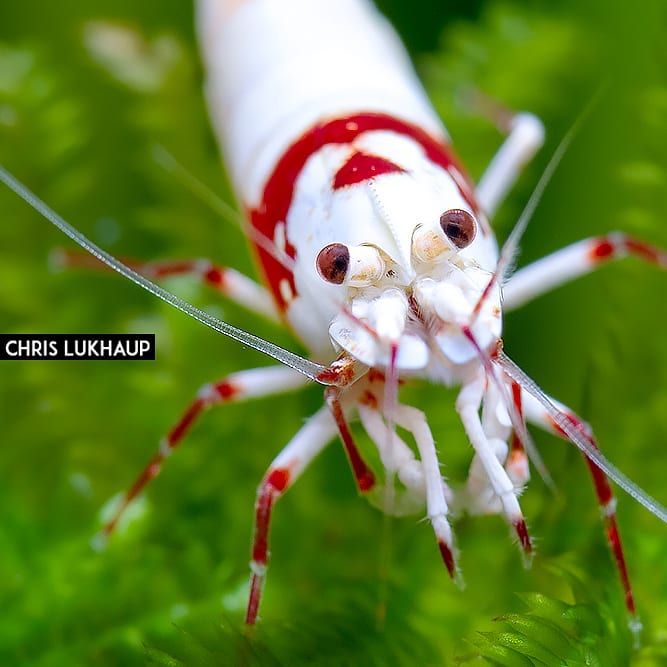
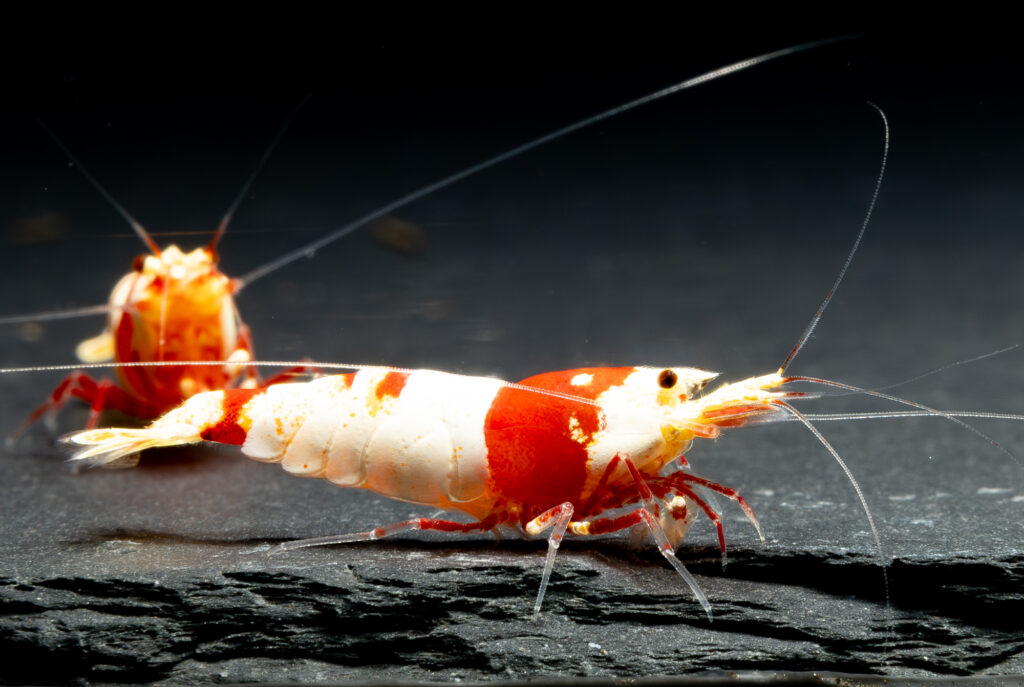

Leave a Reply