
Chapter 1: Before the Boom
The Origins of Crystal Red Shrimp and the Birth of the Japanese Caridina Hobby
Introduction
Today, Crystal Red Shrimp, Taiwan Bees, Blue Bolts, Fishbone and Boa shrimp are kept by enthusiasts around the world. Thousands of selectively bred colour forms now exist, and an entire industry has developed around specialised foods, substrates, minerals, bacteria and breeding techniques.
Yet before the 1990s, none of this existed.
Freshwater shrimp were largely overlooked by aquarists. They were considered algae eaters, scavengers, or occasional additions to planted aquariums rather than animals worthy of dedicated breeding programmes.
The modern Caridina hobby began not in a laboratory, but through a chance mutation observed by a Japanese aquarist.
This single event changed the aquarium world forever.
Bee Shrimp Before Crystal Reds
Before Crystal Reds appeared, hobbyists in Japan and other parts of Asia occasionally kept naturally occurring bee shrimp.
These shrimp, now known as:
- Caridina cantonensis
- Caridina logemanni
- Related bee shrimp forms
displayed wild-type patterns consisting of black bands and translucent body sections.
The shrimp were attractive, but they were not considered especially valuable. They were imported in small numbers and generally kept alongside fish in planted aquariums.
At the time, dedicated shrimp aquariums were almost unknown.
Most aquarium literature focused on:
- Tropical fish
- Discus
- Koi
- Marine aquariums
- Aquatic plants
Freshwater shrimp occupied only a small niche within the hobby.
No one imagined that shrimp would one day become the centrepiece of specialist breeding rooms and international competitions.
The Mutation
During the early 1990s, Japanese breeder and aquarist Takayuki Shirakura observed an unusual shrimp among a group of black bee shrimp.
Instead of black markings, the shrimp displayed red and white bands.
Whether this was a spontaneous mutation or a naturally occurring genetic variation remains uncertain, but the result was extraordinary.
Rather than dismissing the shrimp as a curiosity, Shirakura recognised its potential.
He selectively bred the shrimp over multiple generations, strengthening the red and white pattern.
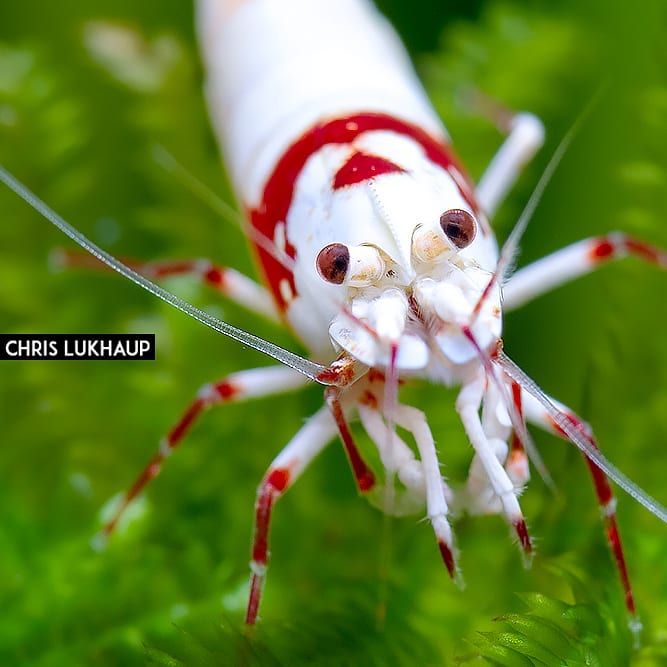
This marked the beginning of the Crystal Red Shrimp.
The First Crystal Reds
The earliest Crystal Reds were very different from the shrimp we see today.
Characteristics included:
- Thin white bands.
- Pale red coloration.
- Variable patterns.
- Lower breeding consistency.
Selective breeding transformed these early shrimp over many years.
Breeders focused on:
- Deeper red colour.
- Dense white pigmentation.
- Balanced patterns.
- Strong shell quality.
As breeding improved, Crystal Reds became increasingly desirable.
Demand grew rapidly.
What had begun as a single mutation developed into an entirely new branch of aquarium keeping.
Why Japan Led the World
Japan was uniquely positioned to become the centre of shrimp breeding.
Several factors contributed:
Planted Aquarium Culture
Japan already had a strong tradition of natural aquariums, influenced by figures such as:
- Takashi Amano
- ADA (Aqua Design Amano)
Aquarists understood:
- Water chemistry
- Biological filtration
- Soil substrates
- Aquatic plants
These skills transferred naturally to shrimp keeping.
Attention to Detail
Japanese breeders approached shrimp breeding with exceptional patience.
Breeding projects often lasted many years.
Improvements were measured over generations rather than weeks.
The philosophy was simple:
Small improvements, repeated consistently, create extraordinary results.
Specialist Shops
By the early 2000s, specialist shrimp stores began appearing.
Among the most influential were:
- Shirakura
- Lowkeys
- Benibachi
- Ebi Ten
- B-Box
- Mosura
These businesses were more than retailers.
They became centres of knowledge, experimentation and innovation.
The Rise of Dedicated Shrimp Products
As shrimp keeping expanded, new products appeared:
Substrates
- Bee Sand
- ADA Amazonia
- Shrimp-specific soils
These soils stabilised water chemistry and created favourable conditions for Caridina shrimp.
Foods
Breeders developed specialised diets containing:
- Marine proteins
- Spirulina
- Seaweed
- Yeast
- Minerals
Products such as Bee Max became highly respected among hobbyists.
Bacteria and Biofilm
Japanese breeders placed enormous importance on microorganisms.
Many believed that invisible life within the aquarium determined success more than any single product.
This led to:
- Bacterial powders
- Mineral additives
- Biofilm enhancers
- Mature tank methods
These ideas remain central to Caridina keeping today.
The Early Internet Era
The rise of the internet accelerated the hobby.
Japanese websites displayed:
- Breeding rooms
- High-grade shrimp
- Water parameters
- New products
International hobbyists saw these shrimp and wanted to reproduce the results.
Knowledge spread through:
- Forums
- Email groups
- Magazine articles
- Early websites
However, much of this information remained in Japanese.
Many important ideas never reached a wider audience.
As websites later disappeared, significant parts of shrimp history were lost.
The Beginning of the Golden Age
By approximately 2003–2005, shrimp keeping had transformed.
What had once been a niche interest became a specialised hobby.
Breeders competed to produce:
- Better colour
- Stronger white coverage
- New patterns
- Rare mutations
This period saw the emergence of legendary names:
- Shirakura
- Benibachi
- Ebi Ten
- Lowkeys
- B-Box
- Mosura
Together, these breeders created the foundations of the modern Caridina hobby.
The years that followed would become known by many enthusiasts as the Golden Age of Japanese shrimp breeding.
Chapter 2
Takayuki Shirakura – The Man Who Taught the World How to Keep Bee Shrimp
Takayuki Shirakura – The Man Who Taught the World How to Keep Bee Shrimp
“Great shrimp are not created by chance. They are created by understanding nature.”
Few names have had a greater influence on freshwater shrimp keeping than Takayuki Shirakura.
Unlike some breeders, Shirakura did not become famous for producing the rarest colour morphs or selling record-breaking shrimp. Instead, he fundamentally changed the way aquarists thought about keeping Caridina shrimp alive and breeding consistently.
Many of the techniques now considered standard practice—active substrates, mature biological filtration, stable water chemistry, restrained feeding, and an appreciation of biofilm—were popularised through Shirakura’s work.
Today, it is difficult to imagine the hobby without those ideas.
The Hobby Before Shirakura
In the late 1990s, keeping bee shrimp successfully was far from straightforward.
Most aquarists approached shrimp in the same way they approached tropical fish:
Neutral tap water.
Standard aquarium gravel.
Conventional fish foods.
Large water changes.
Frequent maintenance.
While shrimp could survive under these conditions, breeding was often inconsistent and colonies frequently declined without obvious explanation.
Many believed bee shrimp were simply delicate animals.
Shirakura questioned that assumption.
Understanding Nature
Rather than asking, “How do we keep shrimp alive in an aquarium?” Shirakura asked a different question:
“What conditions do shrimp naturally experience, and how can we recreate those conditions?”
That change in thinking transformed the hobby.
Instead of treating water as something to constantly adjust with chemicals, Shirakura viewed the aquarium as a living ecosystem made up of:
bacteria,
fungi,
microscopic algae,
biofilm,
leaf litter,
minerals,
and the shrimp themselves.
Healthy shrimp were a consequence of a healthy ecosystem.
The Importance of Soil
One of Shirakura’s most influential contributions was promoting specialised shrimp substrates.
At a time when most aquarists used inert gravel, he advocated substrates that would:
lower pH naturally,
absorb carbonate hardness,
provide surfaces for microbial growth,
support stable water chemistry over long periods.
This philosophy would later influence nearly every manufacturer of Caridina substrates.
Even today, active soils remain the foundation of successful bee shrimp breeding.
Biofilm Before It Was Popular
Modern hobbyists often talk about biofilm as if it were a recent discovery.
Japanese breeders had already recognised its importance decades ago.
Shirakura believed newly hatched shrimplets depended on microscopic grazing rather than prepared foods.
Instead of trying to feed babies directly, he encouraged aquarists to cultivate mature surfaces covered with beneficial microorganisms.
This explains why experienced breeders often preferred mature aquariums over newly established systems.
Bee Sand
Among Shirakura’s best-known products was Bee Sand.
To many aquarists it looked like ordinary substrate.
In reality, it reflected an entire philosophy.
The goal was not simply to change water chemistry but to create an environment where bacteria, microorganisms and shrimp could thrive together.
Its success inspired a generation of shrimp-specific substrates from other manufacturers.
Bee Ball
Bee Ball demonstrated another recurring theme in Shirakura’s work.
Rather than relying on large quantities of additives, he sought products that gently supported the biological processes already occurring within the aquarium.
Although hobbyists sometimes debated exactly how Bee Ball functioned, its purpose was clear: provide additional surface area for beneficial microorganisms and contribute to a stable biological environment.
Nutrition
Shirakura also viewed food differently from many competitors.
Instead of encouraging heavy feeding, he promoted moderation.
The healthiest shrimp, in his view, spent most of the day grazing naturally on microbial films.
Prepared foods should supplement that diet, not replace it.
This philosophy reduced waste and helped maintain stable water quality.
A Lasting Legacy
Many companies that followed—Benibachi, Mosura, Lowkeys, Ebi Ten, and others—developed their own products and methods.
Yet almost all of them built upon the same core principles:
stable water,
mature biological systems,
active substrates,
natural grazing,
patient husbandry.
Whether they agreed on every detail or not, Shirakura’s influence can be seen throughout the modern Caridina hobby.
Why His Ideas Still Matter
Technology has changed dramatically since the early 2000s.
LED lighting has replaced fluorescent tubes.
Digital TDS meters are commonplace.
New shrimp varieties have emerged.
Yet experienced breeders still return to the same fundamentals that Shirakura championed:
Stability over constant adjustment.
Biology over chemistry.
Patience over shortcuts.
Observation over intervention.
These ideas have outlived countless products and trends.
That may be Shirakura’s greatest achievement—not a single product or shrimp, but a philosophy that continues to shape the hobby decades later.
- Taiwan,
- China,
- Southeast Asia,
- and European breeders.
The rise of social media
The hobby moved away from forums and websites towards:
- Facebook groups,
- Instagram,
- YouTube.
Many older Japanese websites disappeared.
Breeder retirement
Many pioneers from the golden era eventually stepped away from the hobby.
Whether this contributed to Benibachi’s decline remains uncertain.
What We Know and What We Still Need to Discover
Confirmed
✓ Benibachi was one of the most influential Japanese shrimp brands.
✓ It produced highly respected Crystal Red and Taiwan Bee lines.
✓ Bee Max became one of the most famous shrimp foods of the era.
✓ Its influence spread internationally.
Still requiring research
?
Who founded Benibachi?
?
What was the company’s exact history?
?
Who maintained the breeding lines?
?
Why did production decline?
?
What happened to the original shrimp stock?
The Legacy of Benibachi
Even though much of the company’s history remains undocumented, its influence is undeniable.
Benibachi helped change the perception of freshwater shrimp.
They were no longer simply aquarium cleaners.
They became:
- selectively bred animals,
- competition subjects,
- genetic projects,
- and living examples of careful craftsmanship.
The Benibachi name represents one of the defining ideas of the golden era:
That a tiny freshwater shrimp could be refined into an object of extraordinary beauty through patience, observation and generations of selective breeding.


Leave a Reply